Green, white, yellow, oolong, black and dark tea all come from
Camellia sinensis. Nothing is added and nothing is bred in. What
separates them is 氧化 — how long the picked leaf is
allowed to breathe before heat stops it — and what the maker does either side
of that moment.
The seventh, 花茶, is not a family at all. It is a
finishing method applied to one of the six, and it is here because half of
China drinks it.
Bruise a tea leaf and its enzymes begin turning it brown, the way a cut apple
does. Every family is a decision about when to stop that. Green tea stops it
almost immediately; black tea lets it run to the end.
Left is stopped early and tastes fresher. Right ran longer and tastes deeper.
02 · Width寬度
A wide bar is a wide family. Oolong covers more ground than the rest combined.
03 · Water水溫
Broadly, the further left, the cooler the water. Boiling flattens a green tea.
04 · Exceptions例外
Every rule here has a maker somewhere breaking it deliberately and well.
黑茶 Dark tea is drawn as a hatched band rather than a value
because it does not belong on this axis. Its character comes from microbial
fermentation after the leaf has already been fixed, which is a different
process from enzymatic oxidation. 花茶 repeats
綠茶's colour and range because it is a green tea
underneath. Percentages elsewhere are the conventional
teaching ranges; they are approximate, sources disagree, and no figure here
is a measurement of any particular lot.
A tea's identity is the subset it goes through and the order it goes through
them in. White tea uses two. Green tea skips oxidation entirely by doing
殺青 first. Dark tea adds a stage the others do not have.
白茶兩道,烏龍五道。烏龍是唯一先氧化、後殺青者;黑茶是唯一出坊之後仍在變化者。「悶黃」與「窨製」不在六道之列,故以空框標示。
Two stages for white, five for oolong. Oolong is the only run where
氧化 oxidation comes before
殺青 kill-green; dark is the only one that keeps
going after the workshop. The two outlined chips —
悶黃 yellowing and
窨製 scenting —
are not among the six, which is why they are drawn as additions rather than
as stages. These are the conventional teaching outlines; real workshops
split, repeat and reorder them.
一
萎凋
Wither — the picked leaf loses water and softens.
二
殺青
Fix — heat kills the enzymes and freezes the leaf where it stands.
三
揉捻
Roll — the cells are broken so the leaf will give up its liquor.
四
氧化
Oxidise — the browning stage, held for minutes or for hours.
五
乾燥
Dry — the last moisture out, often over charcoal.
六
陳化
Age — dark tea only, and it can run for decades.
05 / 08
七大茶類 · In Depth
Family by family.
一 · 不發酵 Unoxidised
綠茶 Green
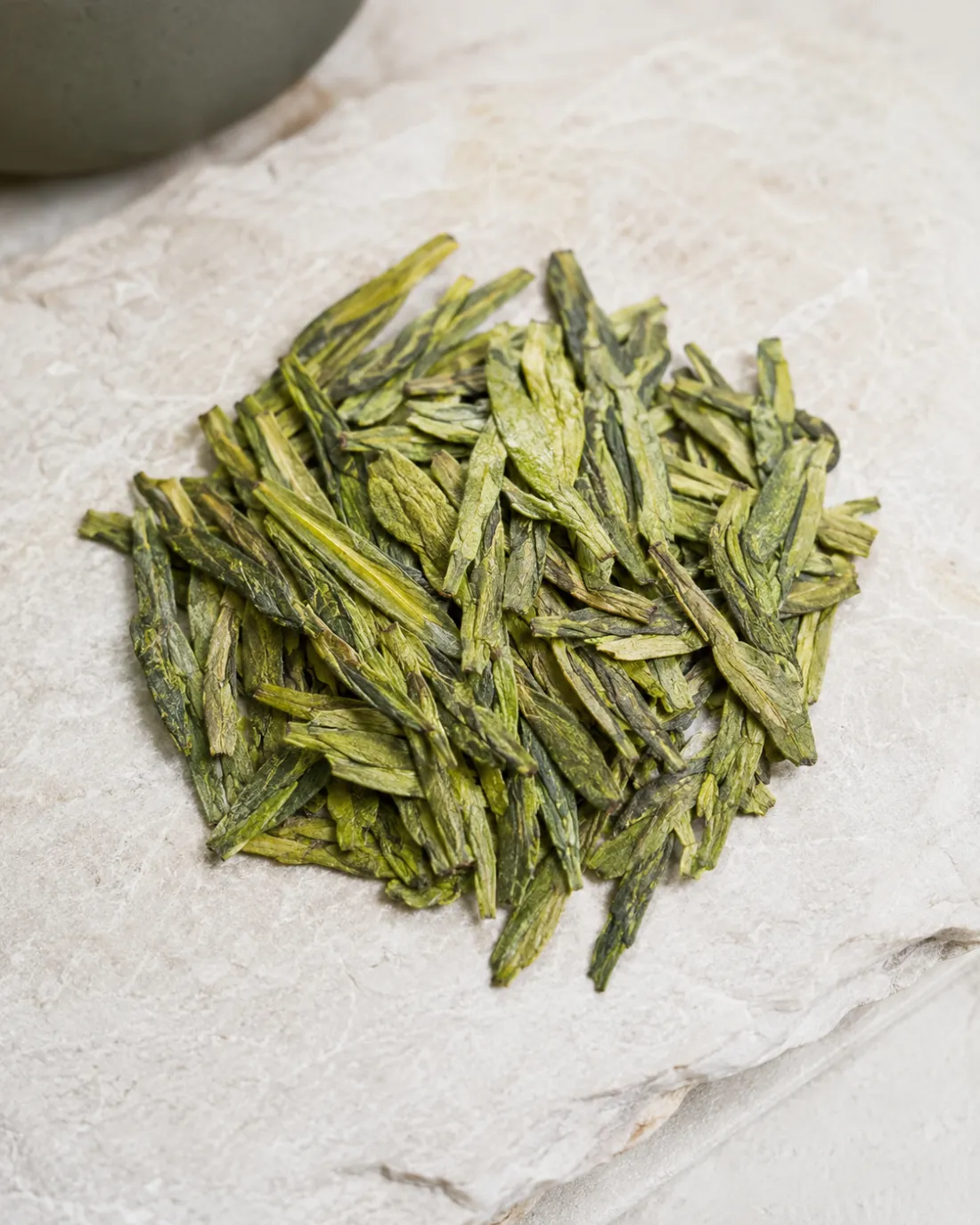
The leaf is heated within hours of picking — pan-fired in a wok or steamed —
which kills the enzymes before they can brown it. Everything after that is
shaping and drying. It is the largest category in China by volume and the
least forgiving in the cup: too hot a kettle and it turns bitter and flat.
氧化 Oxidation
0–5%
風味 Flavour
Cut grass, chestnut, snow pea; a brisk clean finish
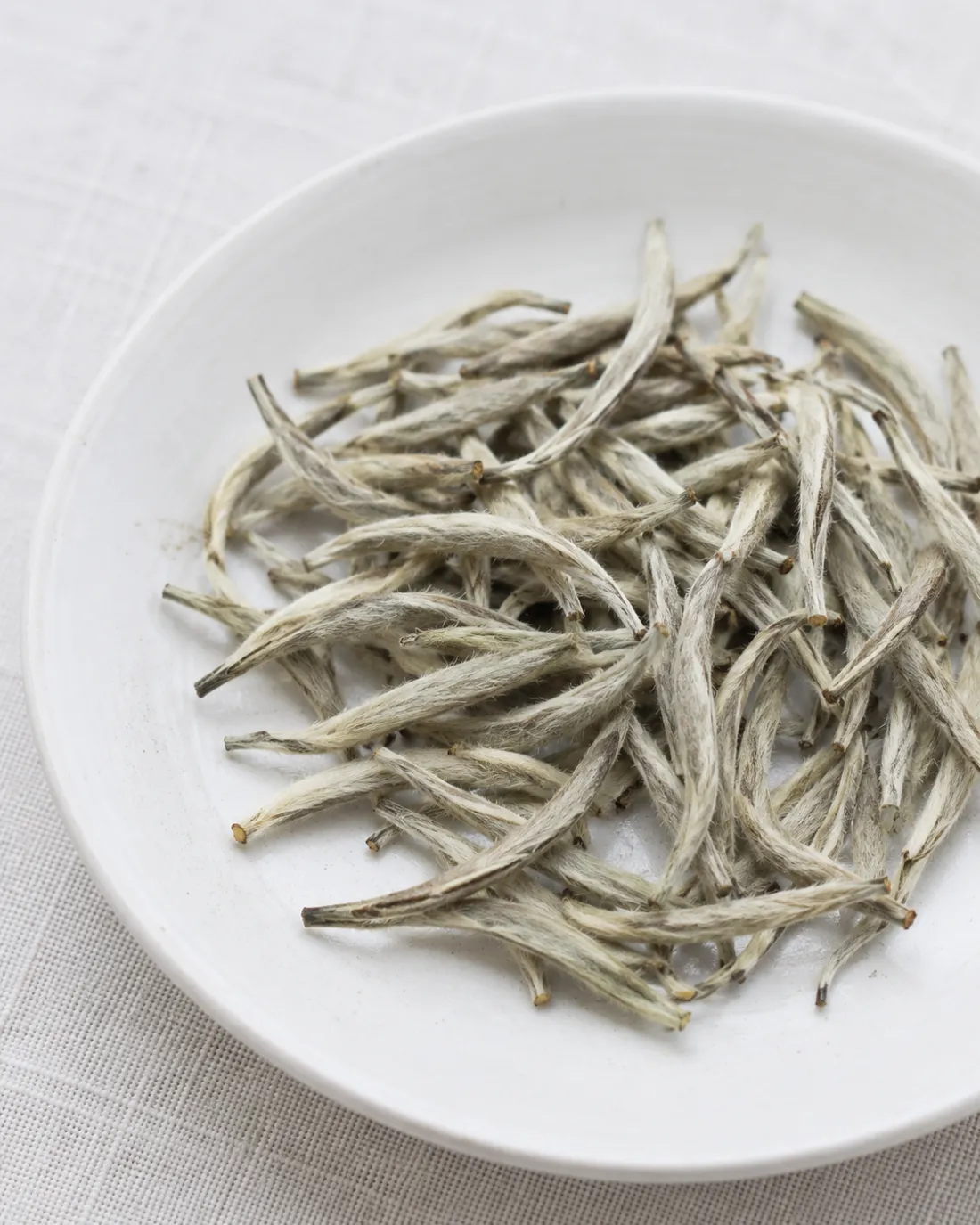
The least handled tea there is. Buds and young leaves are withered — often
in shade, sometimes in sun — and then dried. No fixing, no rolling. A small
amount of natural oxidation happens anyway during the wither, which is why
it does not sit at zero. Silver Needle is the top picking grade, all bud
and no leaf, and it is quietly one of the more expensive things in tea.
氧化 Oxidation
≈5–12%, incidental rather than intended
風味 Flavour
Hay, melon, honeysuckle; pale liquor, long sweet tail
代表 Cultivar
白毫銀針 · 白牡丹 · 壽眉 Bai Hao Yin Zhen · Bai Mu Dan · Shou Mei
三 · 輕發酵 Lightly smothered
黃茶 Yellow
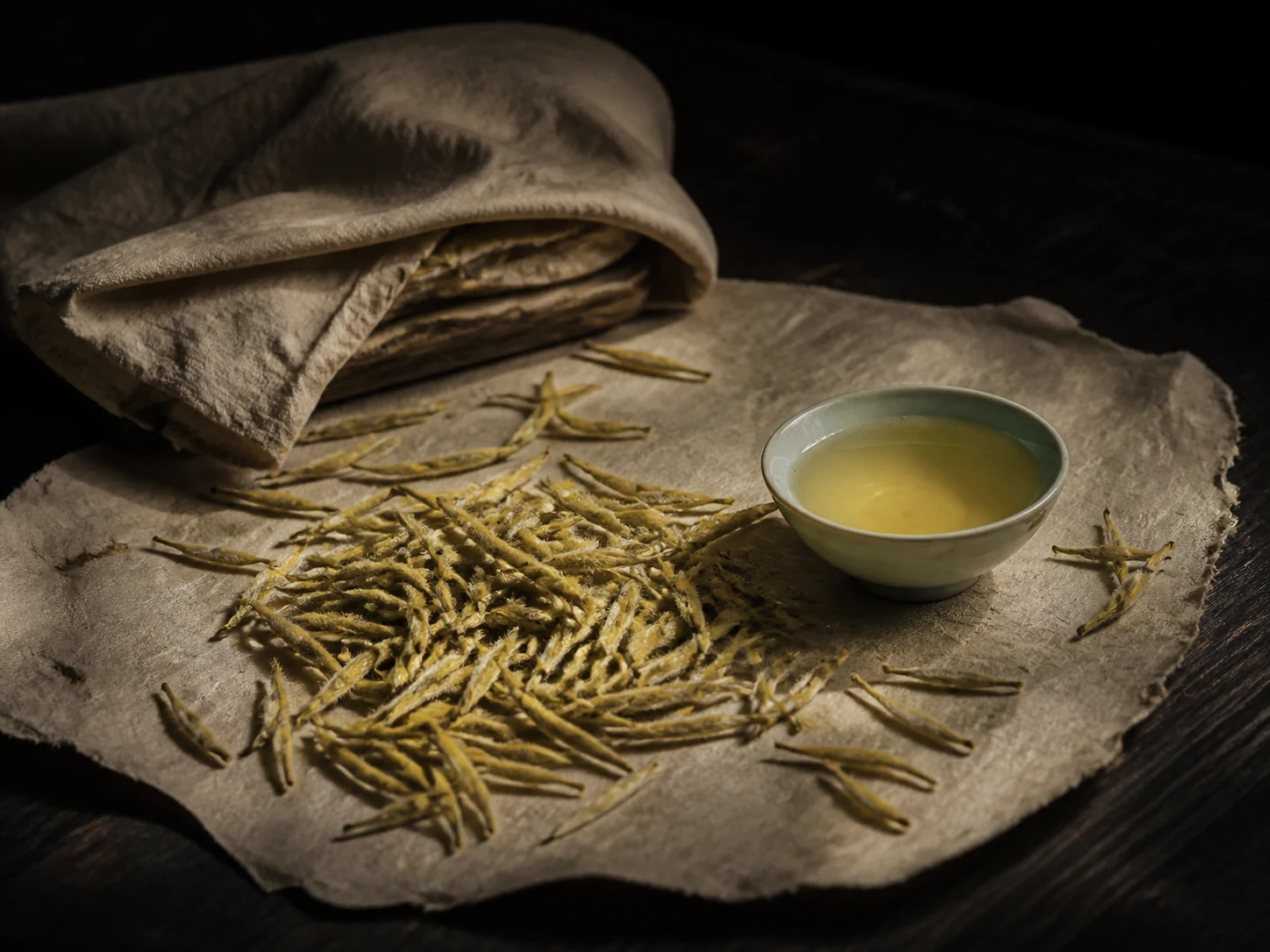
The rarest of the six, and the one most people never meet. It begins as
green tea, then adds a stage called 悶黃 — the warm
damp leaf is wrapped in cloth or paper and left to yellow slowly. That step
is slow, easy to ruin, and commercially unattractive, so very little is
made. What it buys is the removal of the grassy edge: the same freshness,
rounded off.
氧化 Oxidation
≈5–15%, from the smothering rather than from bruising
風味 Flavour
Sweetcorn, chestnut, warm hay; mellow and low-edged
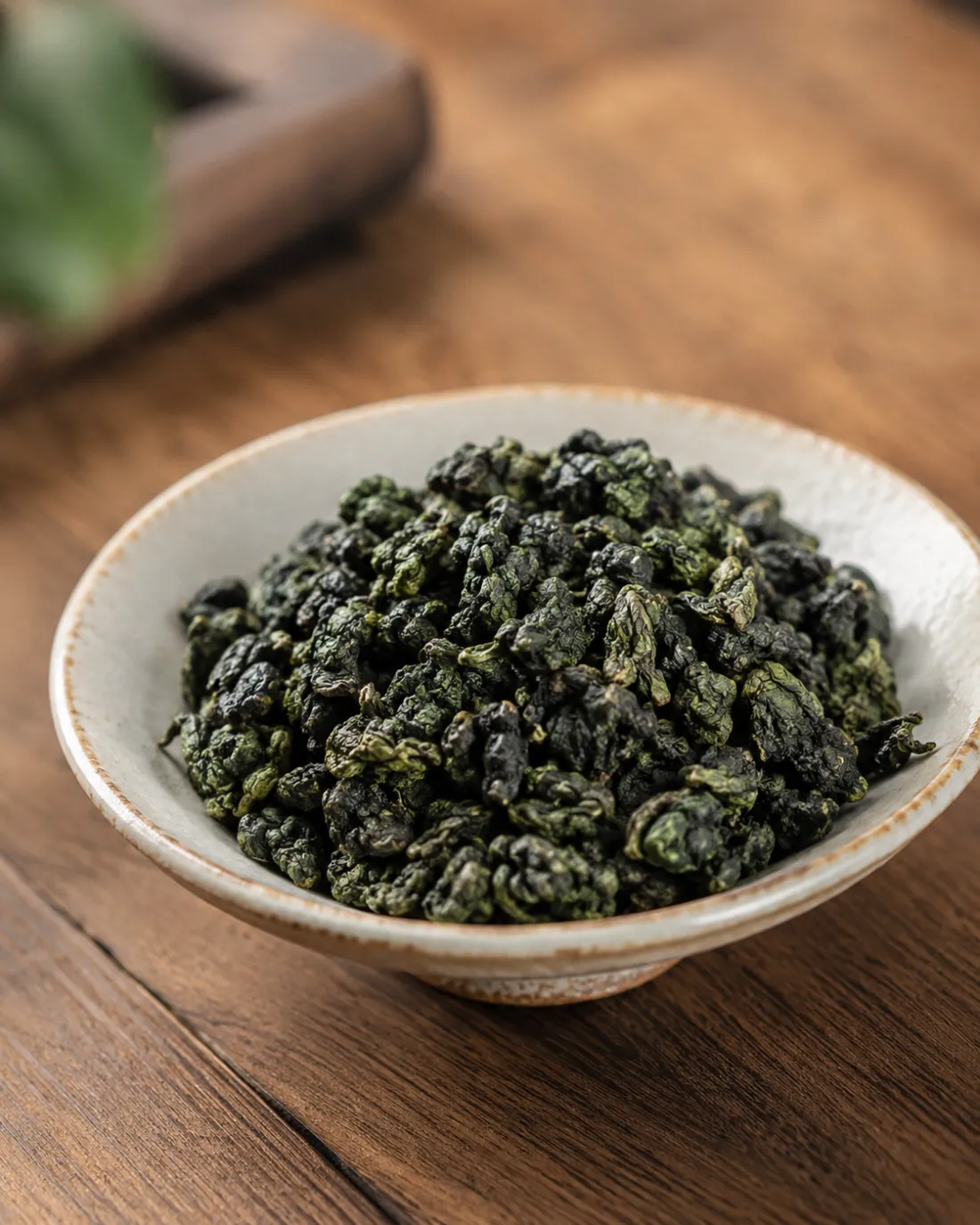
Not one tea but a continent. The leaf is withered, then shaken and tumbled
so its edges bruise while its centre stays green, and oxidation is halted
wherever the maker wants it — anywhere from a tenth to four fifths of the
way. A light Tieguanyin is floral and almost green; a heavily roasted
Wuyi oolong is dark, mineral and closer to black tea. Both are oolong.
This is also the family built for repeated short steepings, where the
fifth pour is often better than the first.
氧化 Oxidation
10–80%, set deliberately by the maker
風味 Flavour
Orchid and cream at the light end; roast, stone fruit and mineral at the dark
代表 Cultivar
鐵觀音 · 武夷岩茶 · 鳳凰單叢 Tie Guan Yin · Wuyi rock tea · Phoenix Dancong
五 · 全發酵 Fully oxidised
紅茶 Black · 紅 "red"
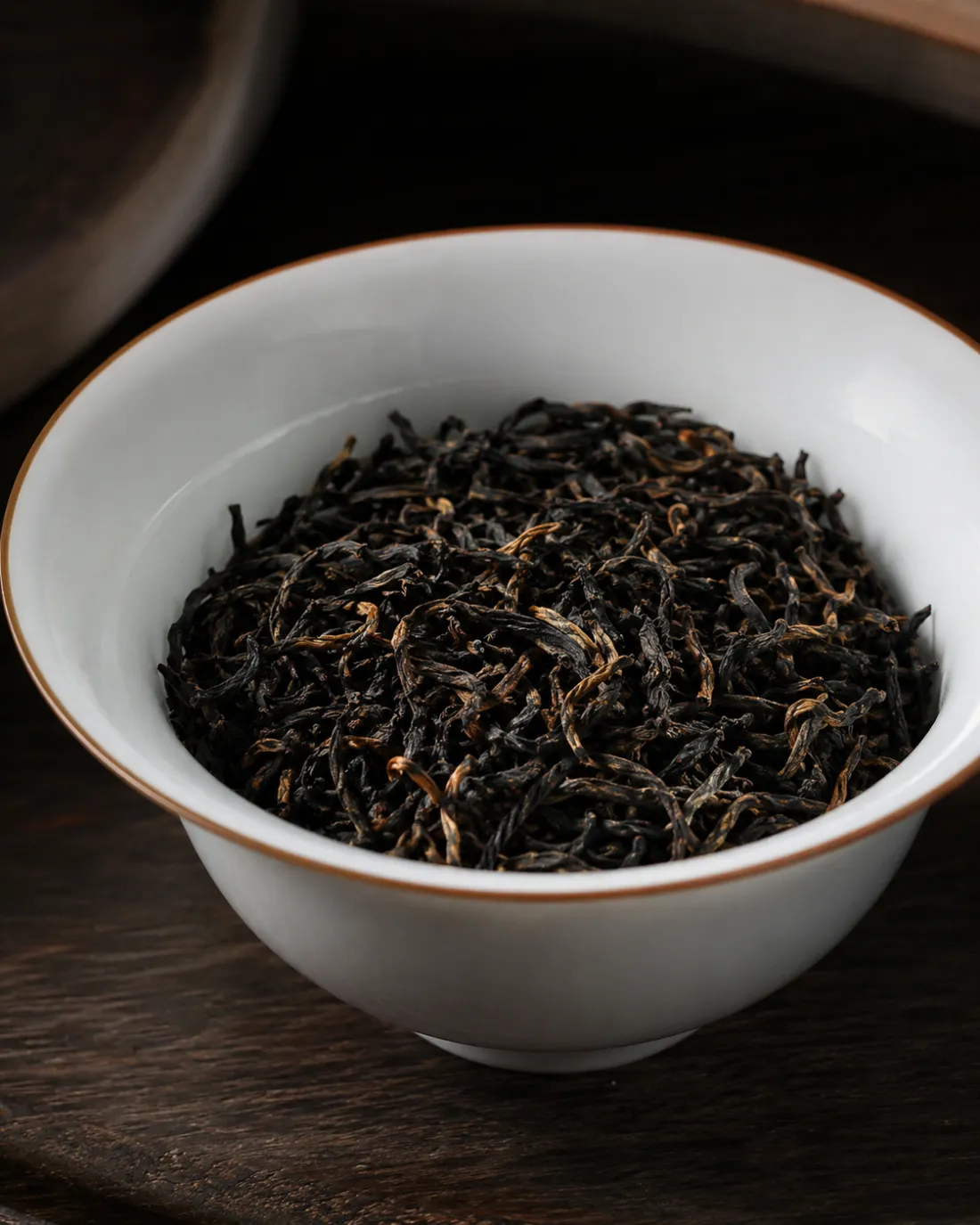
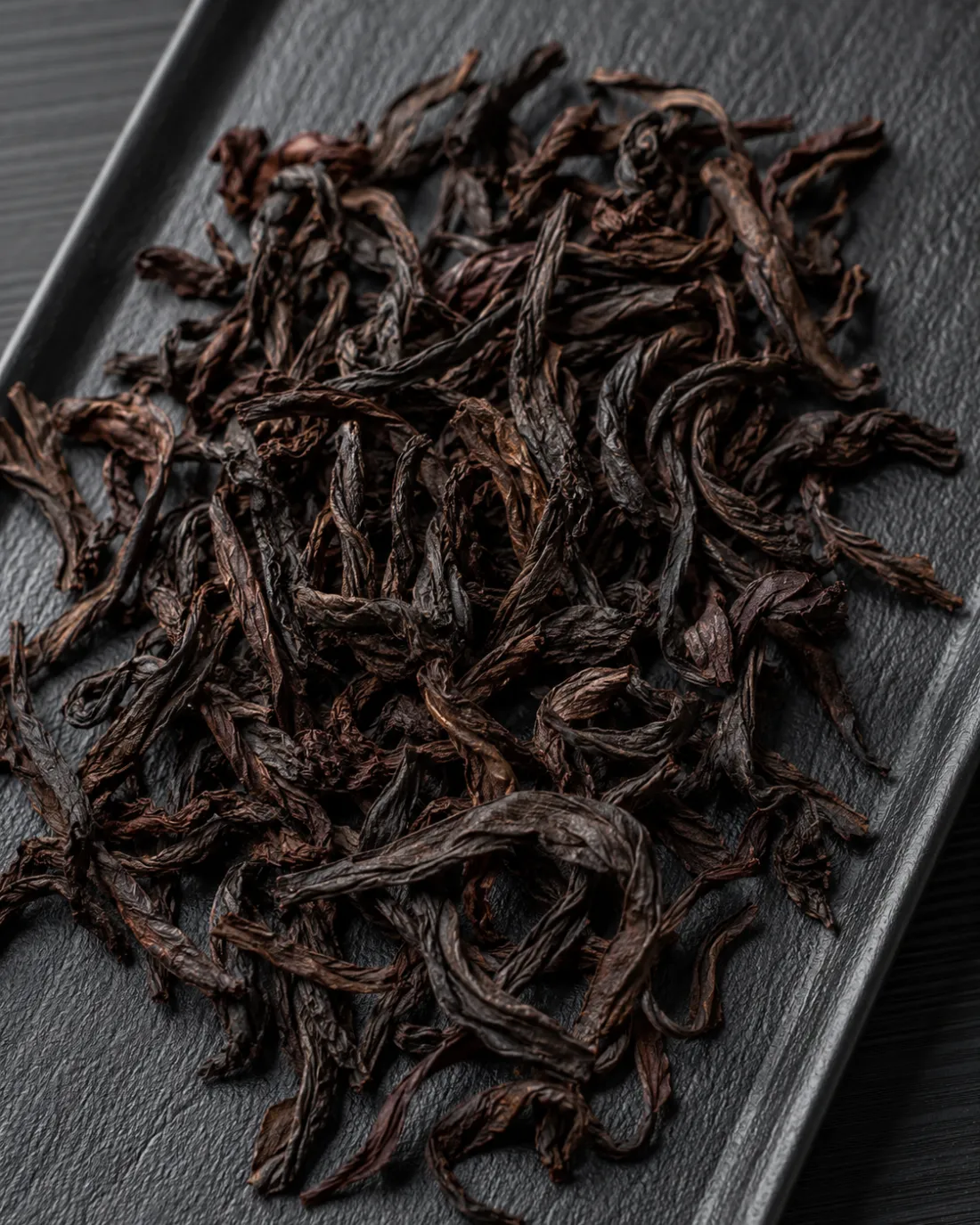
Withered, rolled hard, and then left to oxidise all the way before drying.
Chinese calls it 紅茶, red tea, after the colour of
the liquor; the English name describes the leaf instead, which is why the
two never quite line up. It is the most forgiving family — boiling water is
correct, a long steep is survivable, and it is the one that takes milk
without falling apart.
氧化 Oxidation
85–100%
風味 Flavour
Cocoa, dried fruit, malt; sometimes smoke, depending on the drying
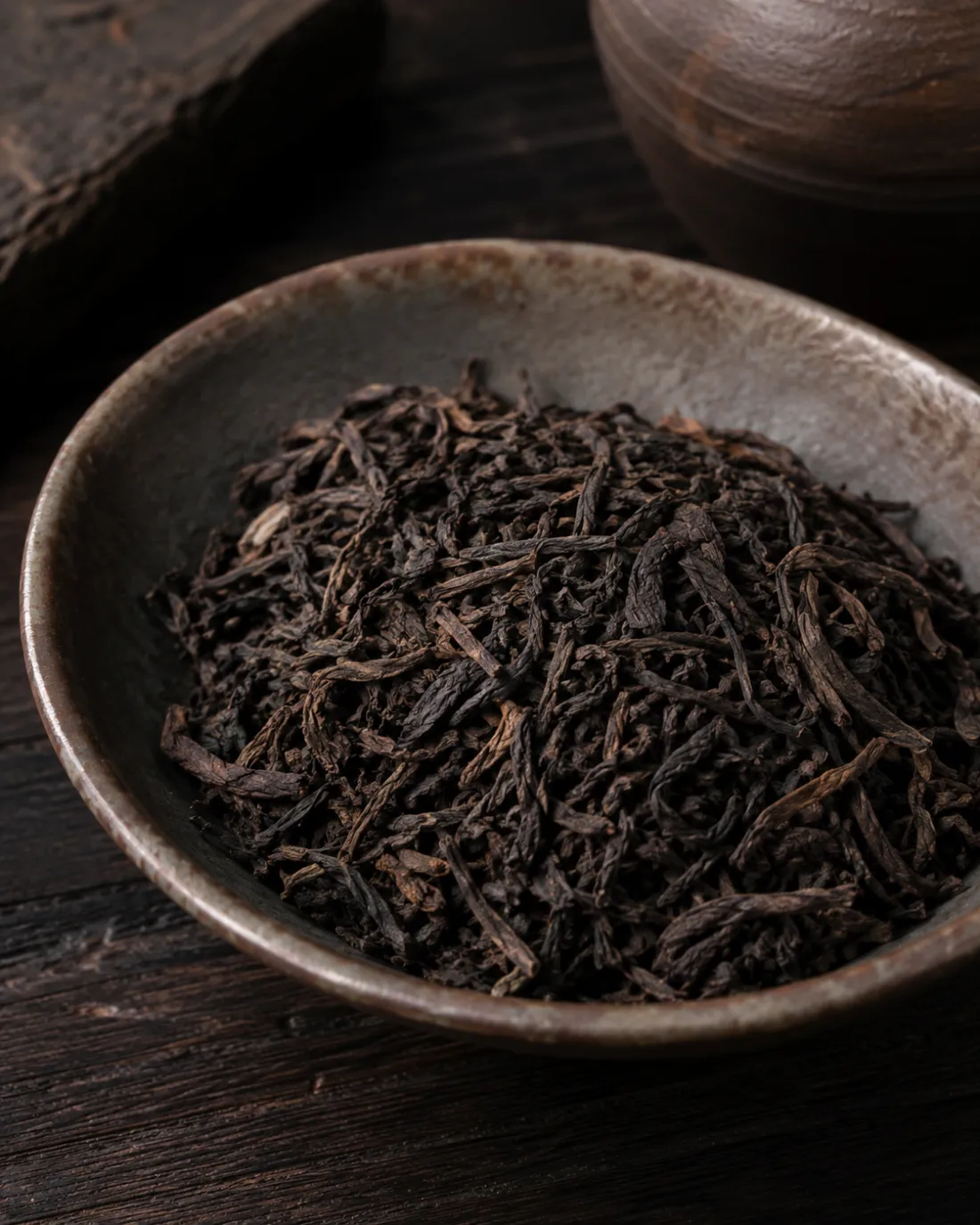
The odd one out. After the leaf is fixed and dried, it is deliberately
exposed to moisture, warmth and microbial activity — piled in
渥堆 for the ripe style, or simply pressed into cakes
and left for years in the raw style. That is fermentation, not oxidation,
and it is the only family that keeps developing after it leaves the
workshop. A twenty-year-old cake is not the tea it was when it was pressed.
發酵 Fermentation
Microbial, ongoing; not measurable on the oxidation scale
風味 Flavour
Damp forest floor, old wood, dates; thick body, sweet finish
代表 Cultivar
普洱 · 六堡茶 · 安化黑茶 Pu'er · Liu Bao · Anhua dark tea
七 · 窨製 A method, not a family
花茶 Scented · Jasmine
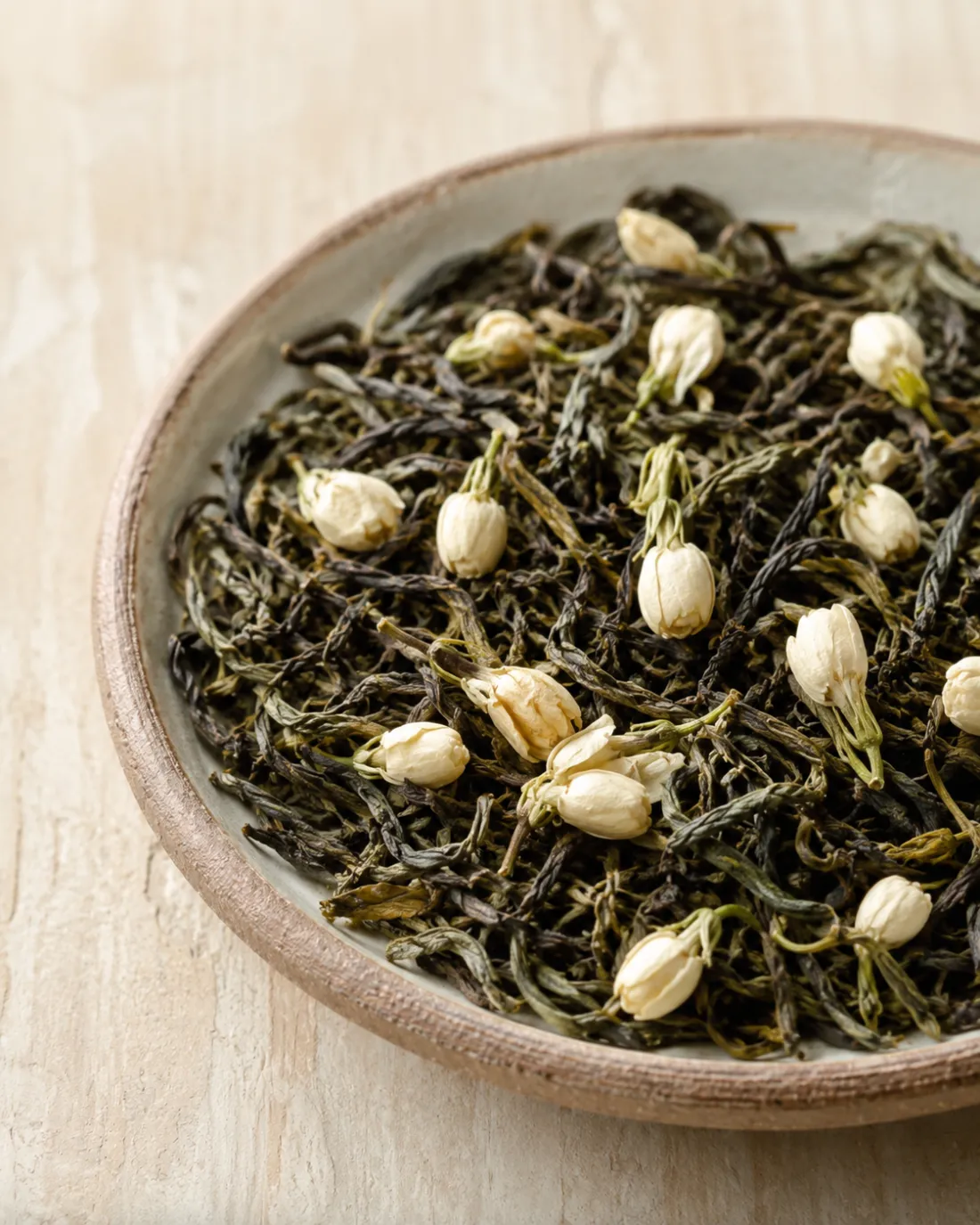
Finished green tea is layered with jasmine blossom picked that afternoon and
left overnight while the flowers open and the dry leaf drinks the scent. The
spent flowers are removed and the process repeated — good jasmine tea is
scented several times over, and the blossom you sometimes see in the tin is
decoration rather than the source of the aroma. It belongs in the atlas
because it is the everyday cup across northern China, not because it is a
seventh kind of leaf.
底茶 Base tea
Usually green; occasionally white or a light oolong
風味 Flavour
Jasmine over a light green body; perfumed, soft, unhurried
The word tasters reach for when the tea tastes of stone.
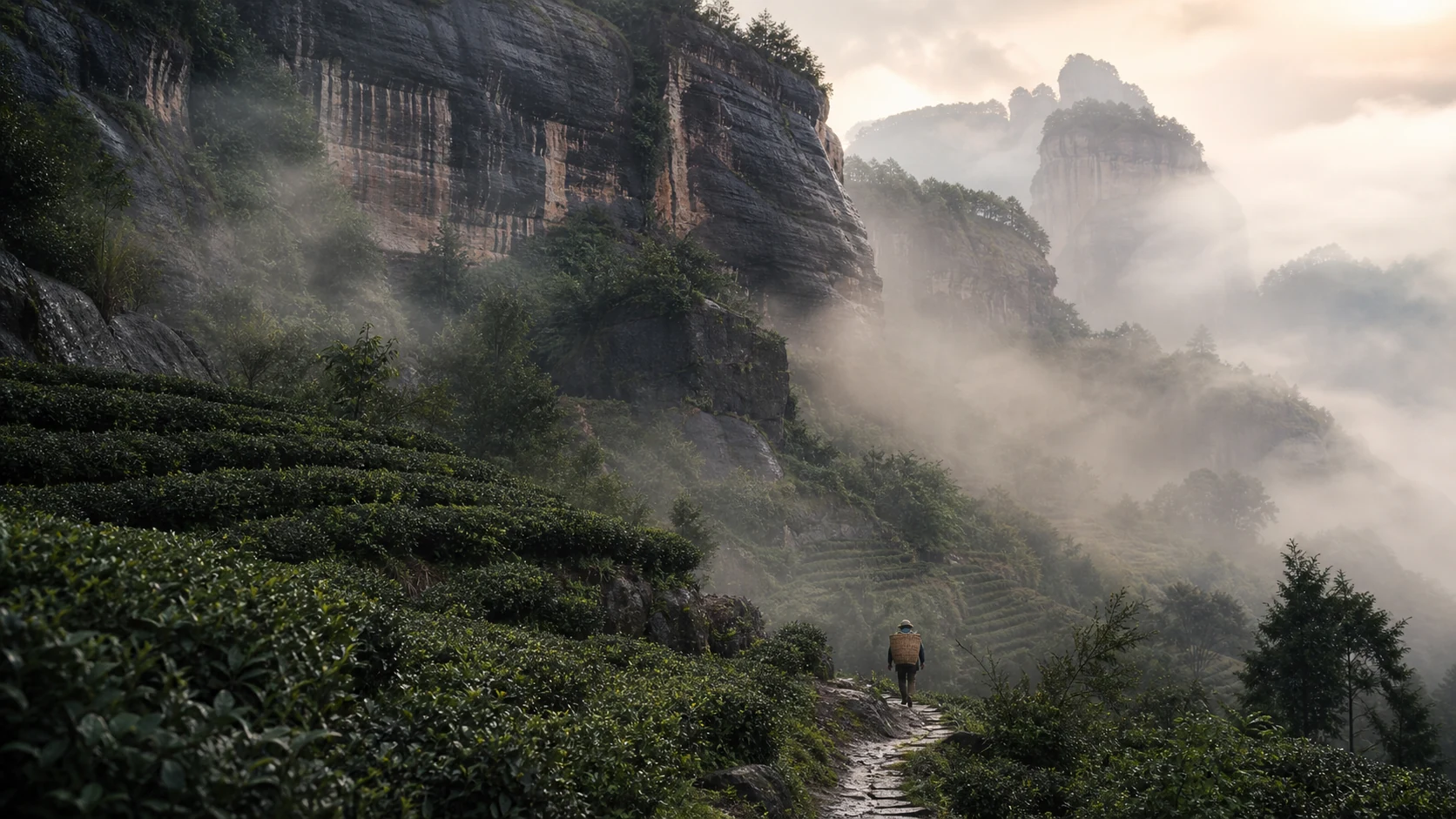
岩韻 Yan yun — literally rock rhyme — is the term used for
oolongs grown among the cliffs and ravines of the Wuyi mountains in Fujian.
The bushes sit in thin, weathered, mineral-heavy soil in narrow gorges that
hold mist and limit direct sun. Tasters describe what comes out of that as
a cool mineral undertone that sits beneath the roast and lingers after the
fruit and flower have gone.
It is worth being straight about what the term is. 岩韻
Yan yun is a tasting vocabulary, not a measurement. There is no test for it, no
threshold, and no agreement on where the boundary of the growing area
should fall — which is exactly why it is argued about, and why the word
appears on packaging far more often than the geography justifies.
茶類 Type
Oolong 烏龍 — heavily oxidised, charcoal roasted
產地 Origin
Wuyi Mountains 武夷山, Fujian
代表 Cultivar
大紅袍 · 水仙 · 肉桂 Da Hong Pao · Shui Xian · Rou Gui
價格 Price
Requires verification
08 / 09
產區 · The growing regions
Eight grounds, and what each one puts in the cup.
A family tells you how the leaf was handled. A region tells you what it was
before anyone touched it — the altitude it grew at, the earth under it, and
the processing that grew up around both.
產區 · Region0 m1,300 m2,600 m海拔 · Altitude
08宇治抹茶Uji Matcha
50–250 mTencha / matcha
04杭州龍井Hangzhou Longjing
100–300 mGreen tea
02武夷岩茶Fujian Wuyi
300–700 mRock oolong
03安溪鐵觀音Anxi Tieguanyin
600–1,000 mOolong
05黃山 / 祁門Huangshan / Keemun
600–1,200 mGreen tea and black tea
06潮州鳳凰單叢Chaozhou Dancong
600–1,400 mDancong oolong
01雲南普洱Yunnan Pu'er
1,200–2,000 mSheng and shou Pu'er
07台灣高山烏龍Taiwan High Mountain
1,000–2,600 mHigh mountain oolong
此圖按海拔低高排列,非按下表編號。左側數字即下表之列號。色為該產區所出茶類之湯色;黃山/祁門兼出二類,故其條兼二色。
Sorted by altitude, not by the list's numbering — the number at the left is
the row to open below. Three of the eight start at 600 m and end
somewhere different, which is the part a paragraph cannot show. Figures are
the ones written in the rows underneath.
01雲南普洱 Yunnan Pu'er1,200-2,000mSheng and shou Pu'er
氣候 Climate
Mist, old forest, humid mountain air · 雲霧、老林、潮濕的山間空氣
風土 Terroir
Ancient tea trees, red earth, deep microbial aging · 古茶樹、紅土,以及深層的微生物陳化
製程 Process
Sun-dried maocha, compressed, aged · 日曬毛茶、緊壓、陳化
故事 Story
Caravan tea, mountain villages, and the long patience of transformation. · 馬幫茶、山中村落,以及漫長轉化所需的耐心。
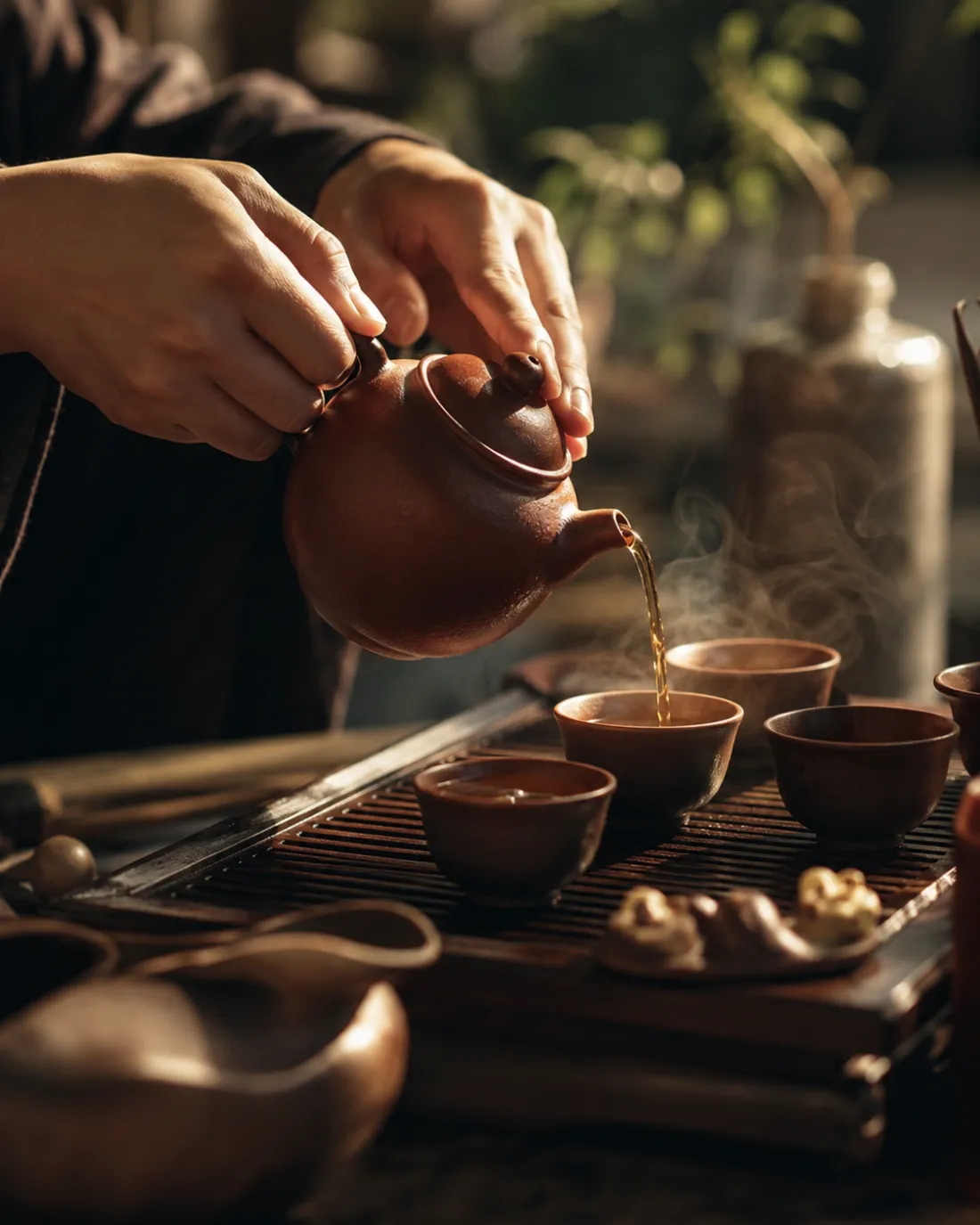
沖泡 Ritual
Clay pot, slow rinse, many short infusions · 陶壺、緩慢潤茶、多次短泡
02武夷岩茶 Fujian Wuyi300-700mRock oolong
氣候 Climate
Rock valley, mineral mist, warm rain · 岩谷、礦質霧氣、溫暖的雨
風土 Terroir
Zhengyan cliff soil, orchid aroma, roasted stone character · 正岩崖壁土壤、蘭花香氣、焙火岩韻
Everything on this page is process, geography and flavour. Chazen makes no
medical or therapeutic claim for any tea, and no grade, price or product
specification is stated here — where one would be needed, it is marked
Requires verification.