一
溫器
Warm the vessels
01 / 13
茶儀式 · The Ritual
功夫茶 — gongfu tea — means tea made with effort and skill. None of the six movements below is difficult. What they ask for is the one thing that is genuinely hard to give: uninterrupted attention, six times in a row.
02 / 13
六道 · The Six Movements
Read once, then forget the order. Within a week the sequence runs by itself and you stop noticing you are doing it — which is the point at which it starts working.
水去何處 · Where the water goes
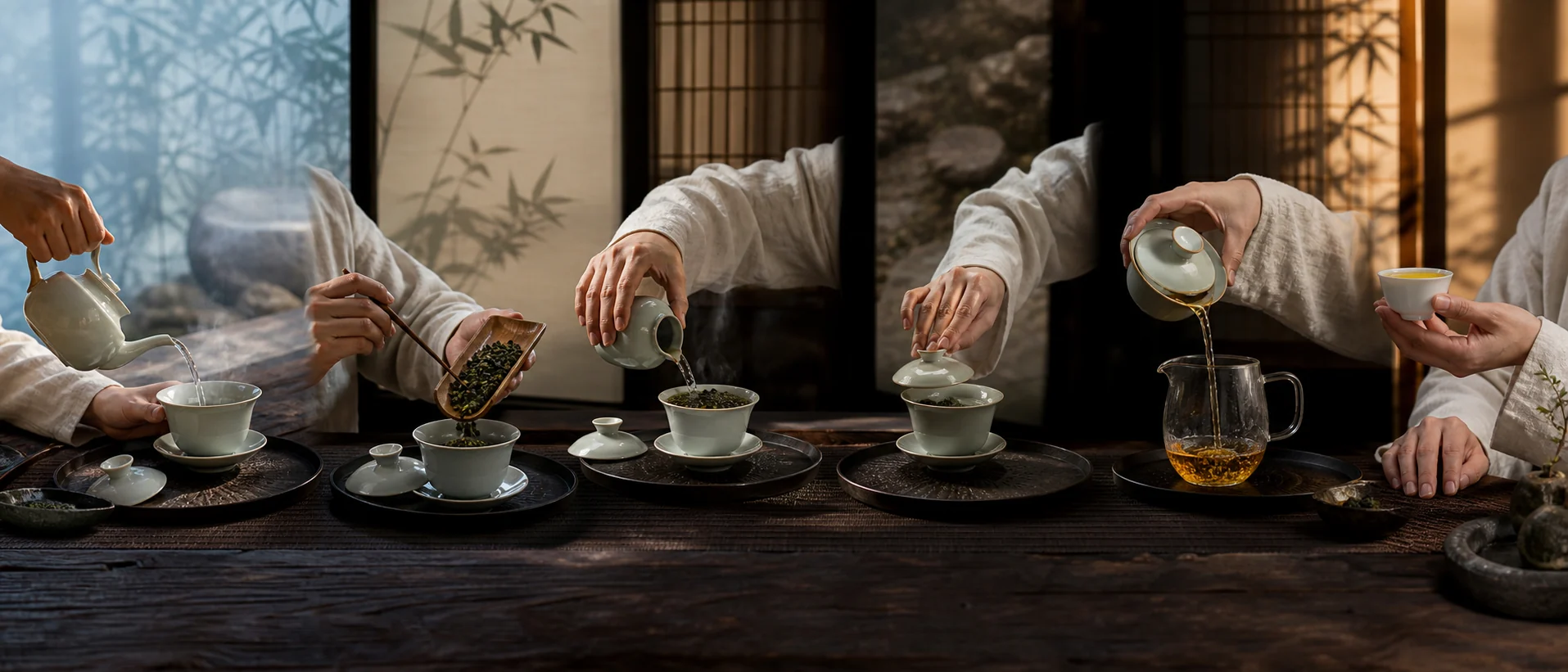
第一、第三兩注皆不入口。入杯者,實為第三注——而醒茶可省,細嫩白茶與早春綠茶無須此道,其湯即為第二注。 Two of the three pours are thrown away. The liquor that reaches a cup is the third time water has been poured — and 醒茶 is the one movement to leave out: delicate white and early-picked green have nothing tightly shut to open, so for those it is the second.
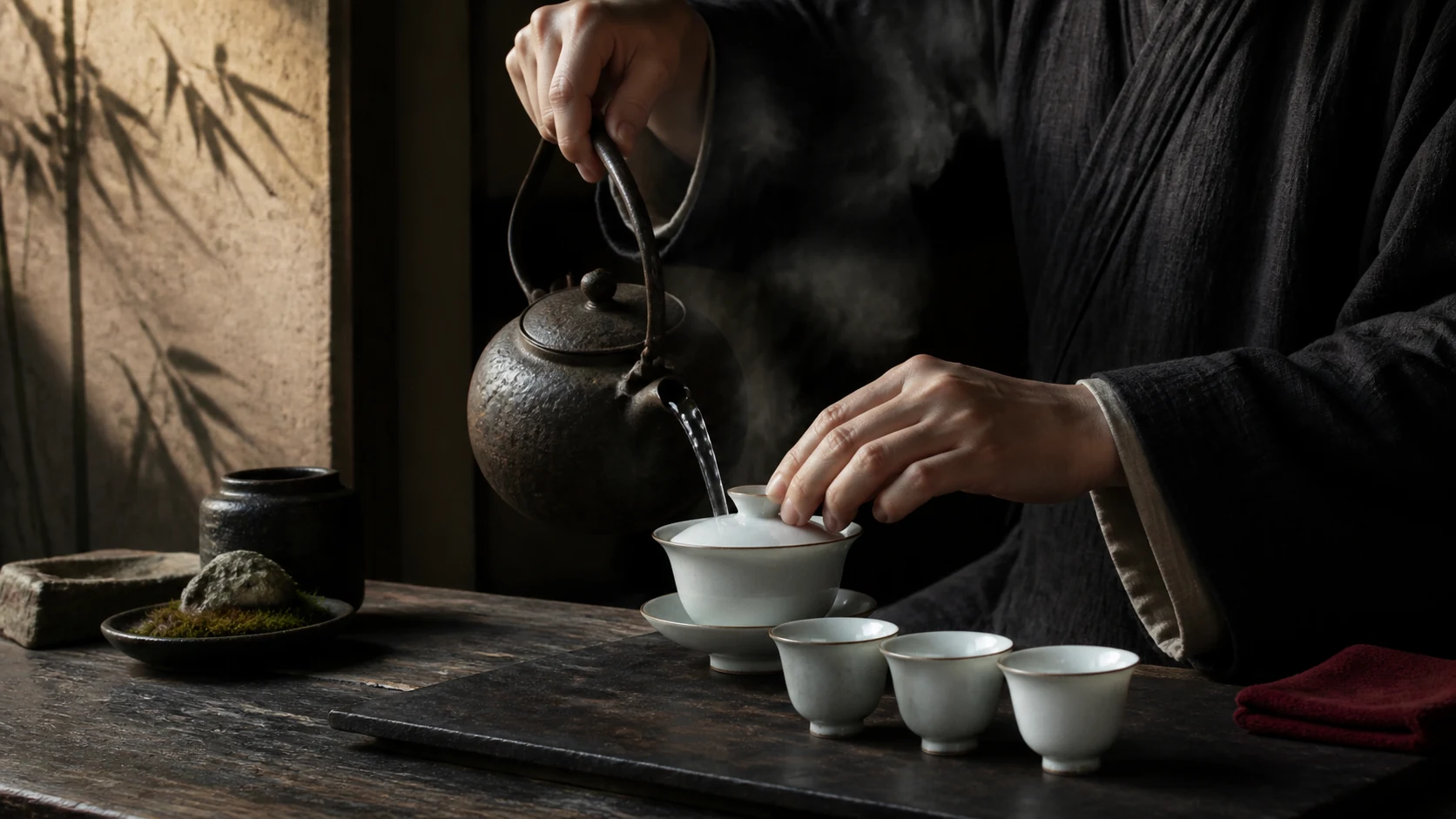
一
Warm the vessels
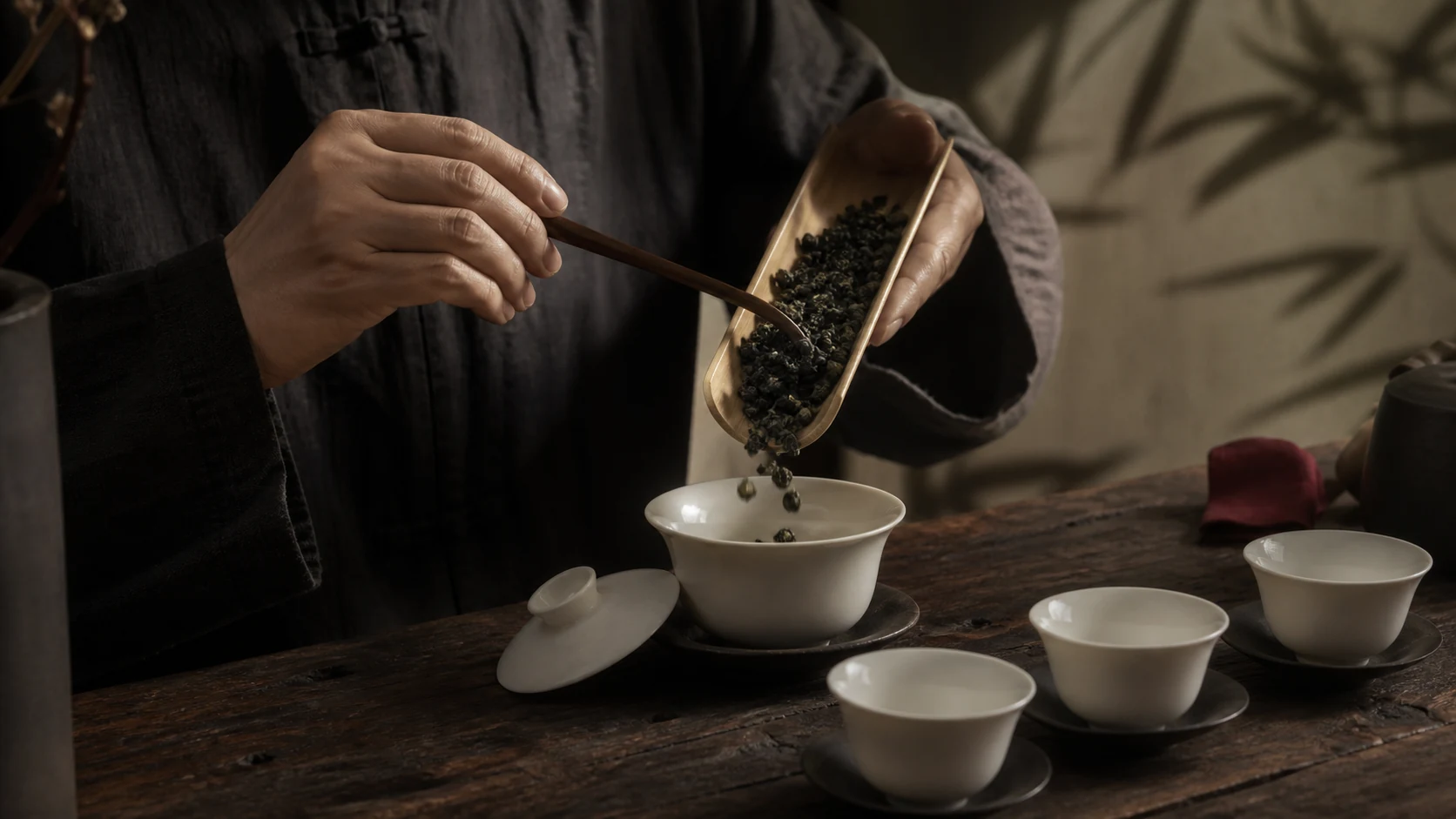
二
Place the leaf
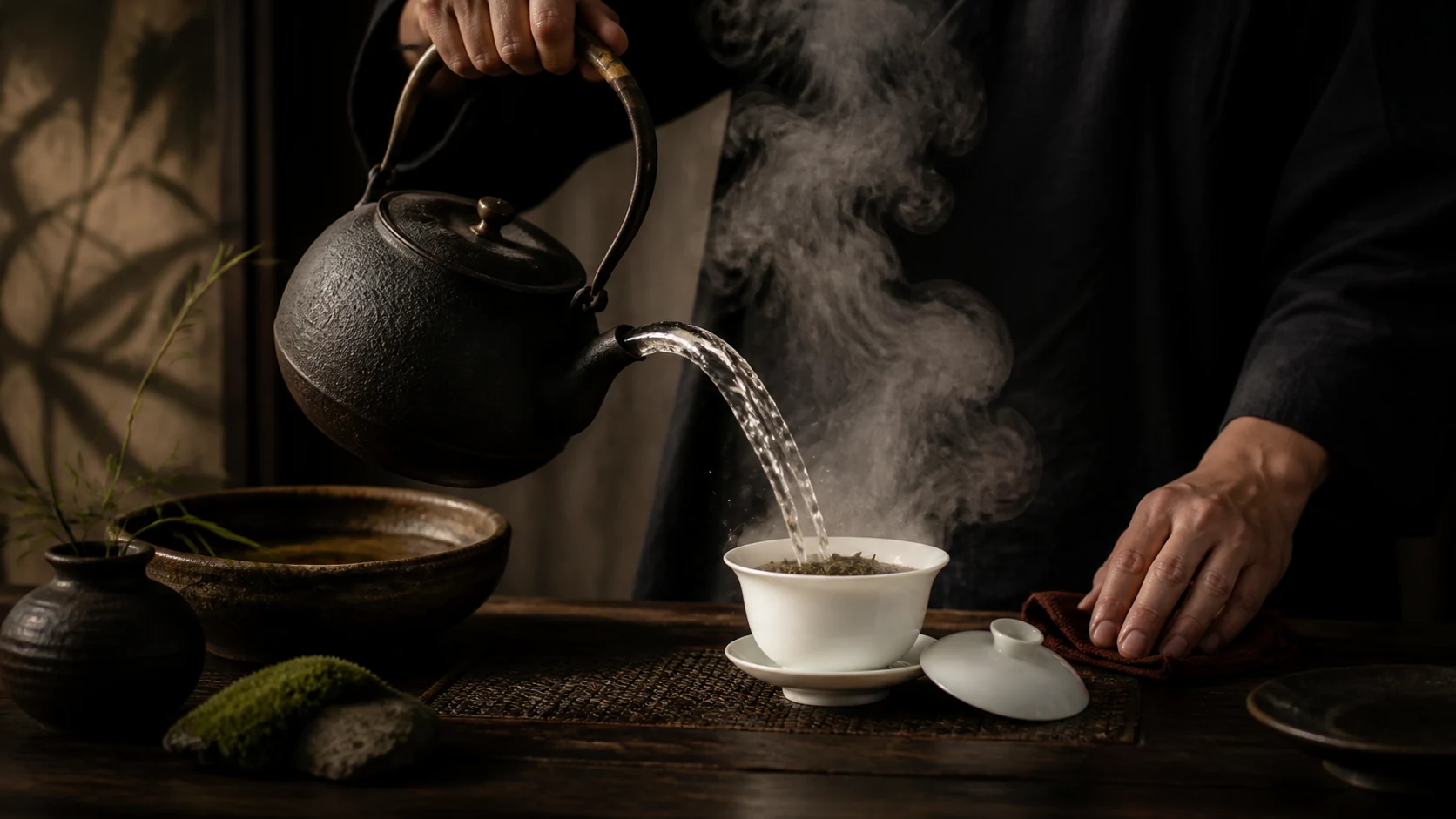
三
Wake the tea
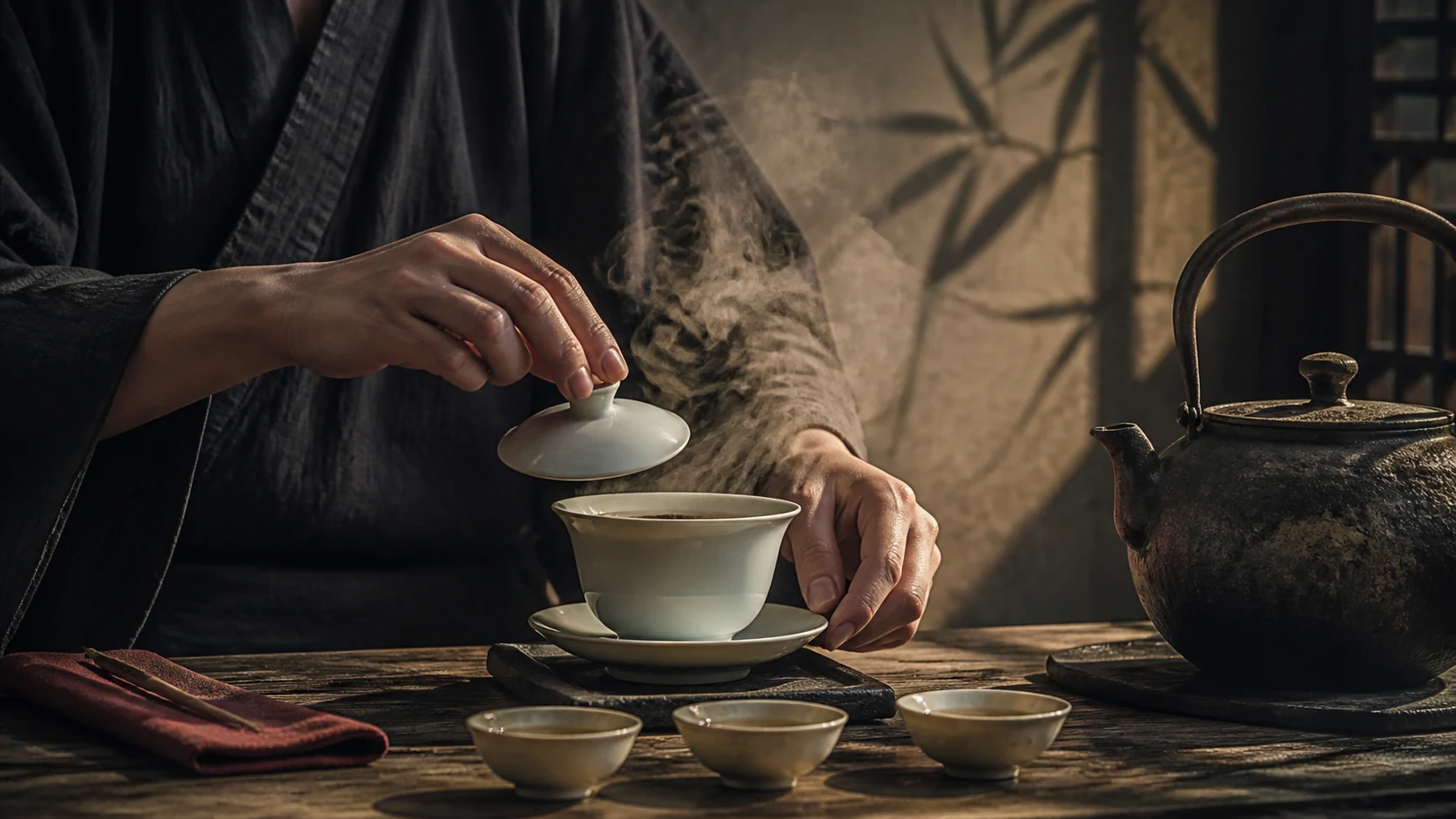
四
Scent
五
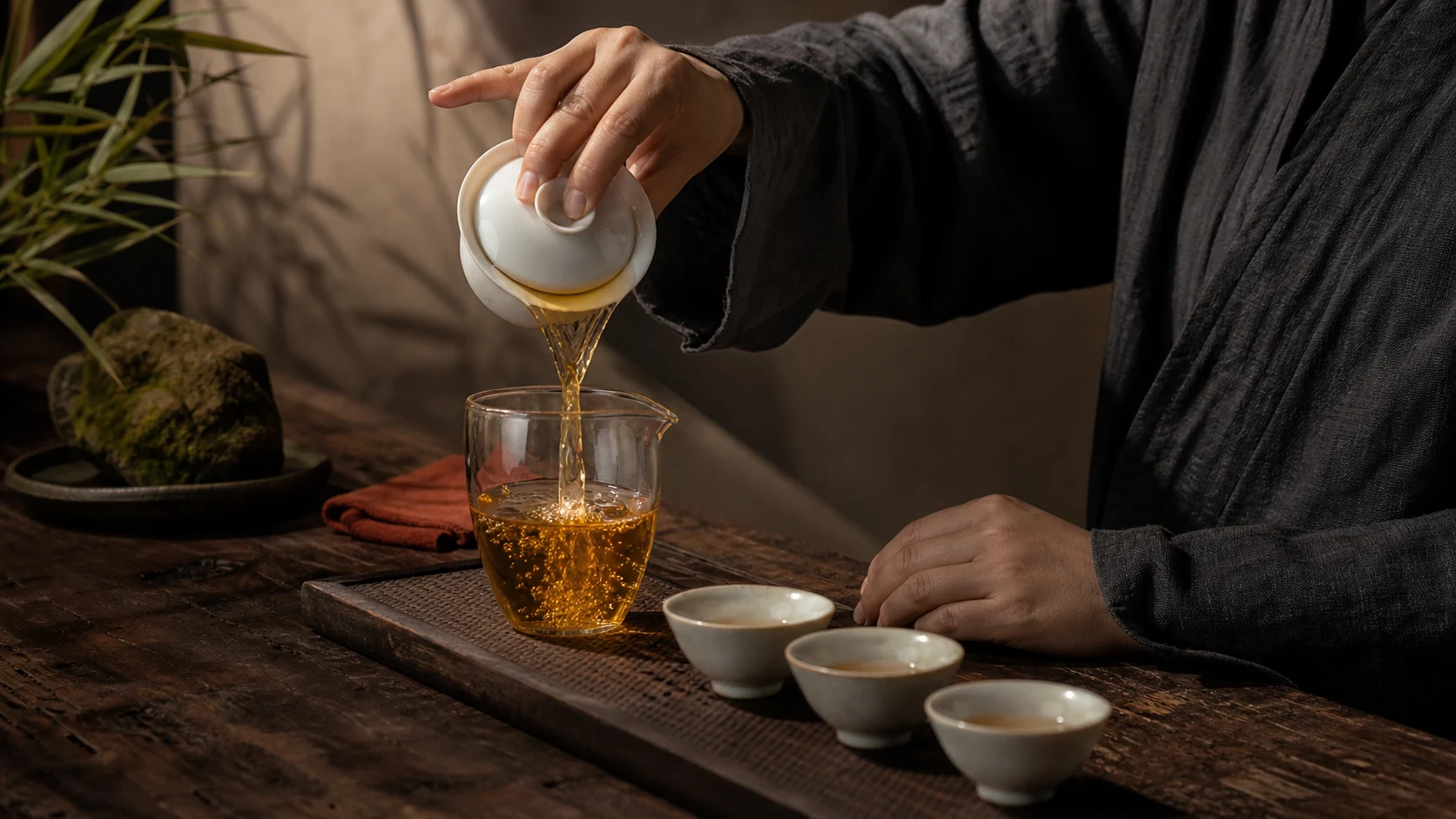
Pour
六
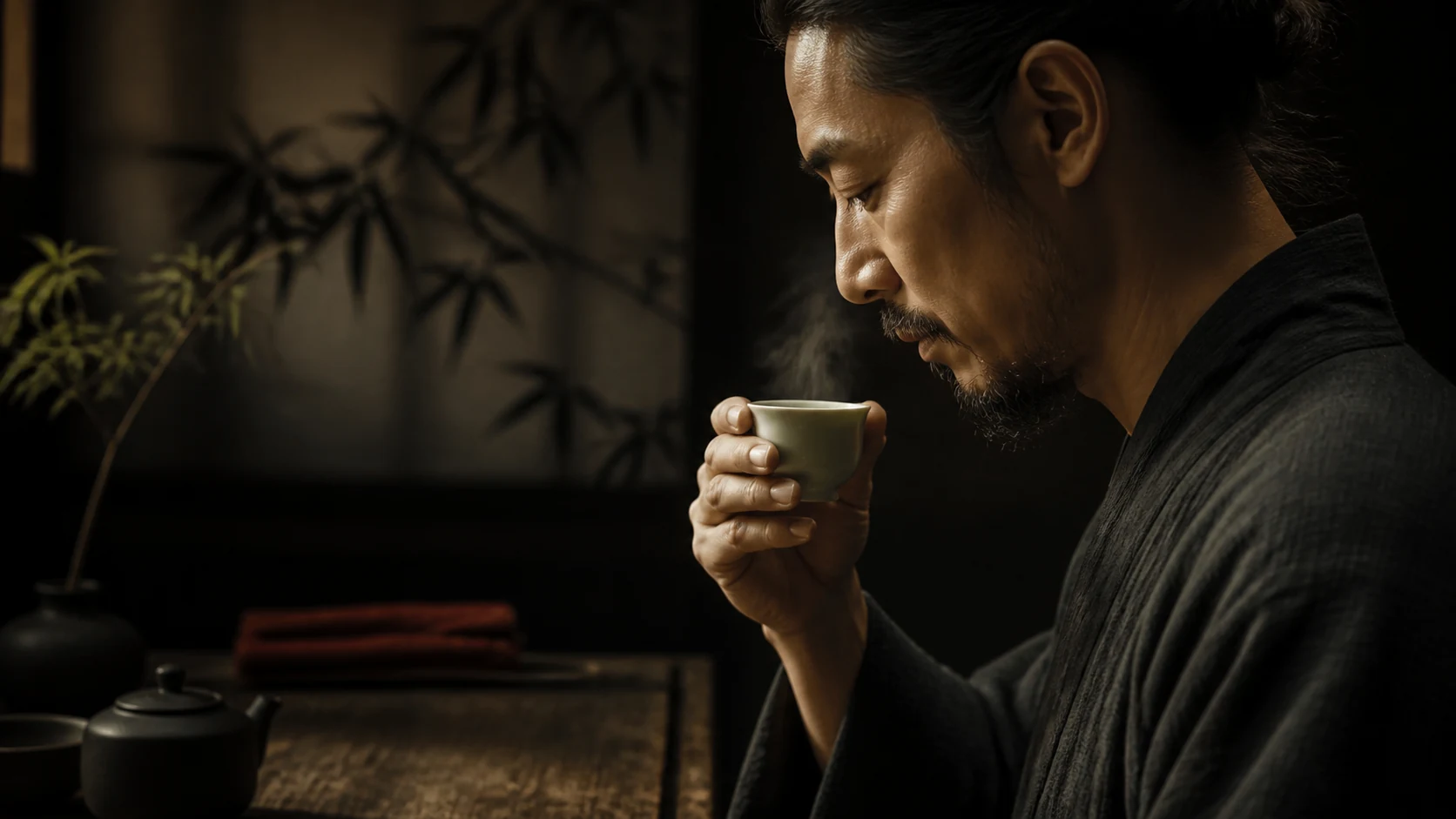
Drink slowly
第一道 First
Warm the vessels
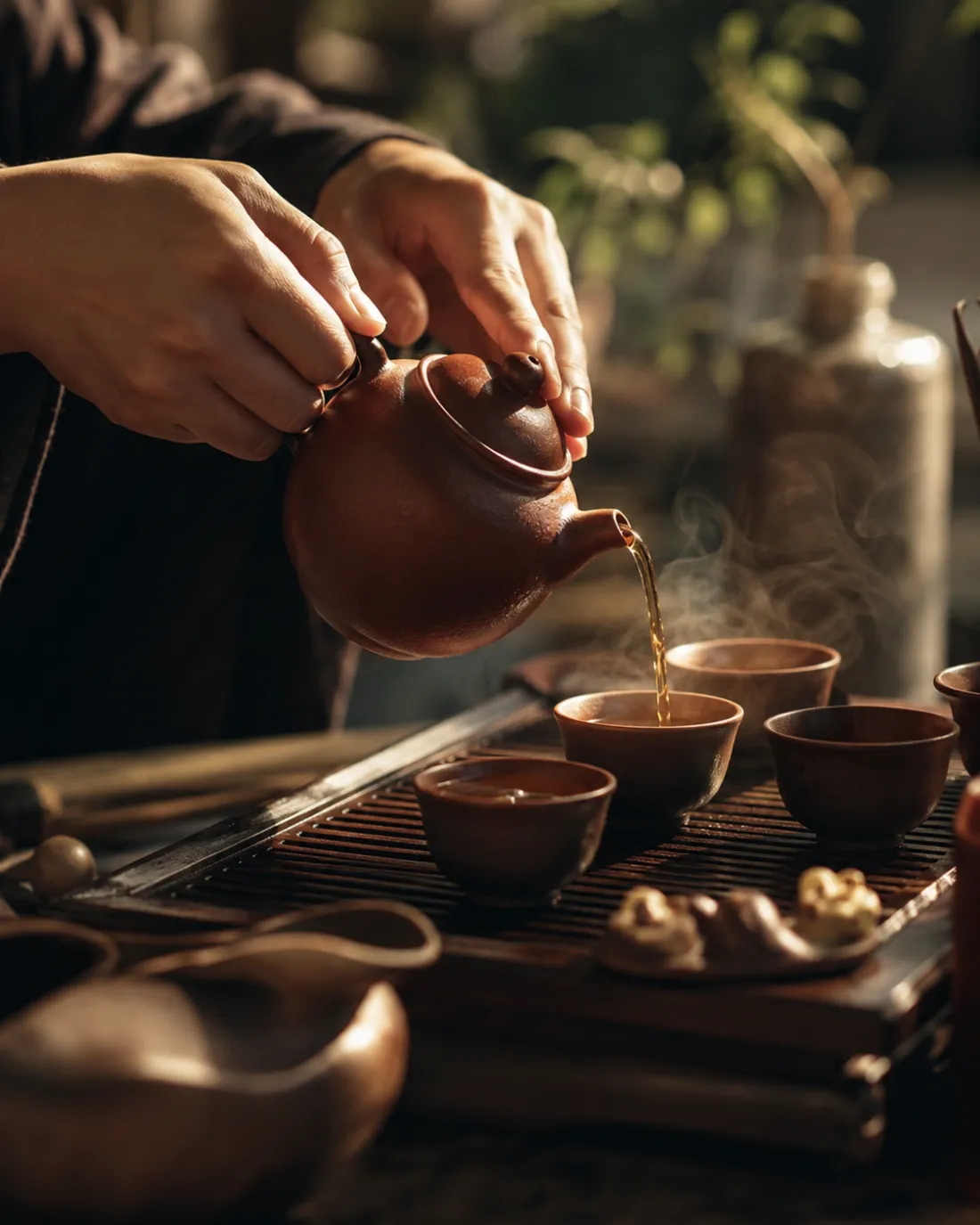
Before any leaf is touched, boiling water is poured through every piece in turn — into the brewing vessel, out through the fairness pitcher, around each cup, and away. Nothing from this pour is kept.
A cold vessel steals heat from the first infusion, and the first infusion sets the tone for everything that follows it. Ceramic that has already been brought up to temperature holds it steady instead of dropping away mid-steep. The pour does two other things at once: it rinses the ware in full view of the guest, which is a courtesy as much as a technique, and the rising steam clears whatever scent the last tea left behind in the pot.
第二道 Second
Place the leaf
Dry leaf is measured into the warmed vessel — traditionally tipped from a curved bamboo scoop, 茶則, so that it is looked at before it is used — and the lid is closed over it for a moment.
Guests are shown the dry leaf because a great deal of what a tea will do is legible before water reaches it: whether the leaf is whole or broken, tightly rolled or already open, dark from roasting or pale from withering. The pause under the lid is not idle either. Warm ceramic lifts the dry aroma out of the leaf, and raising the lid to smell it is the first real information you get about the cup you are about to drink.
第三道 Third
Wake the leaf
Hot water is poured over the leaf and discarded straight away, without being drunk. It is called 醒茶, waking the tea — or, less accurately, 洗茶, washing it.
The first name is the better one, because this is rehydration rather than cleaning. Leaves that have been compressed, tightly rolled or stored for years are closed up, and closed leaves give unevenly: a little from the outside, nothing from the core. The rinse opens them and warms them, so that the first infusion you actually drink arrives whole instead of thin. It is also the step to leave out. Delicate white and early-picked green have nothing tightly shut to open, and a rinse would simply send the best of them down the drain.
第四道 Fourth
Appreciate the aroma
While the tea is steeping or resting, the lid of the gaiwan is lifted and smelled — or, in parts of Fujian and Taiwan, a tall 聞香杯 aroma cup is filled, emptied into the drinking cup, and the empty vessel smelled instead.
This is not a preface to the ritual; it is a large part of what is being tasted. Most of what people call flavour is smell arriving from behind the palate, and Chinese practice makes that explicit by putting the scent on a separate object so it can be attended to on its own, unhurried, before anything is swallowed. It has a second effect its practitioners rarely mention. It costs about thirty seconds, and those thirty seconds are what stop the session becoming a drink.
第五道 Fifth
Pour
The infusion is decanted out of the brewing vessel completely — not most of it, all of it — usually through a small strainer into the fairness pitcher, and only then distributed into the cups.
Two problems are solved by one gesture. Leaf sitting in water keeps extracting, so a pot that is not emptied goes bitter on its own while everyone is talking. And the liquor at the bottom of a pot is far stronger than the liquor at the top, so pouring straight into a row of cups hands the first guest something weak and the last guest something harsh. Emptying into a single pitcher and filling every cup from that makes them identical — which is exactly what 公道, fairness, is naming.
第六道 Sixth
Drink slowly
Small cups, taken in two or three sips, refilled again and again from the same leaf across a session rather than replaced with a fresh pot.
The cups are small deliberately. A small cup cools quickly enough to drink at once, it concentrates the aroma under the nose, and it breaks the session into many short returns instead of one long draught. Good leaf also changes as it goes: the second and third infusions are usually the fullest, and the later ones give up a sweetness the early ones held back, so what you are drinking is a sequence and not a cup. The last movement asks nothing at all of you, which is the part most people find hardest.
03 / 13
器 · The Vessels
A table can be filled with equipment. It does not need to be. Almost everything in the six movements can be done with a lidded bowl, a pot and a pitcher — and two of those three are optional.
沖泡之器 · Two of them brew, and differ by one property
公道杯 Fairness pitcher 不沖泡,只承接。Off the axis entirely — the pitcher does not brew, it receives.
判Judging
Three parts — bowl, lid and saucer. The form was standardised under the Ming and Qing and has not needed altering since. Glazed porcelain is non-porous: it adds nothing to the tea and holds nothing back from the next one, which is why it is the vessel used for judging and comparing.
養Seasoning
Unglazed 紫砂 zisha stoneware from Yixing 宜興 in Jiangsu, in use since the Ming turn to loose leaf created a need for a small pot. The clay is slightly porous, so it holds heat evenly and slowly takes on the character of what is brewed in it.
均Evening out
The newest of the three and the most quietly useful. Every infusion is emptied out of the brewing vessel into it before a single cup is filled. The name is literal: gongdao 公道 means fair, even-handed.
全席 · The full table, eleven objects
Everything else that may sit on a tea table, what each object is for, and when in the sequence it is picked up. None of it is required to make good tea. All of it exists because someone needed it to.
04 / 13
水 · 溫 · 時 — Water, Heat, Time
水Water
Lu Yu put water first among the variables and nobody has since argued him down. Use it fresh and soft, and bring it to the boil 一沸 once.
溫Heat
The direction, not a number: 葉愈經工,愈耐高溫。 the more a leaf has been worked, rolled, roasted or aged, the more heat it will take.
時Time
Early infusions are short — 以秒計,不以分計 seconds, not minutes — and each one after it runs a little longer as the leaf gives up what is left.
首泡最短 · Shortest first 其後漸長 · Longer each time
加葉,或加溫。Add leaf, or add heat.
水停葉上太久。The water simply sat on the leaf too long.
Exact temperatures, leaf weights and steeping times per tea are not published here. They vary by picking and by vessel, and we would rather print nothing than print a figure that has not been checked against the lot in your hands — those parameters require verification.
05 / 13
慢 · Slowly
Warm. Place. Wake. Scent. Pour. Then nothing.
The ritual is the product. The leaf is only what makes it possible.
06 / 13
靜心茶室 · Stillness Mode
靜心茶室
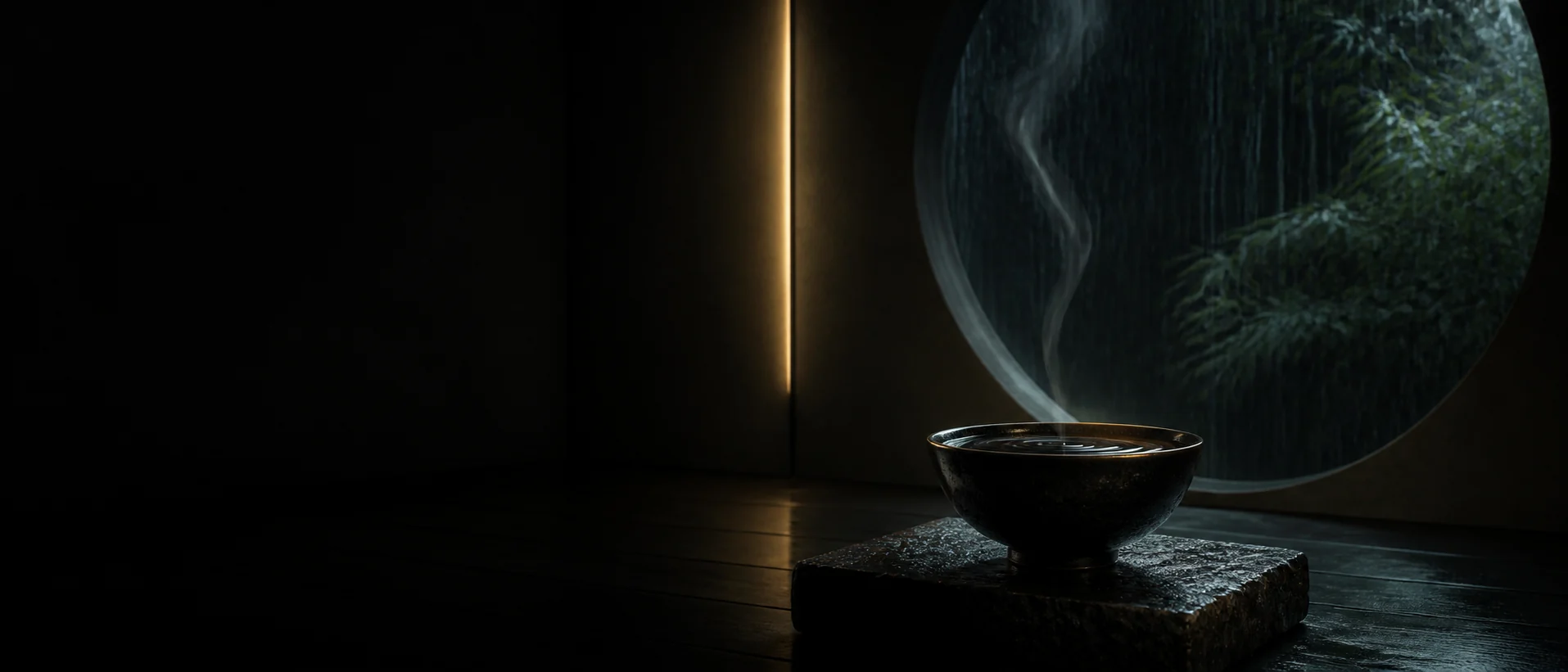
A quiet digital tea room for one minute of breath, bowl sound, and a tea recommendation based on the mood you bring to the cup.
一間安靜的數位茶室,給你一分鐘的呼吸、缽音,以及一份根據你此刻心情而定的茶推薦。
07 / 13
互動靜心室 · Interactive meditation chamber
聆聽一次。呼吸六十秒。
六十秒茶冥想 · 60-second tea meditation
1:00
Let the first sound mark the beginning. Watch the breath expand and release. Return to the cup before returning to the day.
讓第一聲響標記開始。看著呼吸的展開與釋放。在回到日常之前,先回到這杯茶。
你現在感覺如何? · How are you feeling?
建議茶款 · Recommended tea
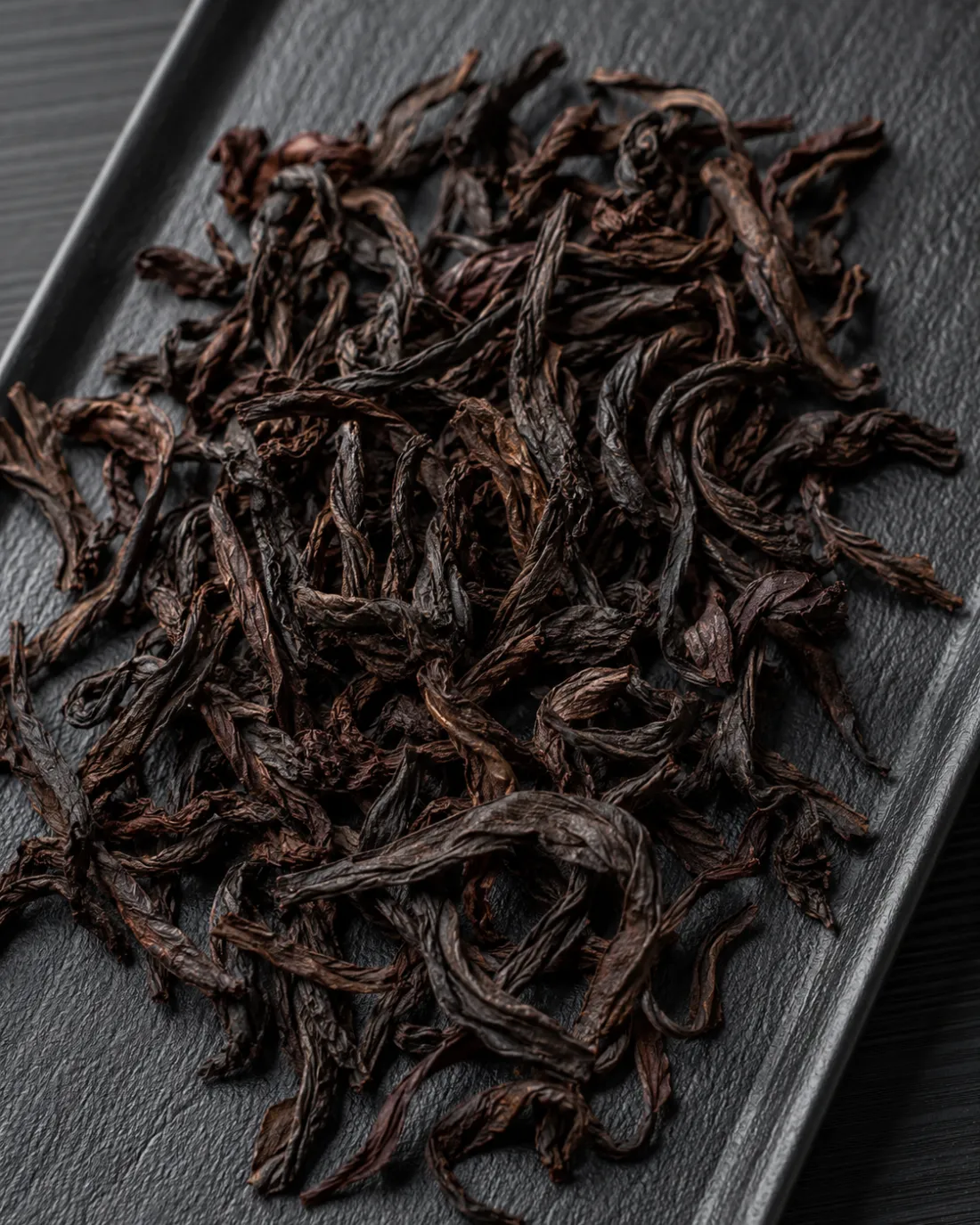
武夷岩茶 Wuyi Rock TeaMineral warmth and roasted depth for returning attention to the body.
礦質般的溫暖與焙火的深度,讓注意力回到身體。
08 / 13
這一分鐘由甚麼組成 · What the minute is made of
A single bowl tone gives the mind a threshold.
一聲缽音,為心靈標記一道門檻。
A quiet pulse marks each inhale and exhale for sixty seconds.
六十秒間,一個安靜的脈動標記著每一次吸氣與呼氣。
The recommendation is not an upsell. It is a ritual pairing for the state you arrived in.
這份推薦不是促銷,而是為你此刻的狀態所配對的儀式。
09 / 13
宋室 · The Song Room
宋室
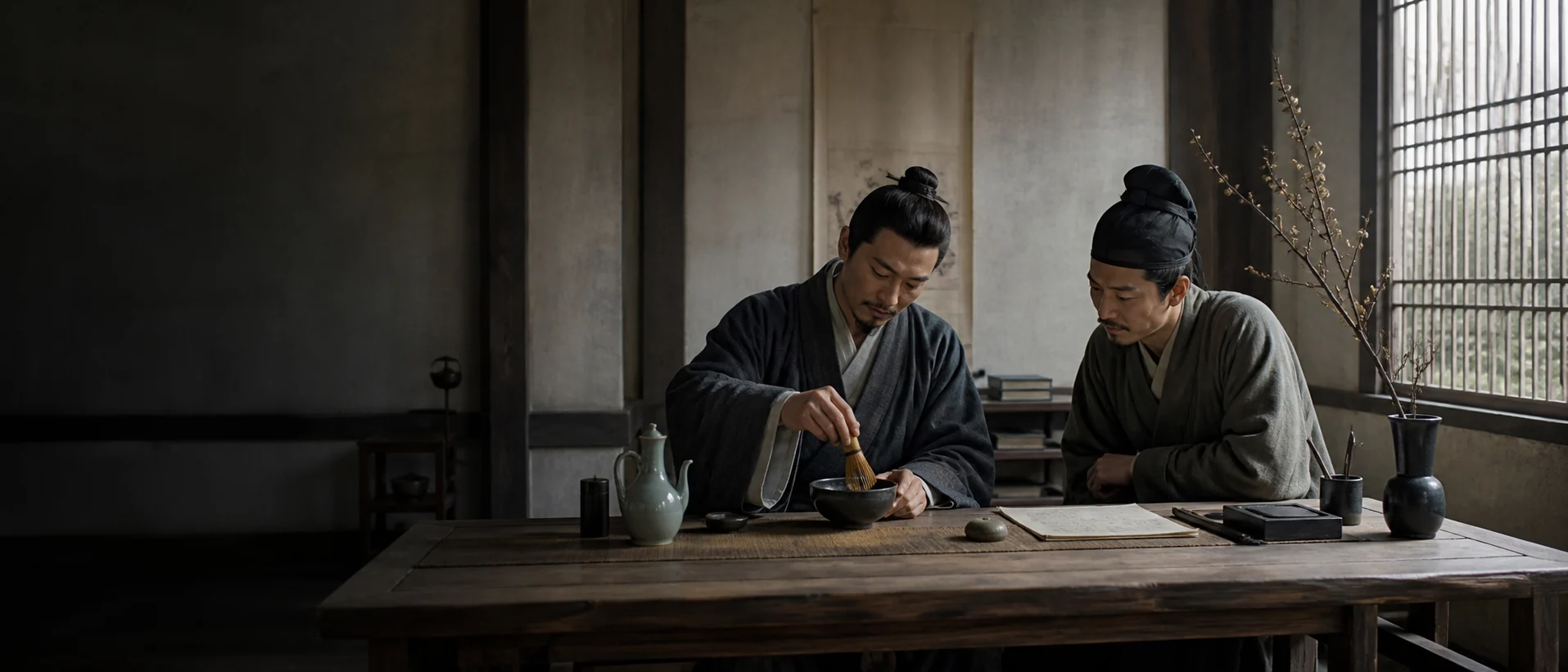
A quiet exhibition on Song dynasty tea aesthetics: foam, dark ceramic, scholar restraint, and the luxury of saying almost nothing.
一場關於宋代茶美學的安靜展覽:泡沫、黑釉瓷器、文人的克制,以及近乎無言的奢侈。
10 / 13
展覽主旨 · Exhibition Thesis
克制不是空無,而是專注。
The Song is the one era where the vessel, the tool, the taste, and the written record all argue for the same thing — visible foam — so it gets a room of its own rather than a paragraph in the history scroll.
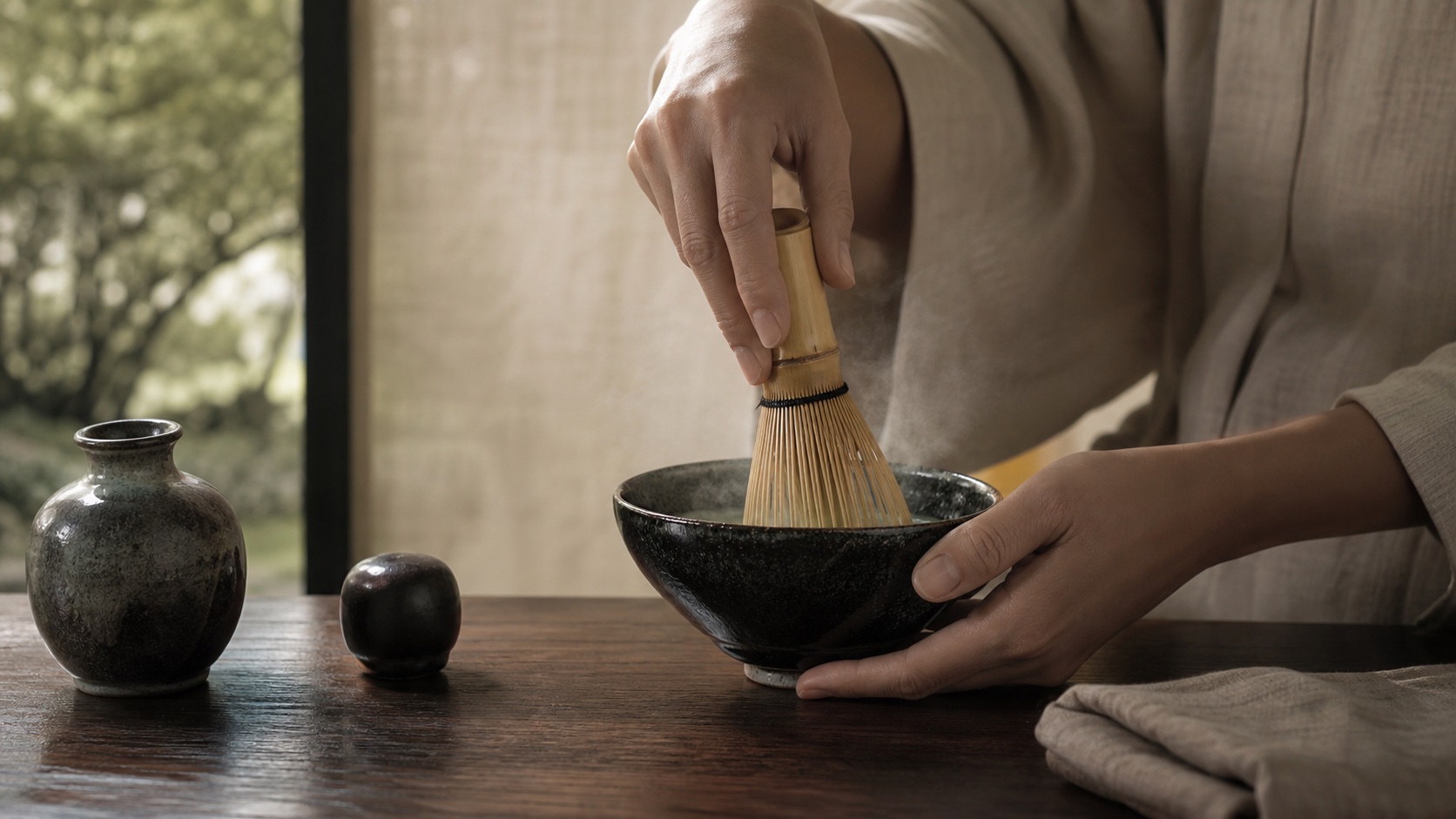
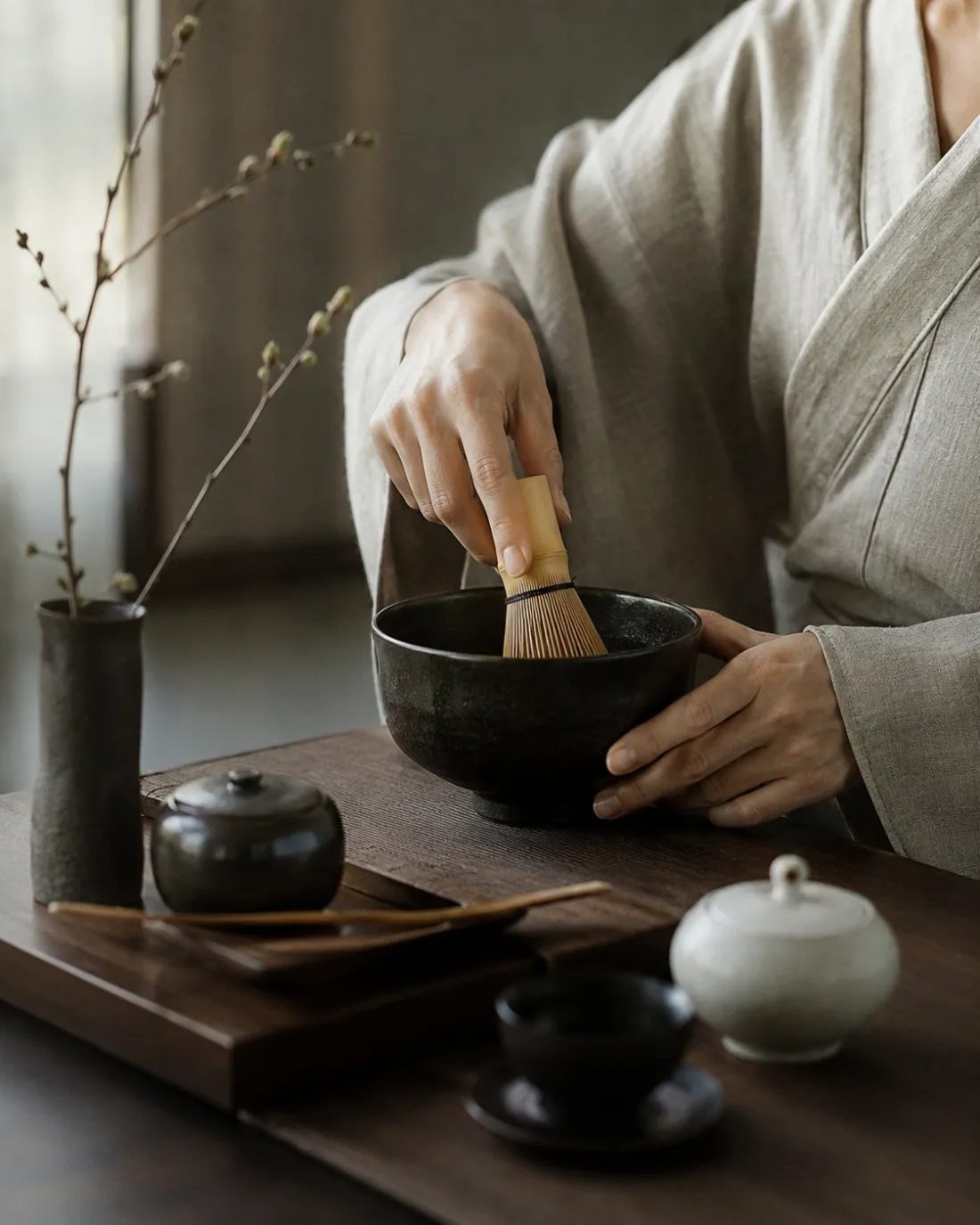
A bamboo whisk worked in a dark tea bowl, raising pale foam from powdered tea. Silent, looping; motion can be paused from the header.
11 / 13
展品 · The Exhibits
01 · Dian Cha
茶末以熱湯擊拂,直至湯花皎白而久聚不散。
Powdered tea is whisked into a pale foam. The act is controlled, quiet, and almost architectural.
茶粉被擊拂成一片淡色的泡沫。這個動作克制、安靜,近乎建築般的精確。
02 · Jian Ware
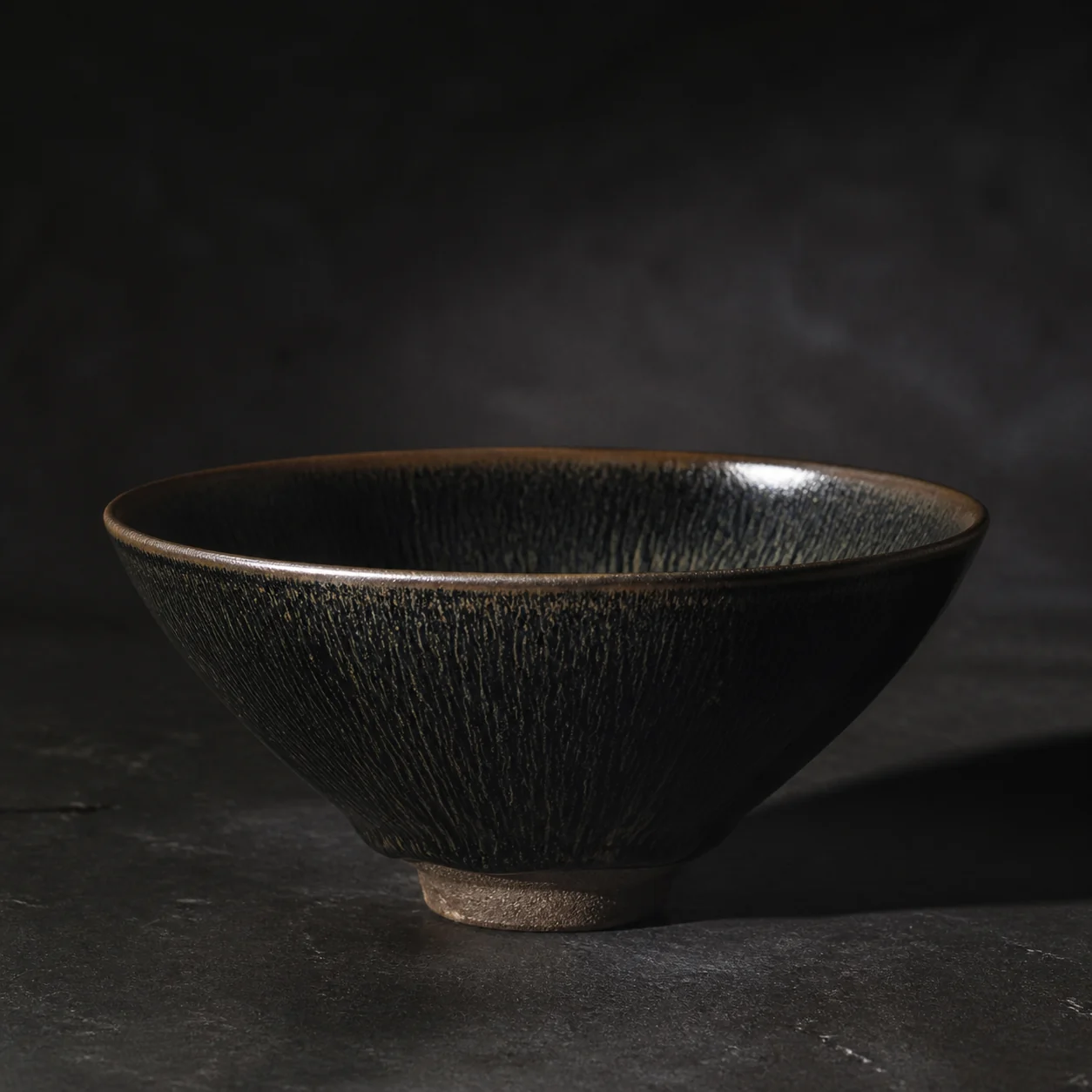
福建所燒鐵釉之盞,其用唯一——以黑襯白,顯其湯花。
Dark bowls reveal light foam. Hare's fur, oil spot, and kiln fire become part of the ceremony.
深色的茶盞映襯出淺色泡沫。兔毫、油滴與窯火,都成為儀式的一部分。
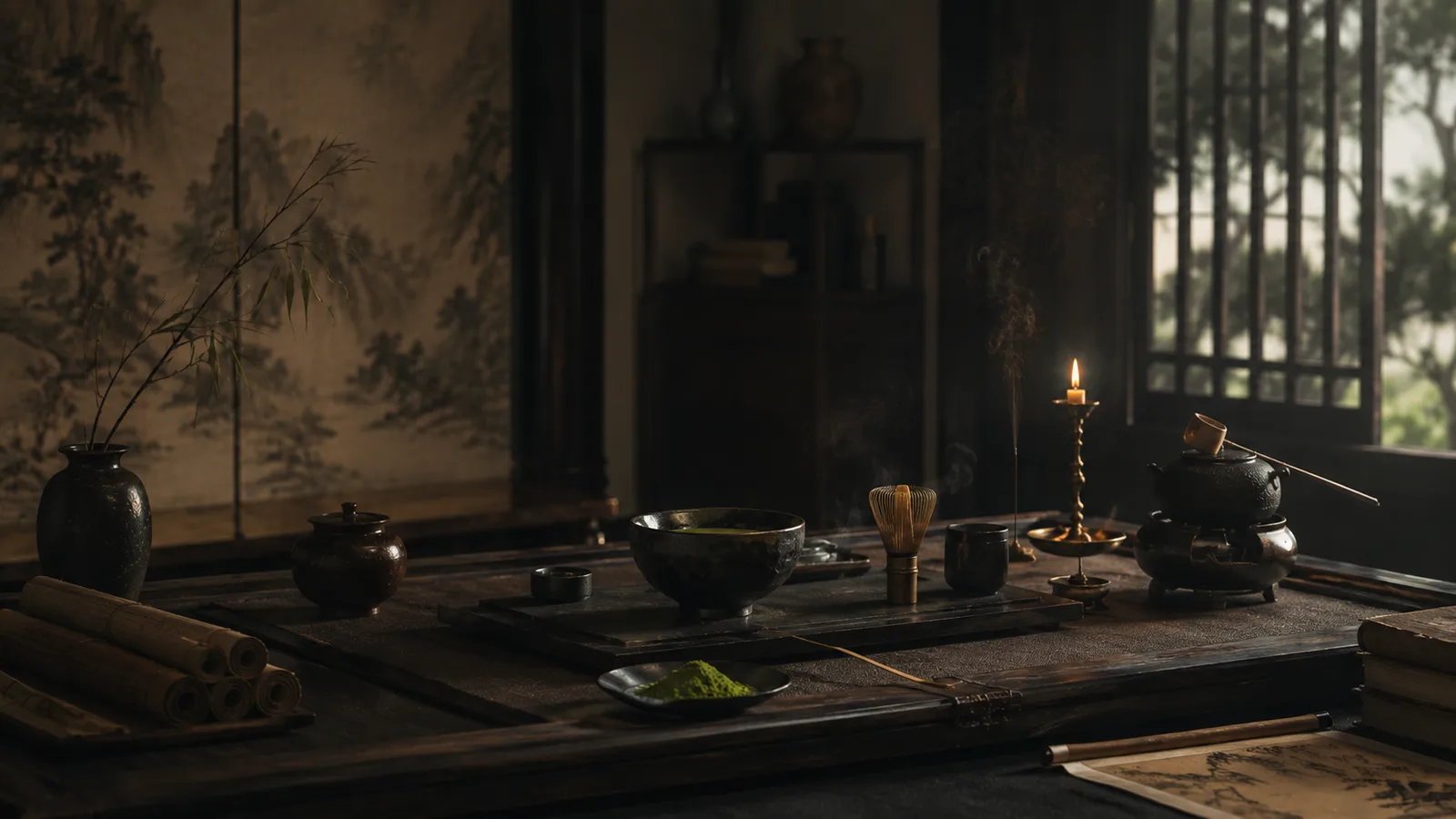
03 · Tea Whisk
竹之節奏,使茶末化為一片瑩然之面。
The whisk is a discipline of rhythm: wrist, breath, texture, then stillness.
茶筅是一種節奏的修行:手腕、呼吸、質地,然後歸於靜止。
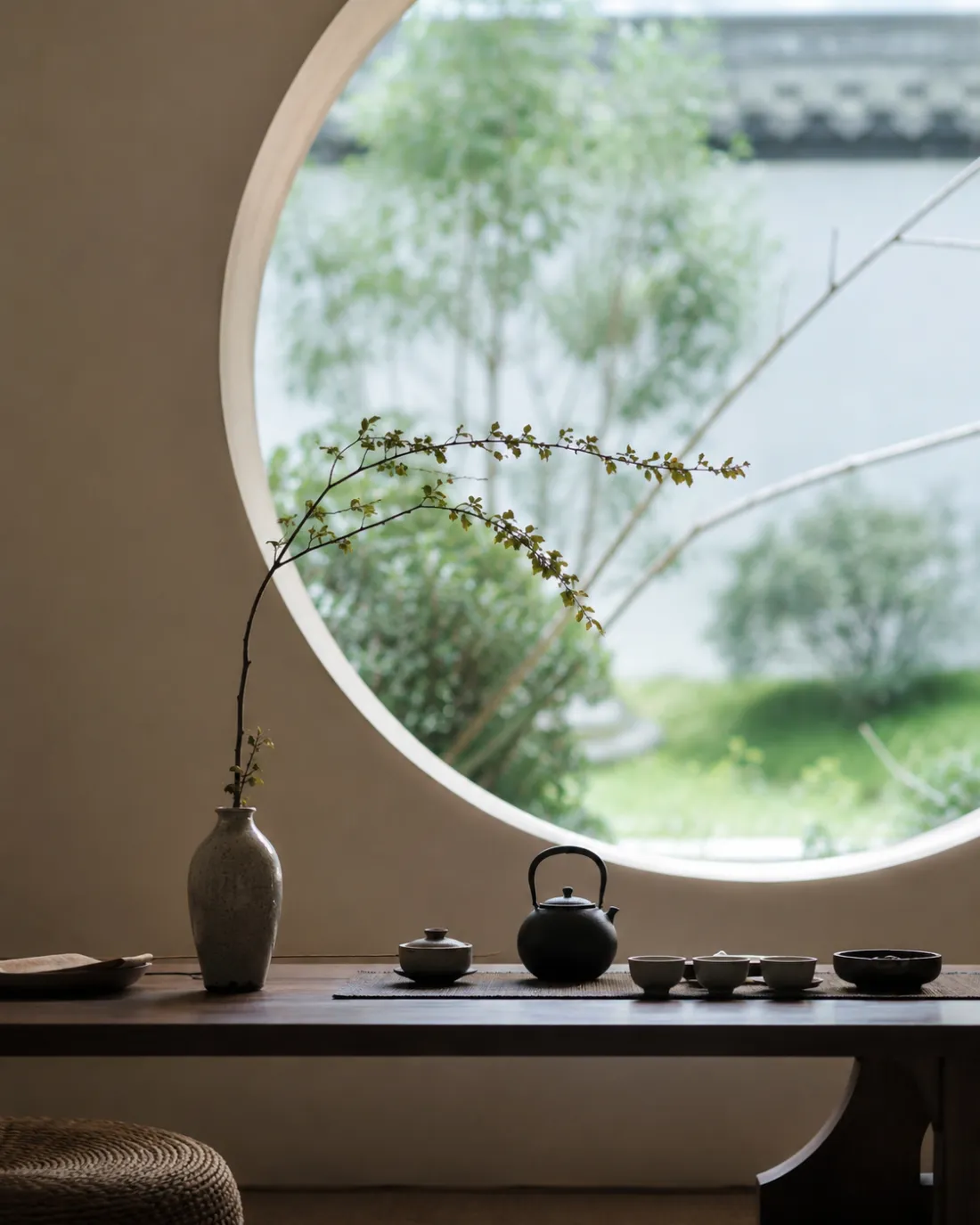
04 · Song Aesthetic
宋人之趣,削去繁飾,所存者唯比例、質地與克制。
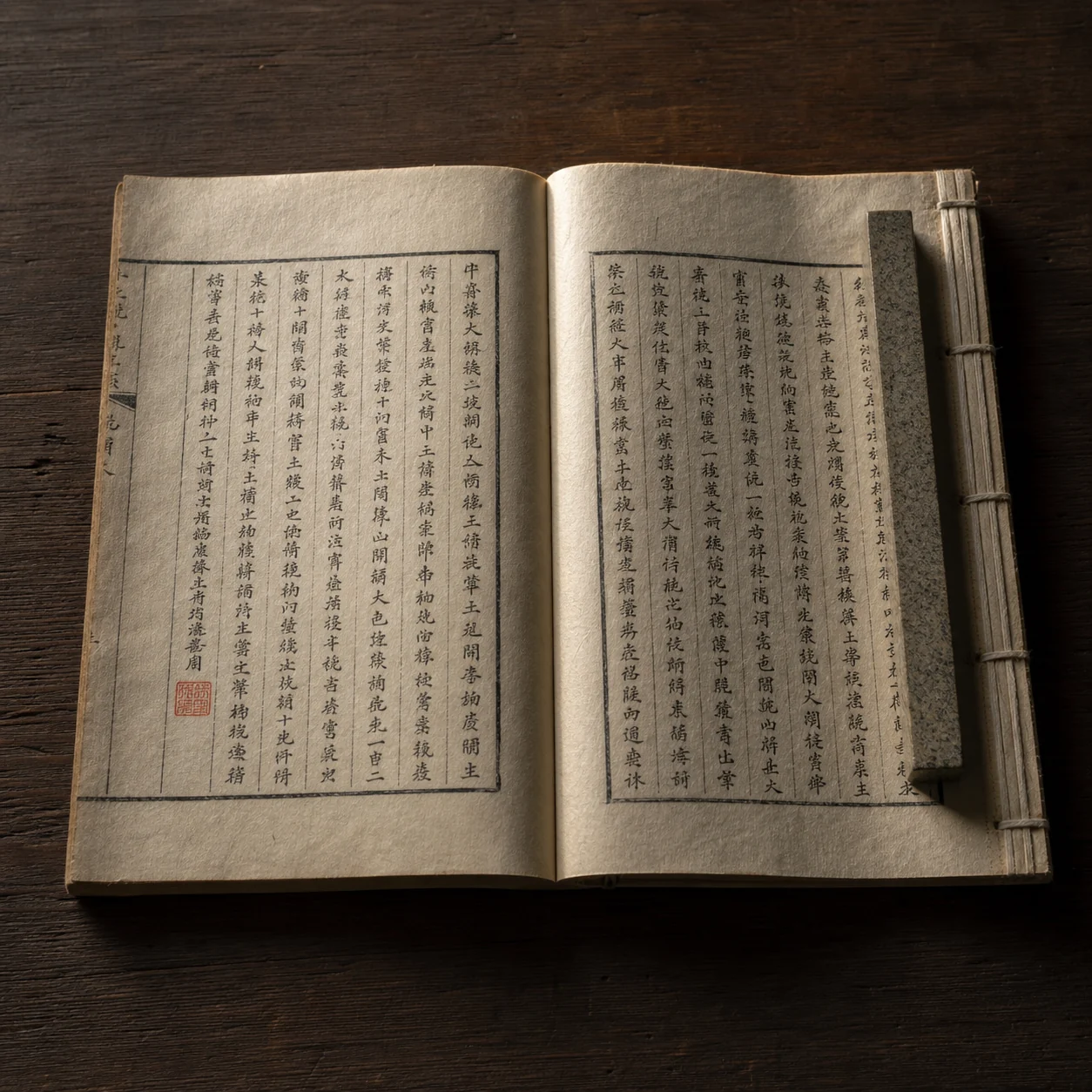
05 · Tea Texts
宋人以文詳載茶事,其著者之中,甚至有一位皇帝。
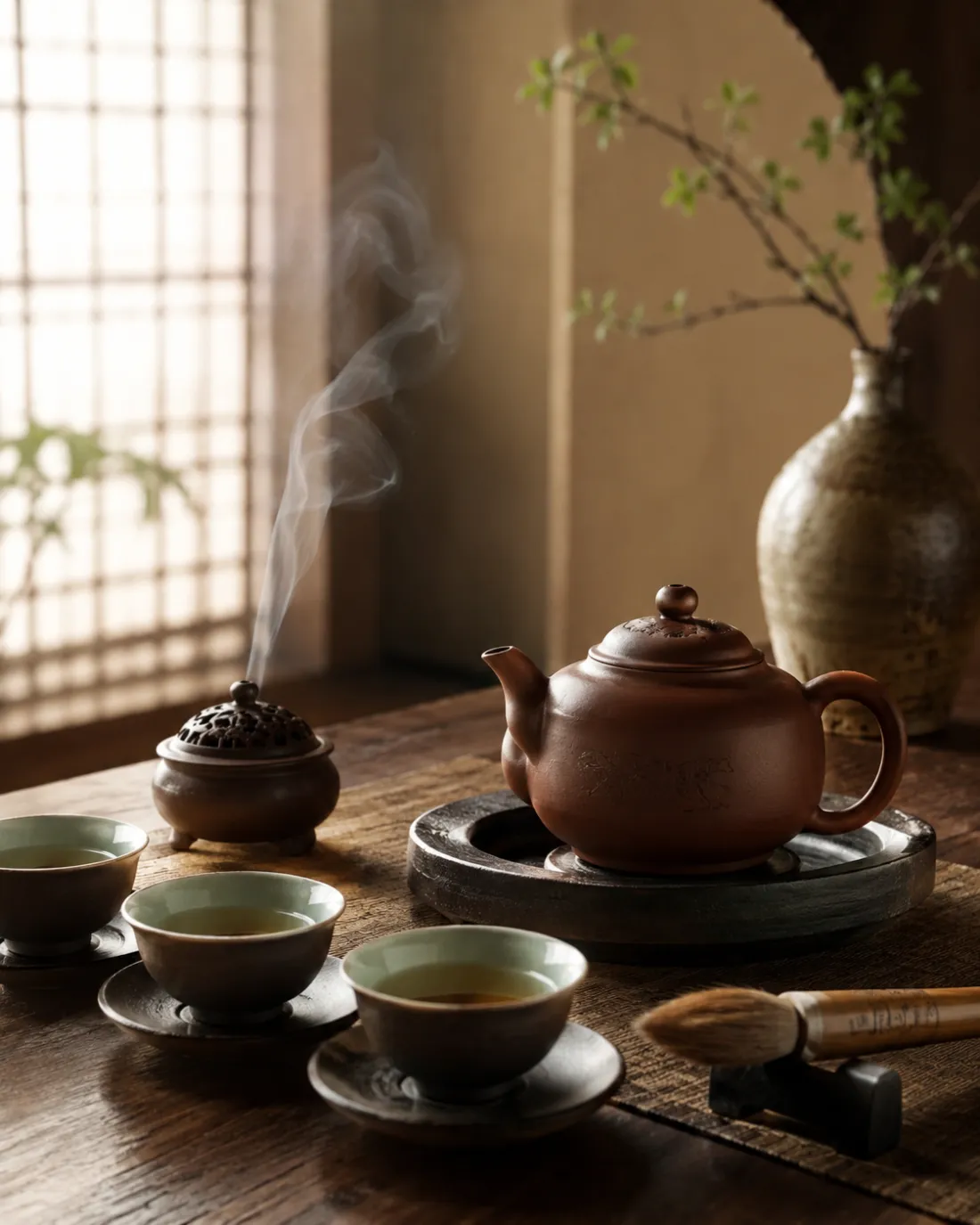
06 · Scholar Studio
茶,屬於墨、紙、硯、詩,以及書桌上那種有分寸的生活。
12 / 13
策展筆記 · Curator Note
宋代的雅致,存在於被省去的部分。
No loud ornament, no theatrical abundance. The room asks visitors to look at a bowl until the bowl becomes weather, time, hand, fire, and breath.
沒有喧鬧的裝飾,沒有戲劇化的豐盛。這個空間邀請訪客凝視一隻茶盞,直到它化為天氣、時間、手、火與呼吸。
13 / 13
延伸閱讀 · Read next
This room is history and aesthetics only. Nothing here is for sale, no price or product specification is stated, and Chazen makes no medical or therapeutic claim for tea.