Chinese tea has been drunk continuously for longer than almost any
other prepared thing on earth. What follows is not a shop shelf. It is
the exhibition — what changed, when, and why the cup in front of you
looks the way it does.
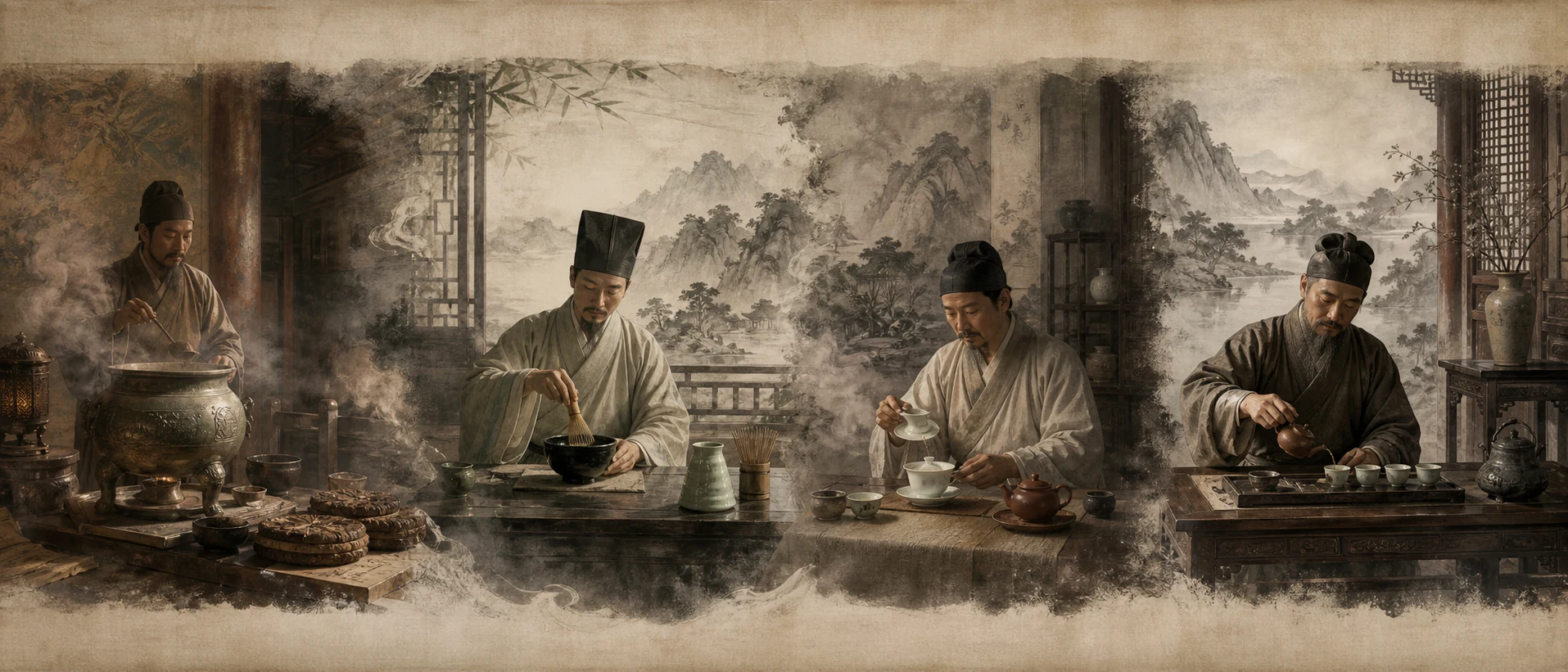
Tea has been boiled, whisked and steeped, and each method belonged to a
different China. Change the vessel and you change the drink — so the
history of tea is really a history of four objects.
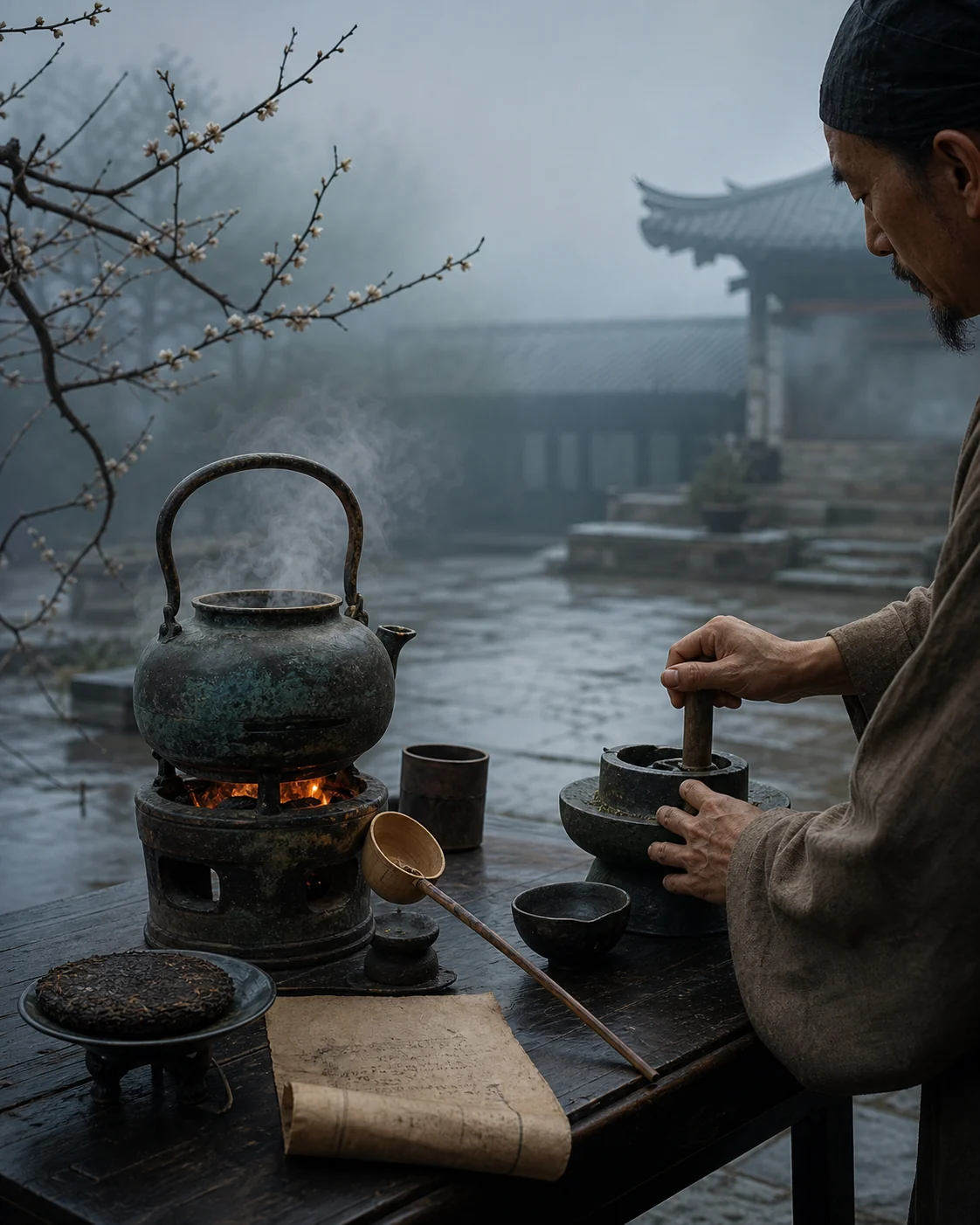
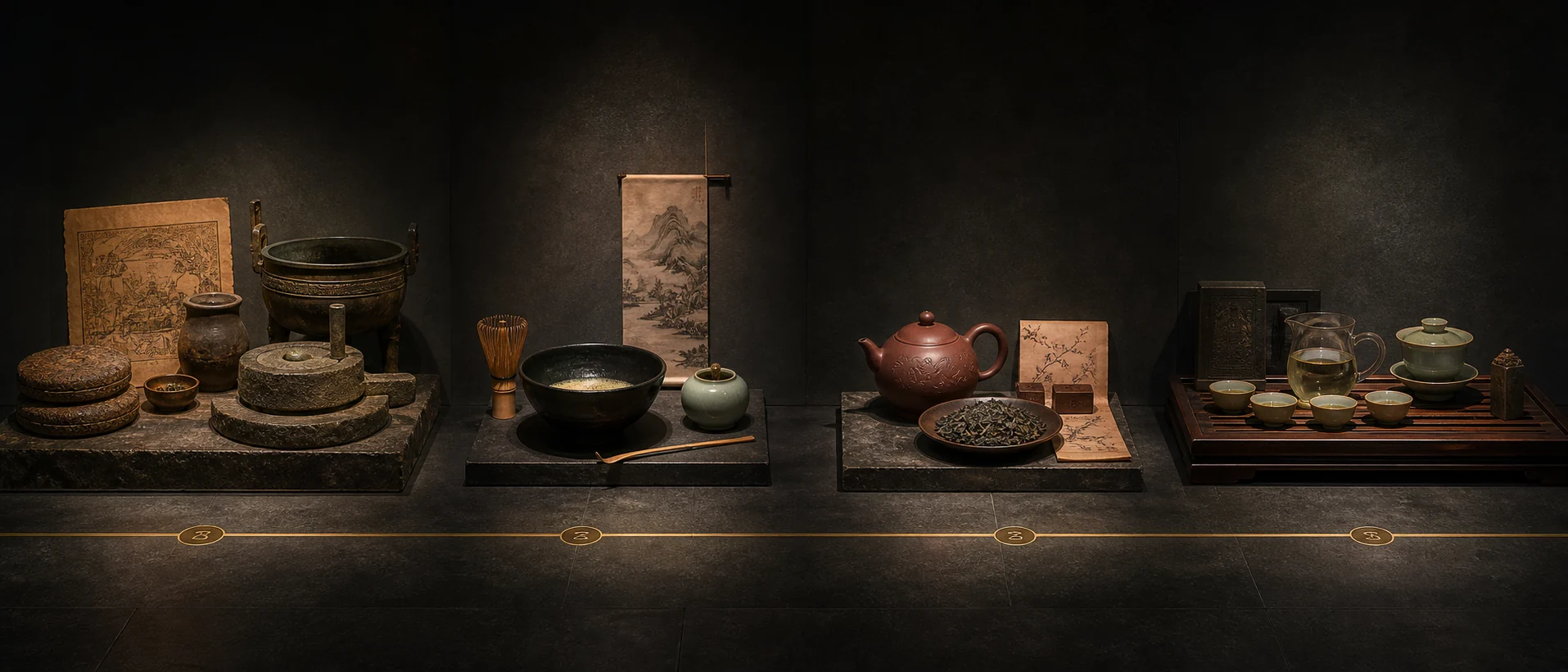
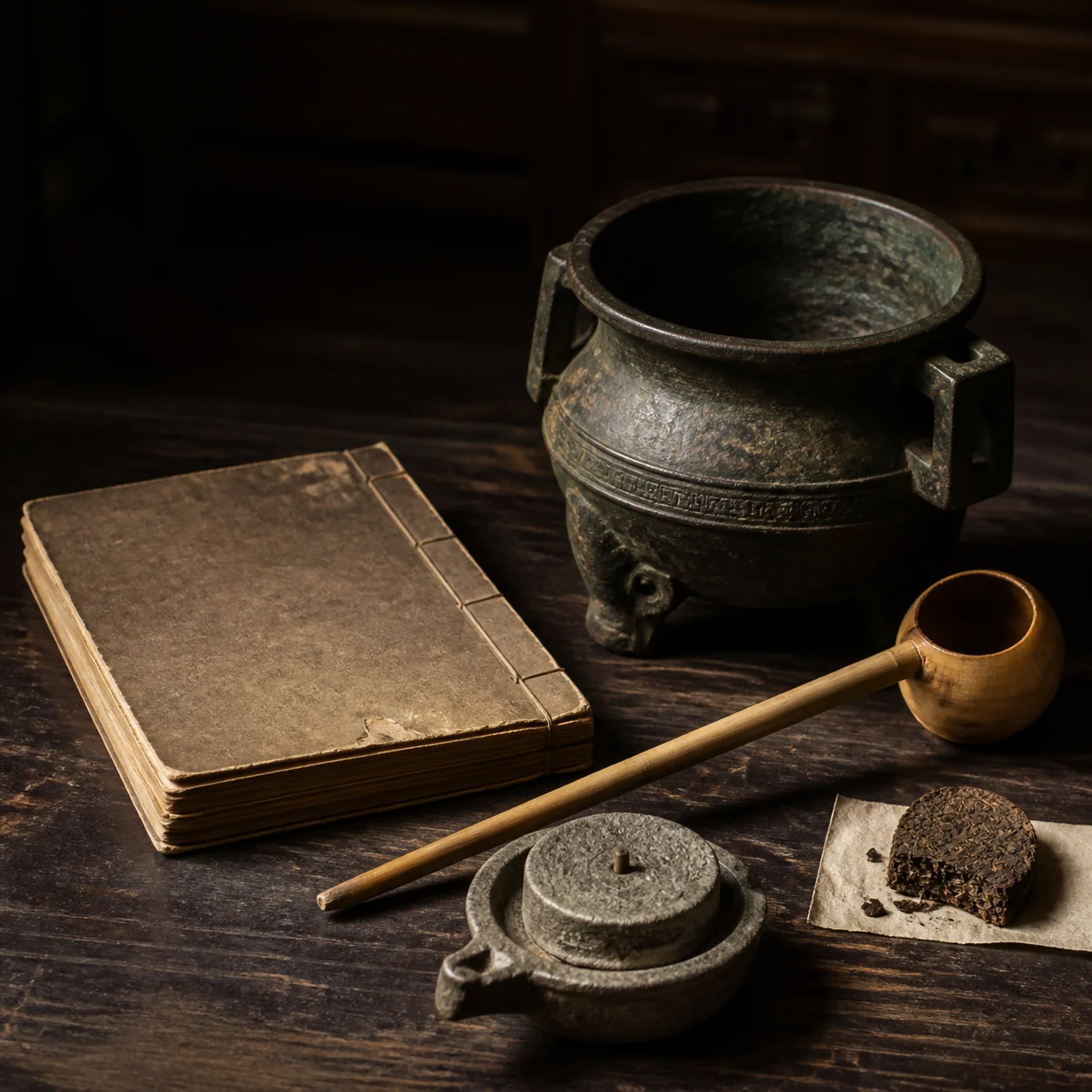
唐Tang618–907鍑與杓 · Cauldron and ladle
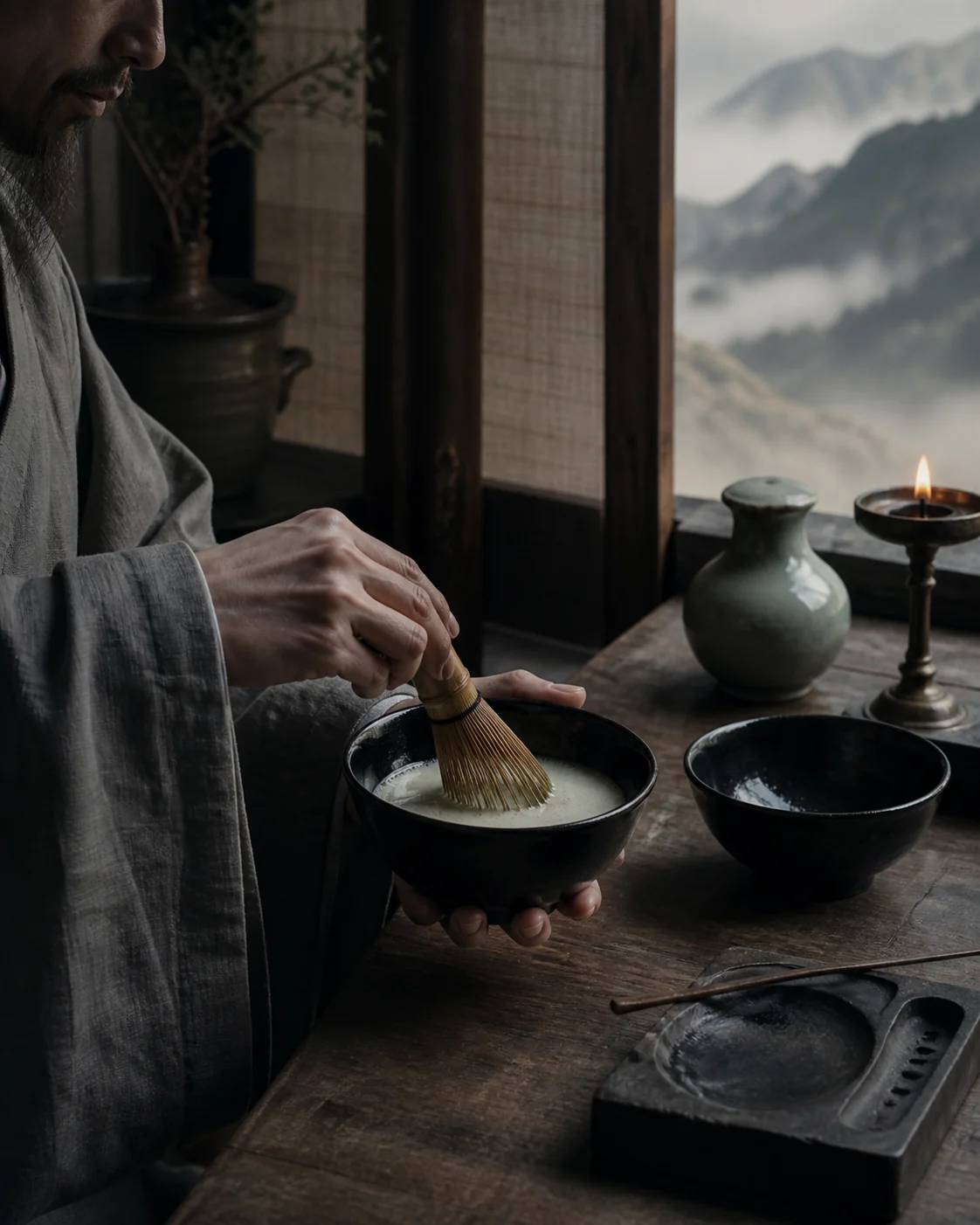
宋Song960–1279建盞與茶筅 · Jian bowl and bamboo whisk
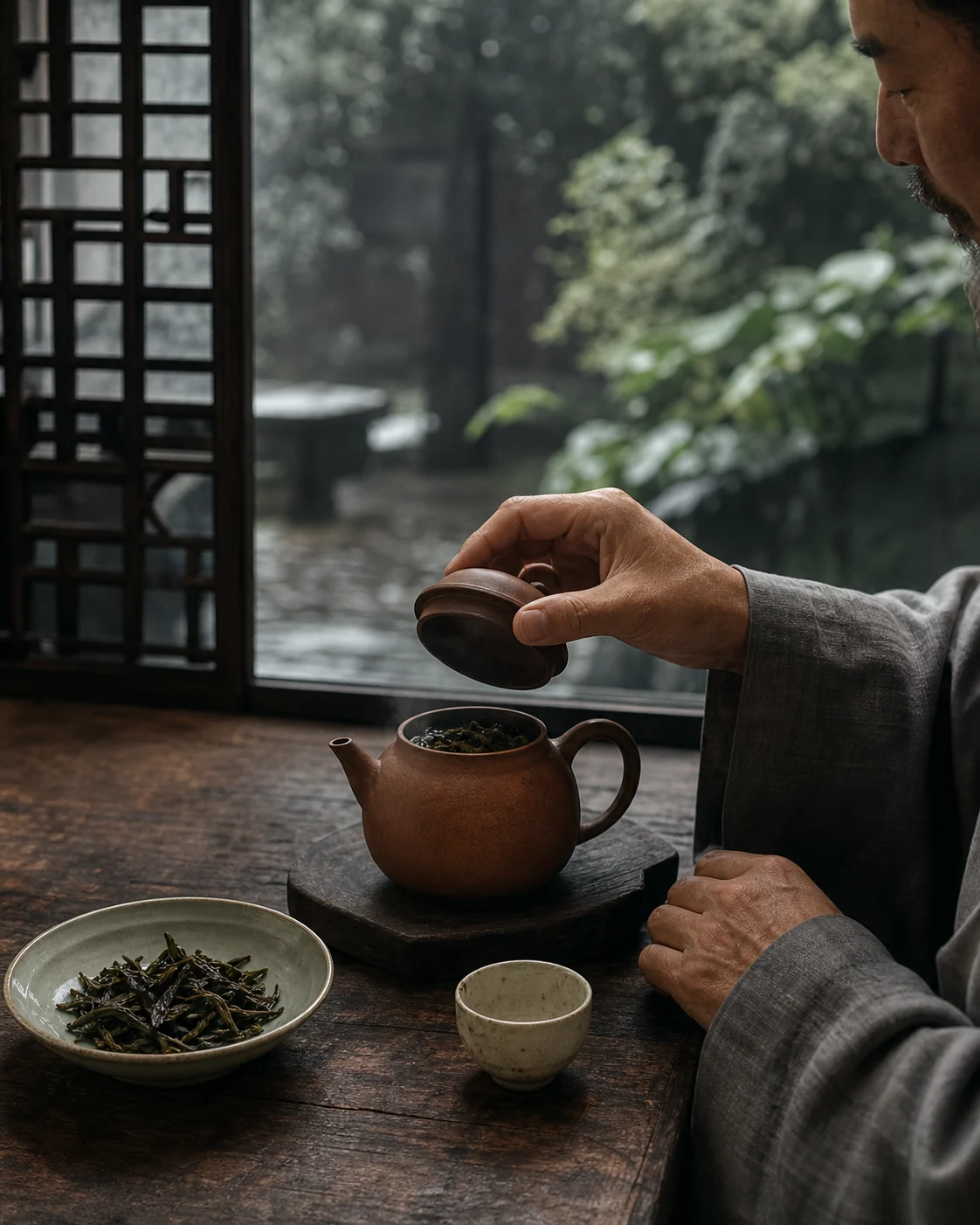
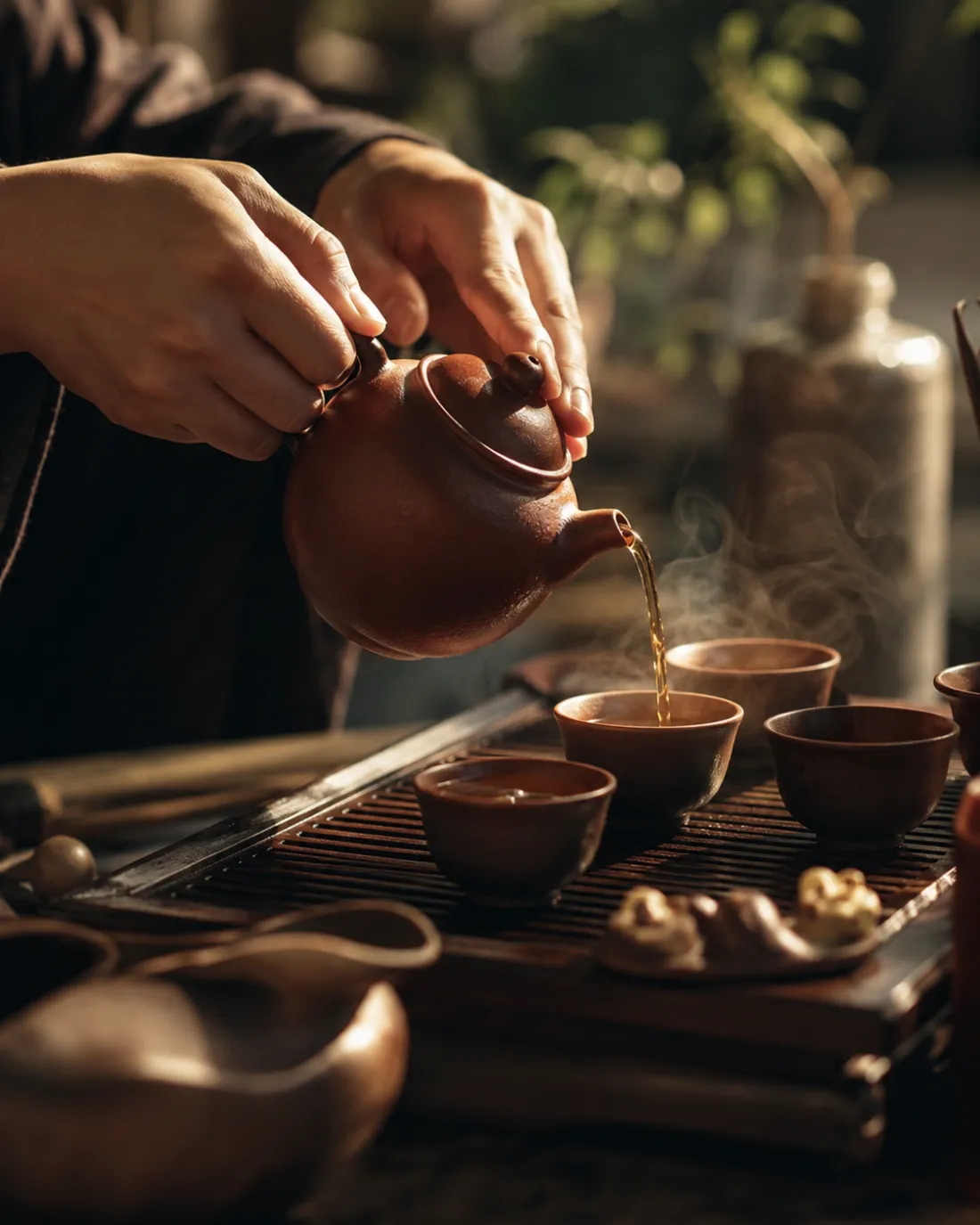
明Ming1368–1644宜興紫砂壺 · Yixing pot
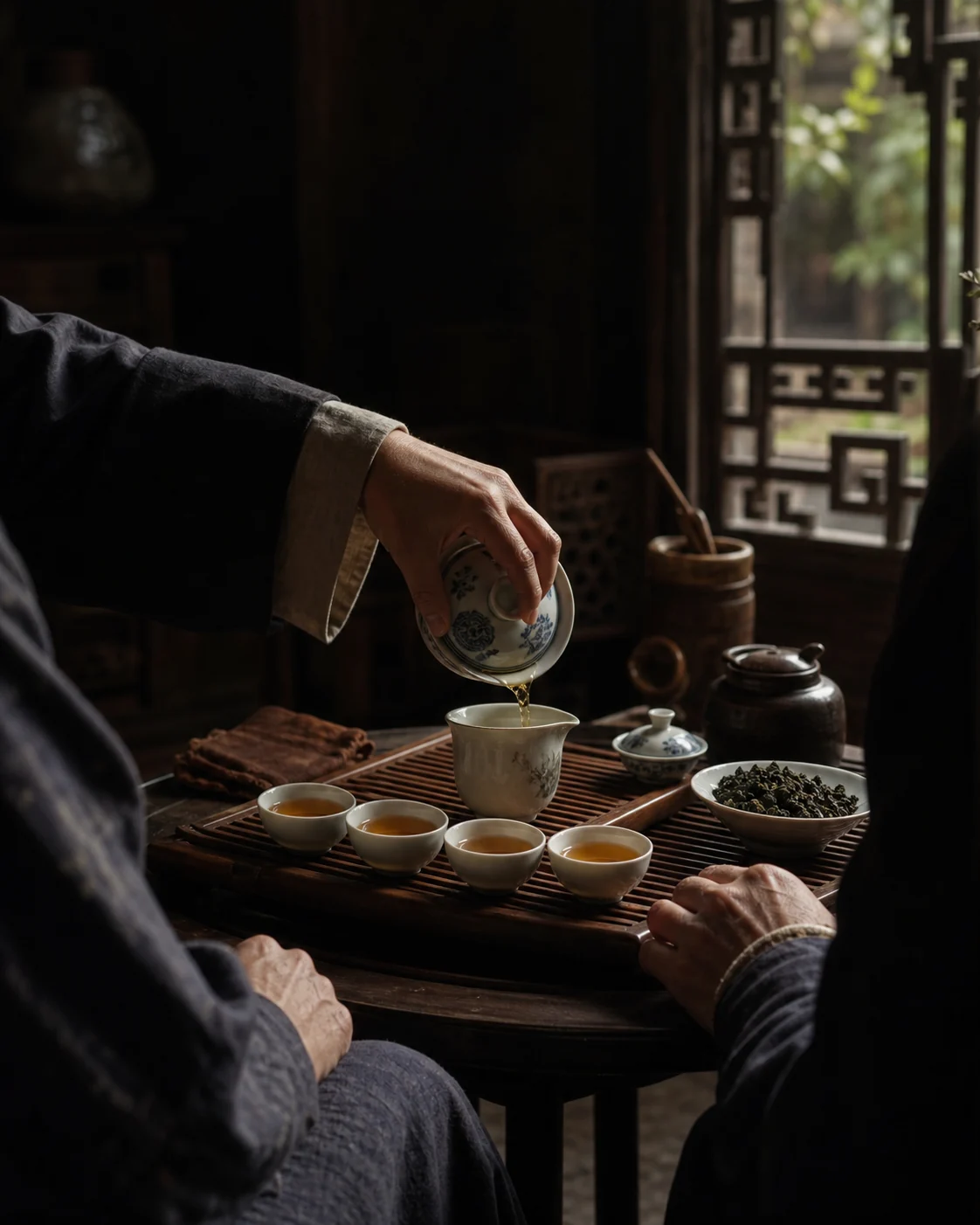
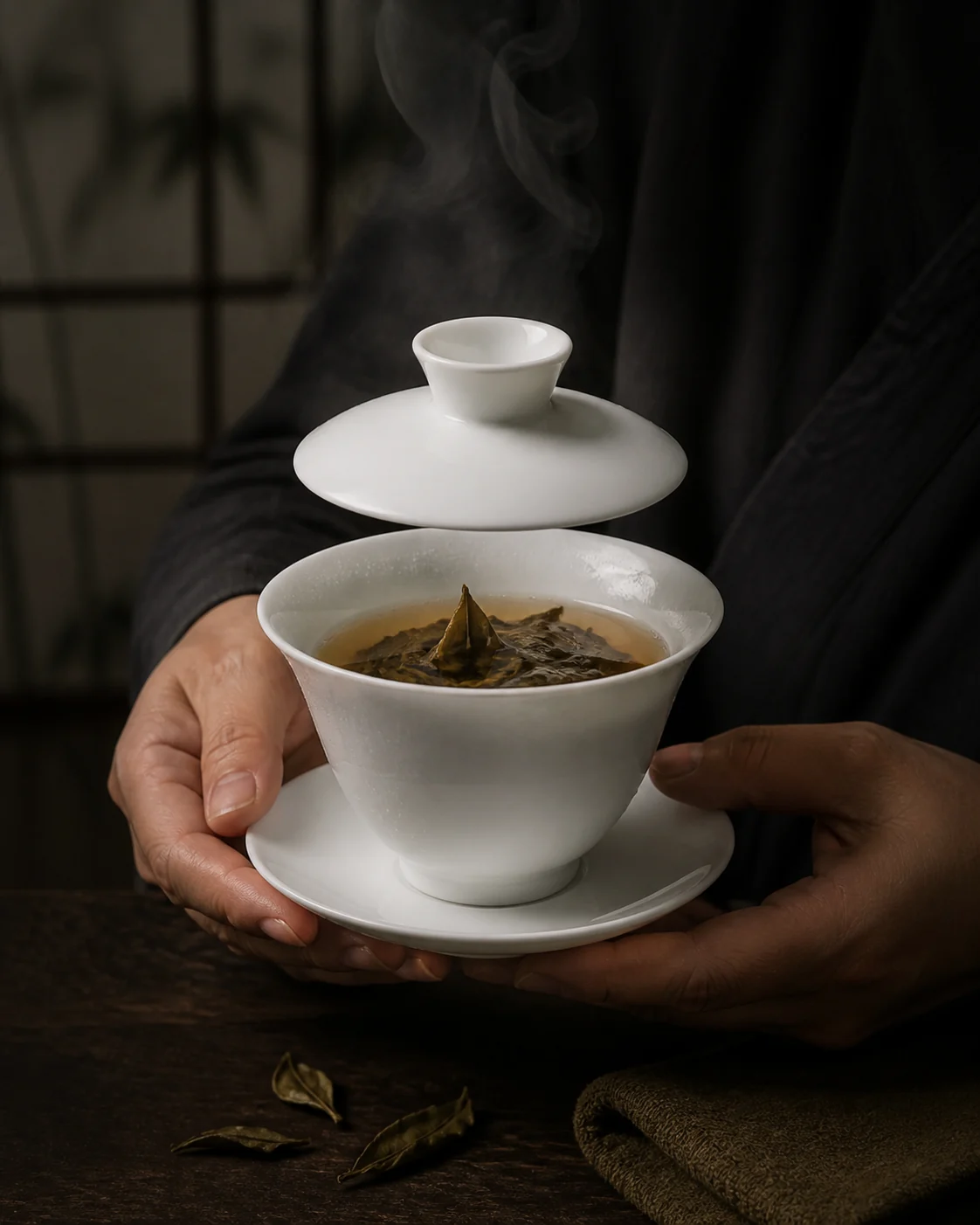
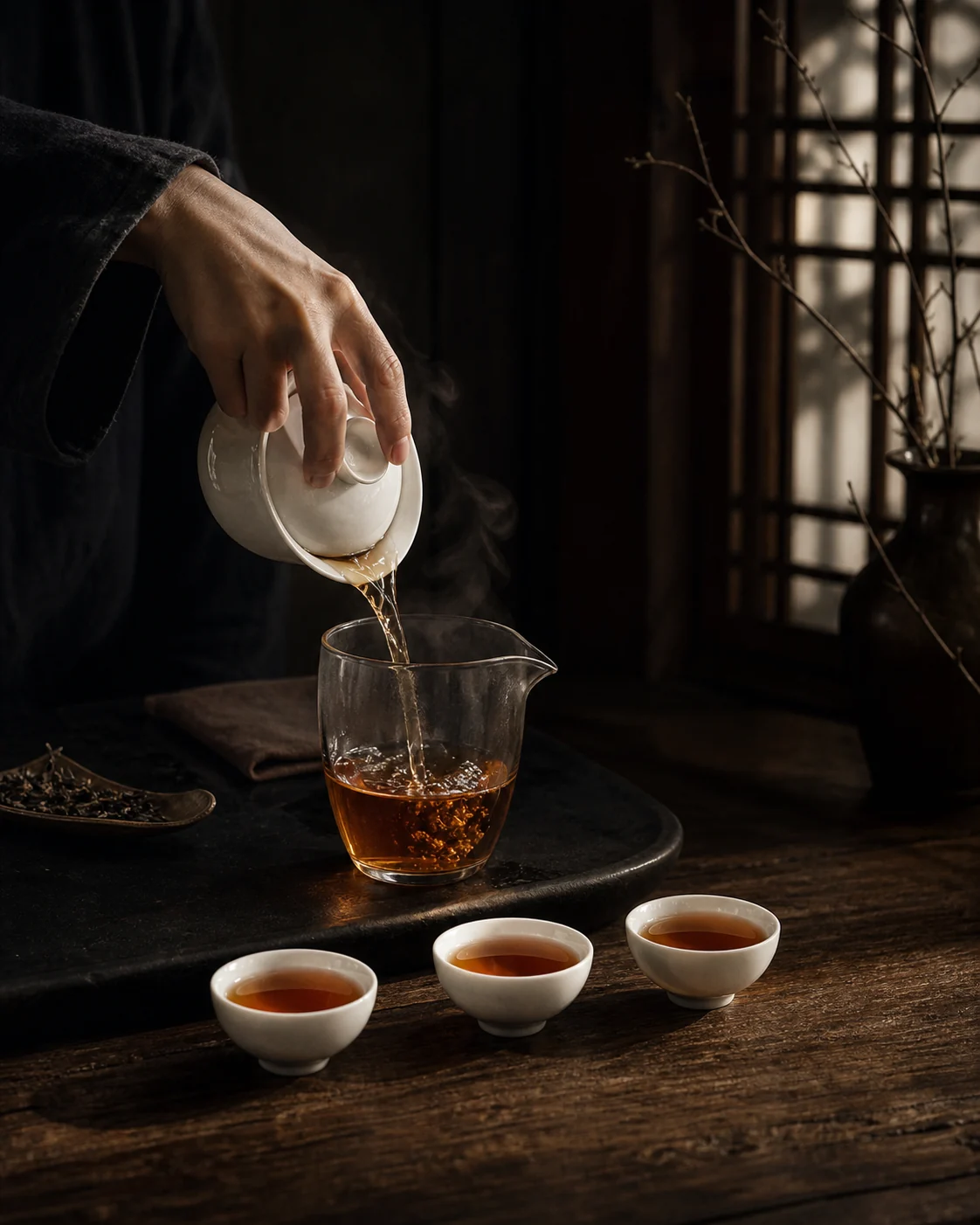
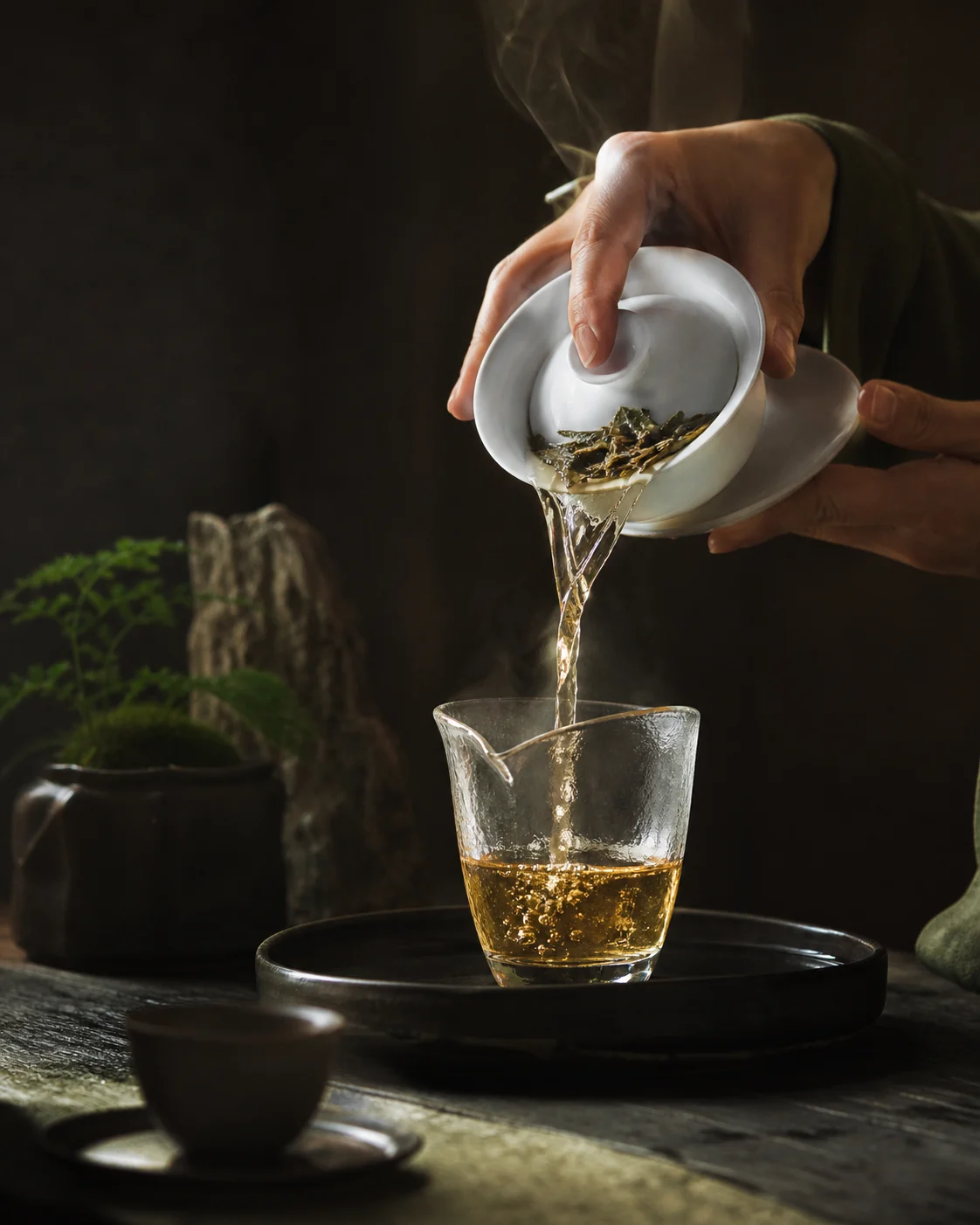
清Qing1644–1912蓋碗與品茗杯 · Gaiwan and cups
鐵線之兩處空隙——九〇七至九六〇、一二七九至一三六八——本展不錄。
The two breaks in the rail, 907–960 and 1279–1368, are years this
exhibition does not cover.
向下捲動 Scroll to travel from 618 to 1912
1 / 4
618–907
唐
Tang
法 Method
Cakes ground and boiled · 碾茶煮飲
器 Vessel
Cauldron and ladle · 鍑與杓
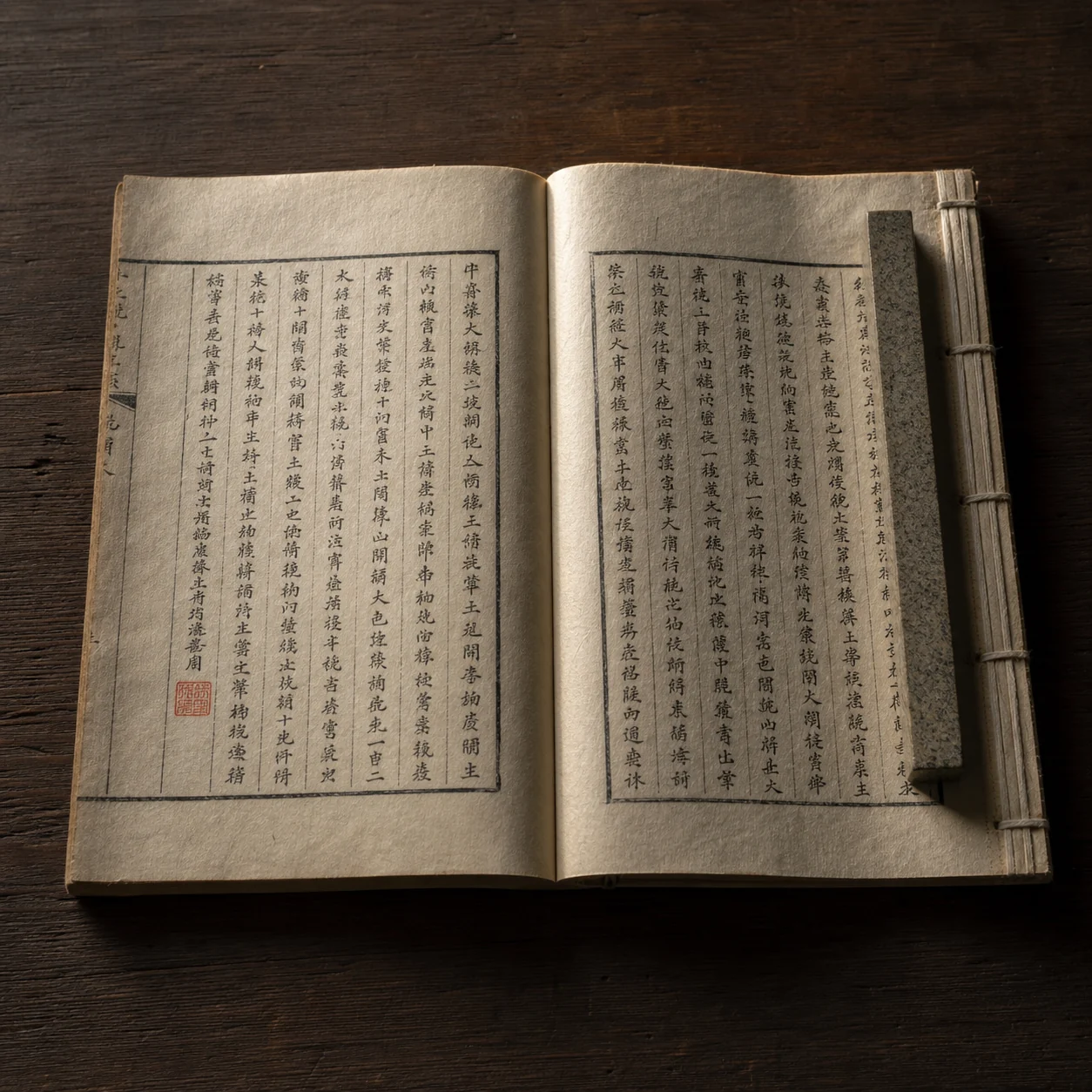
Tea was pressed into cakes, roasted, ground to powder, and boiled in an open cauldron with salt. Lu Yu wrote The Classic of Tea in this period and gave the practice a vocabulary — source, water, fire, vessel, conduct. Drinking became something that could be done well or badly.
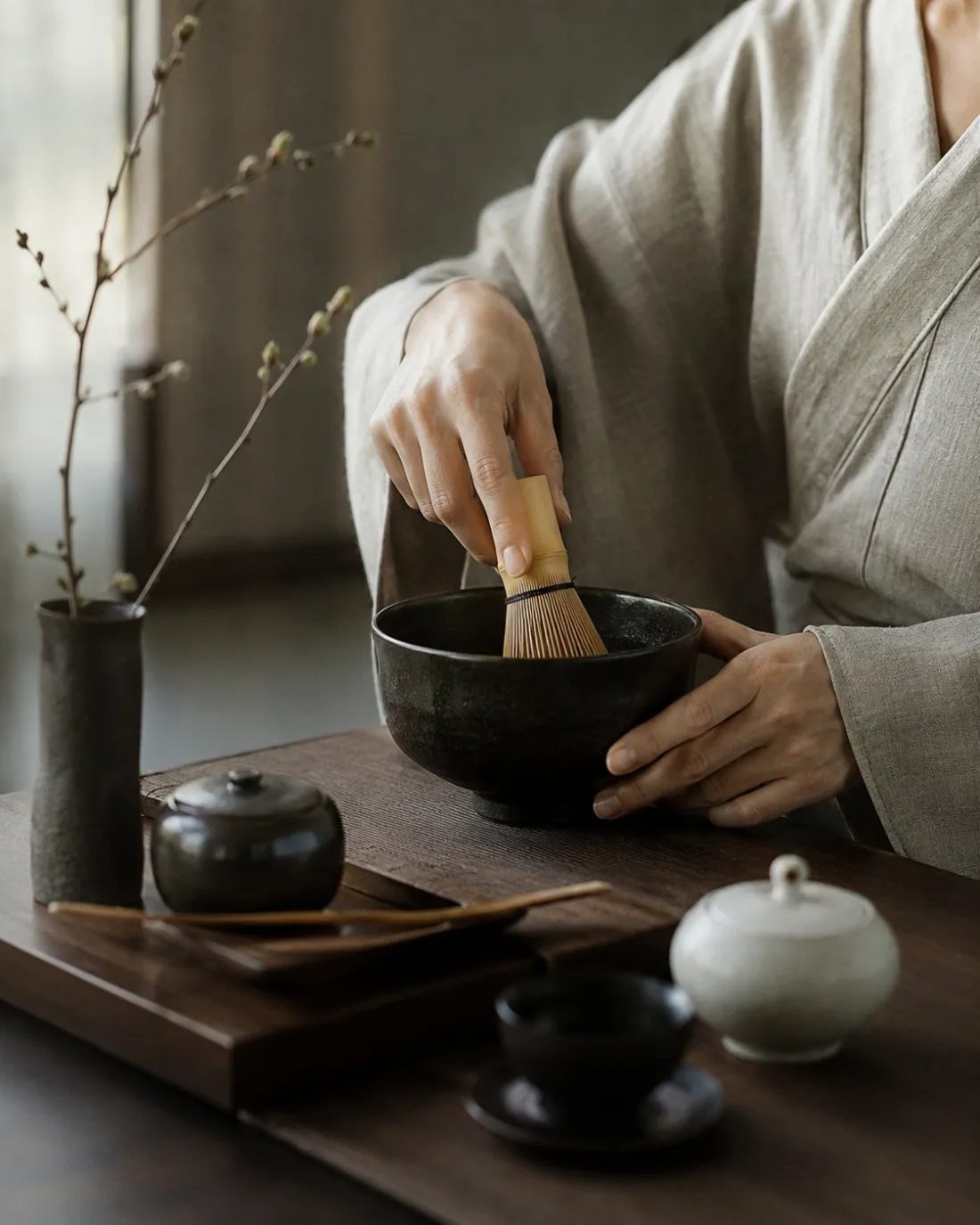
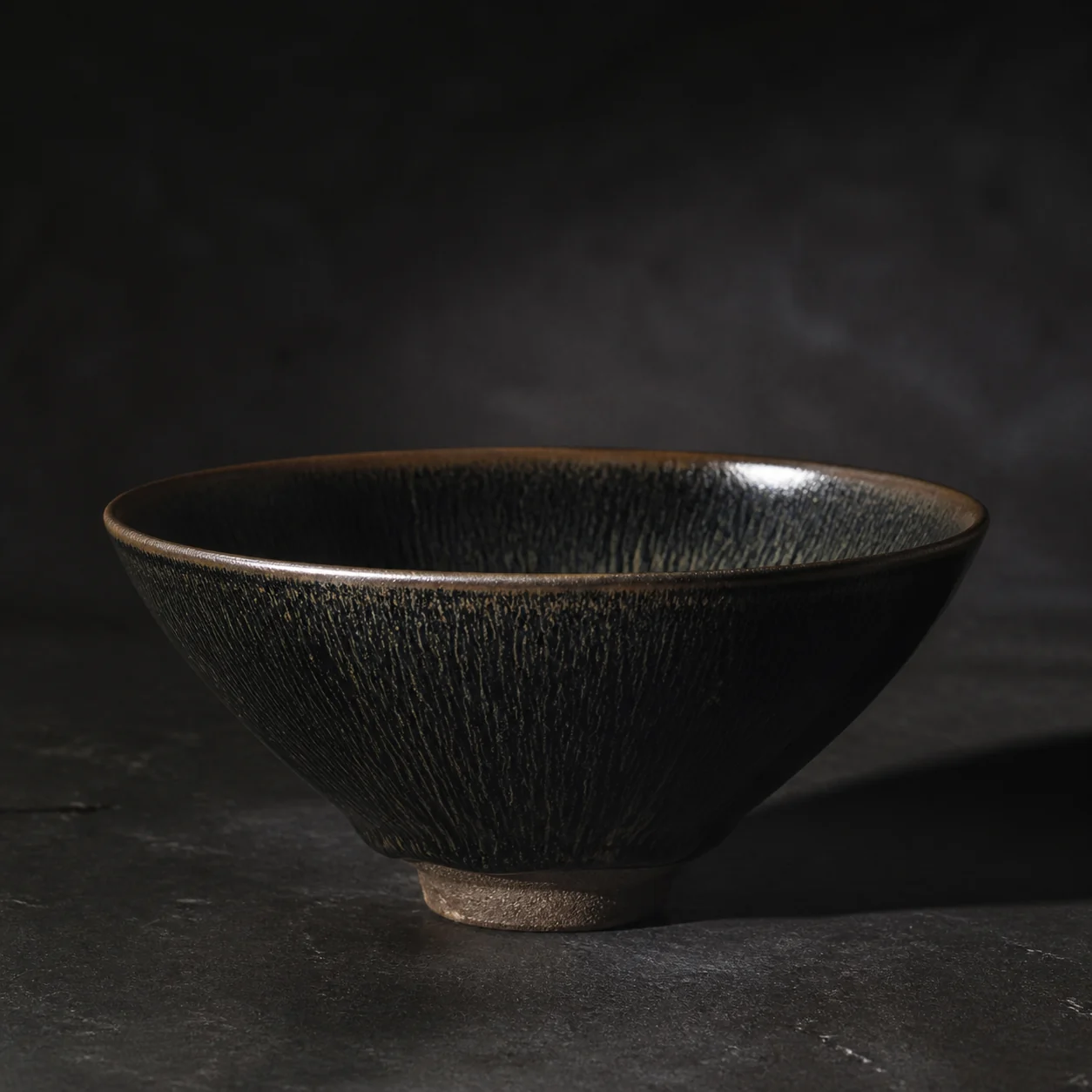
Powdered tea was whisked with hot water until it stood in a pale, stable foam. Black-glazed Jian bowls existed to make that foam visible — iron-rich glaze against white surface. Competitions were judged on the colour of the froth and how long it clung to the wall of the bowl.
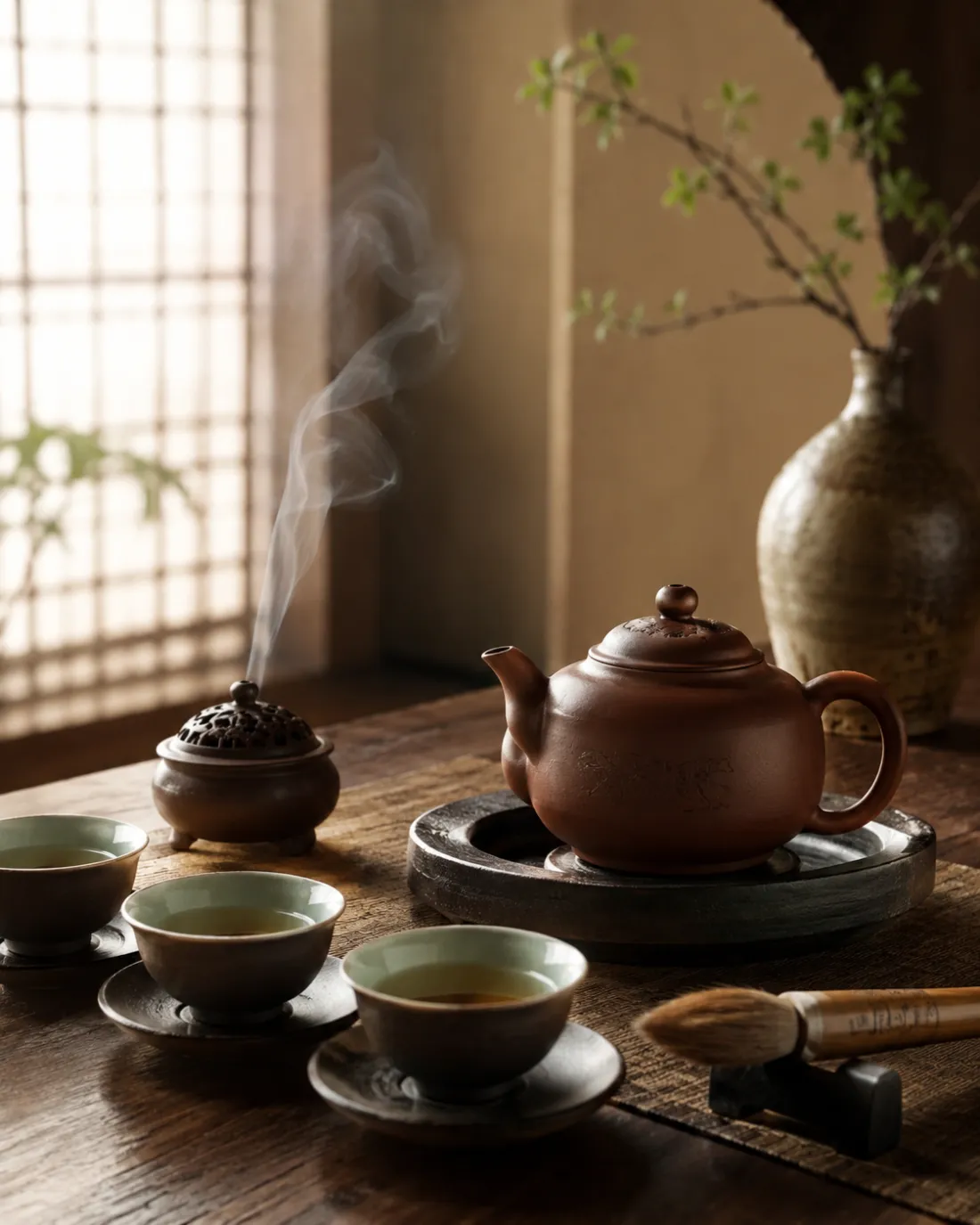
The Hongwu Emperor abolished compressed tribute cakes in 1391, and the whole grammar of tea changed with them. Leaves were steeped whole in unglazed Yixing clay, which holds heat and takes on the memory of the tea poured through it. Shape and fragrance became visible for the first time.
Gongfu is not speed — the name means skill earned over time. Small vessels, water held to a few seconds, and the same leaves opened again and again, each infusion tasting different from the last. Southern hospitality made the sequence precise and repeatable.
Only the last of the four is still in general use — and it is the one you
will make tonight.
03 / 18
展廳 · The Rooms
Where tea is actually drunk.
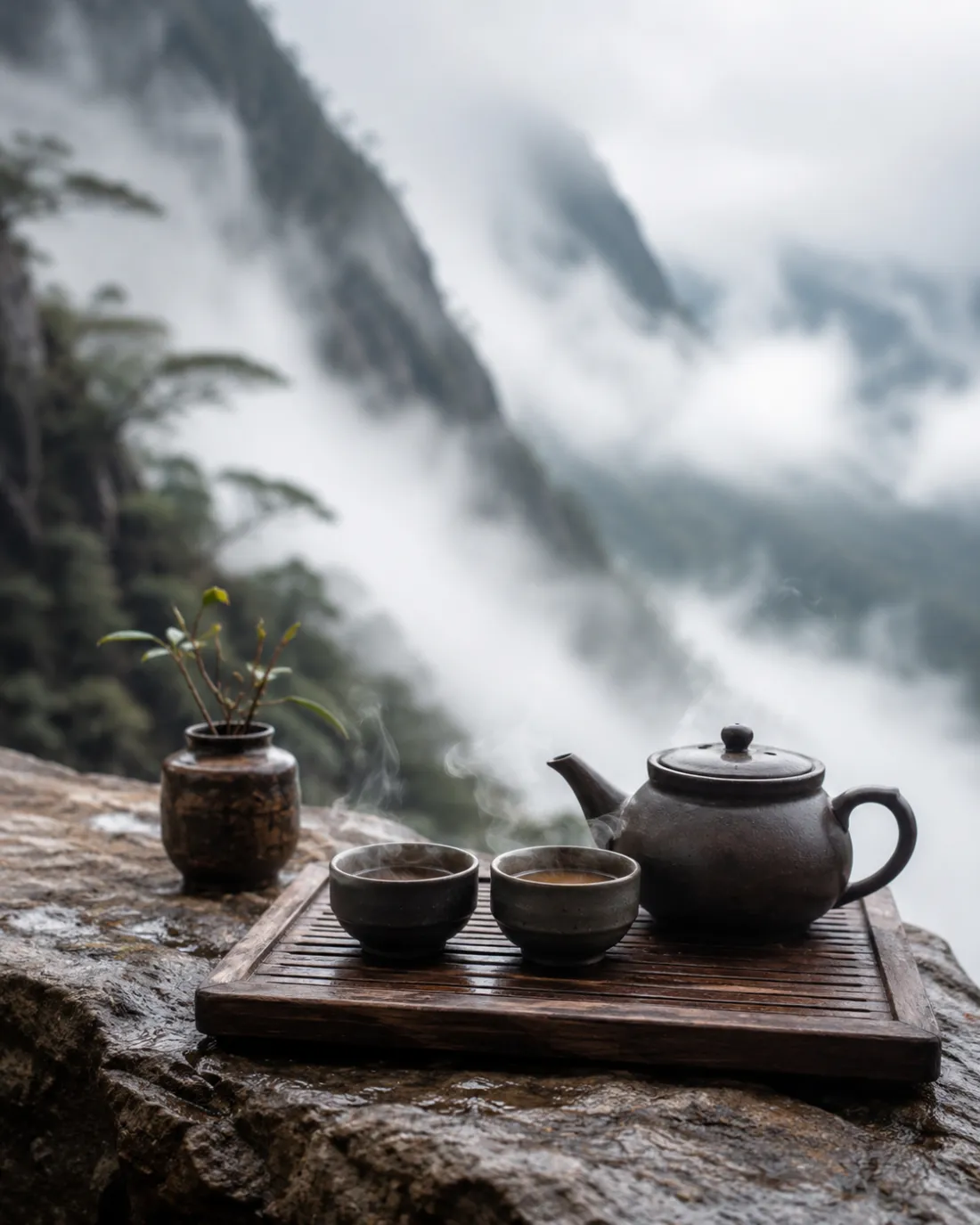
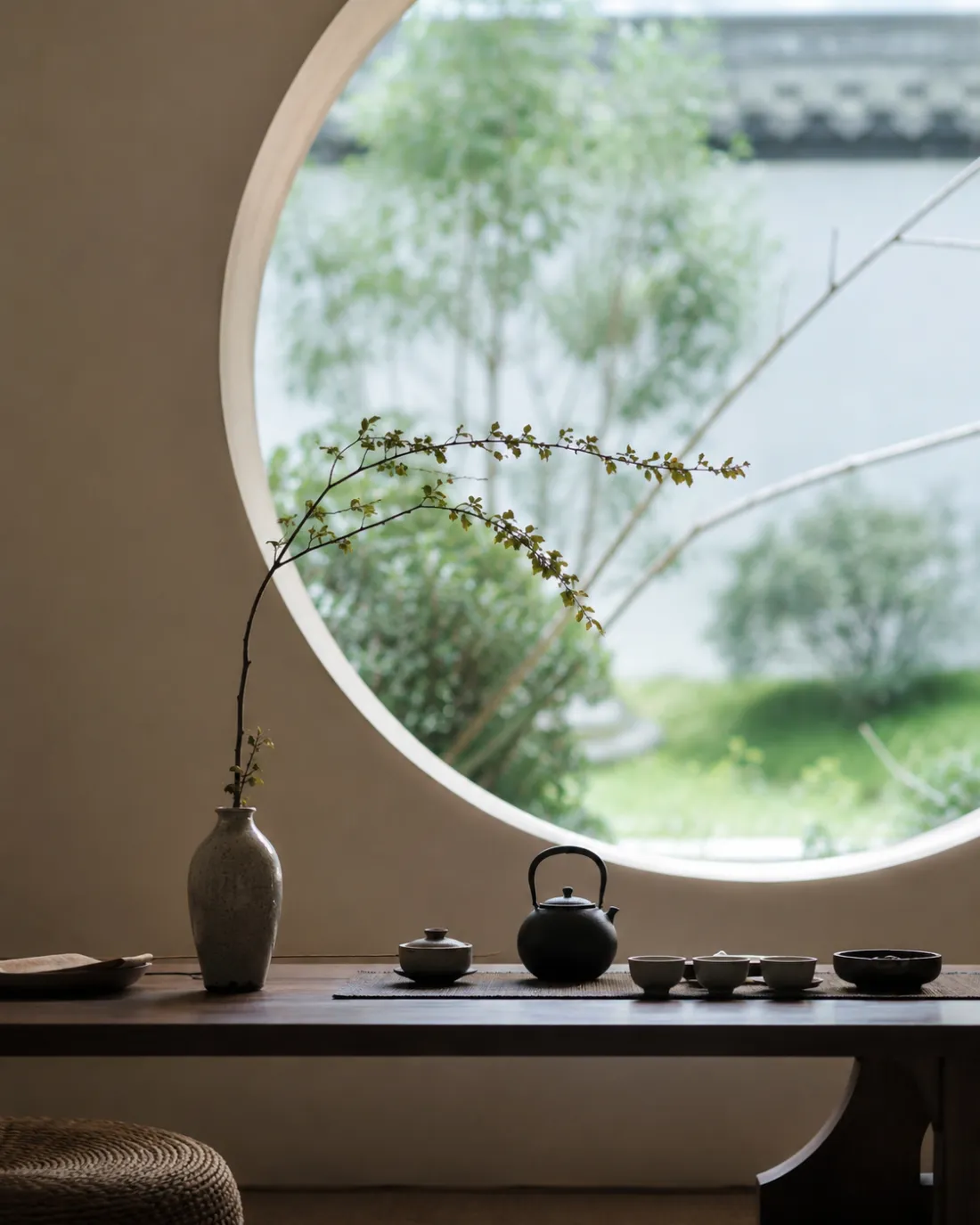
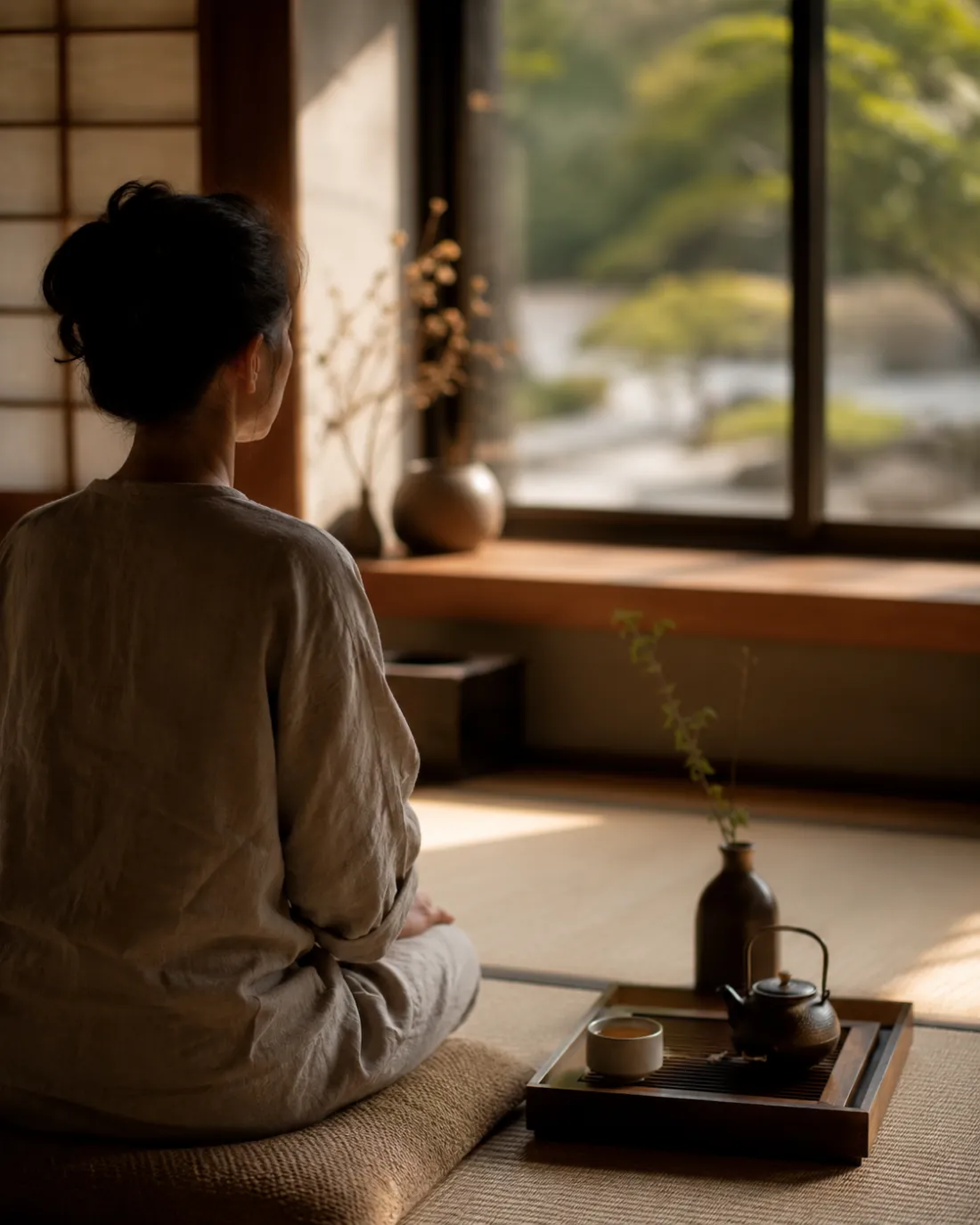
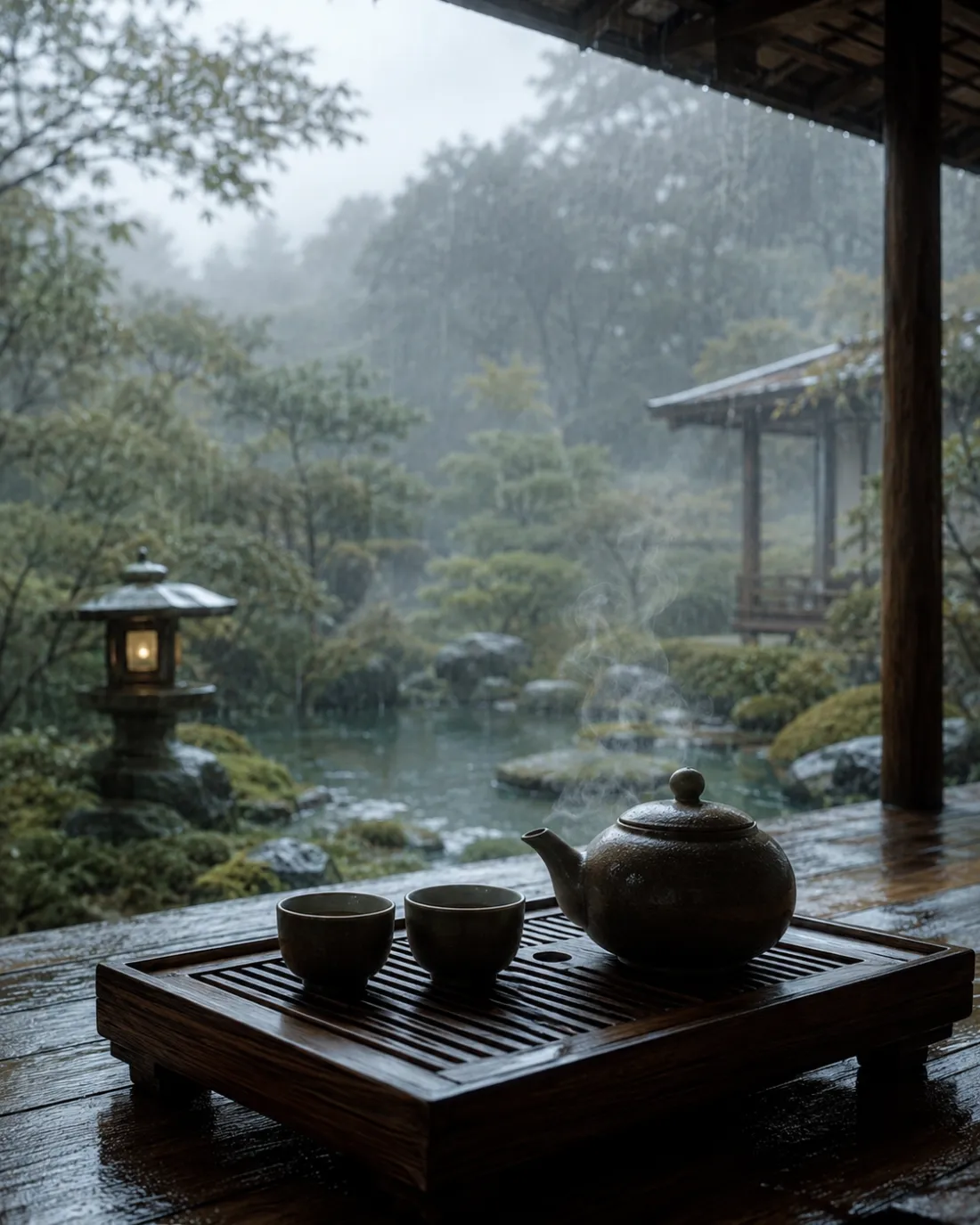
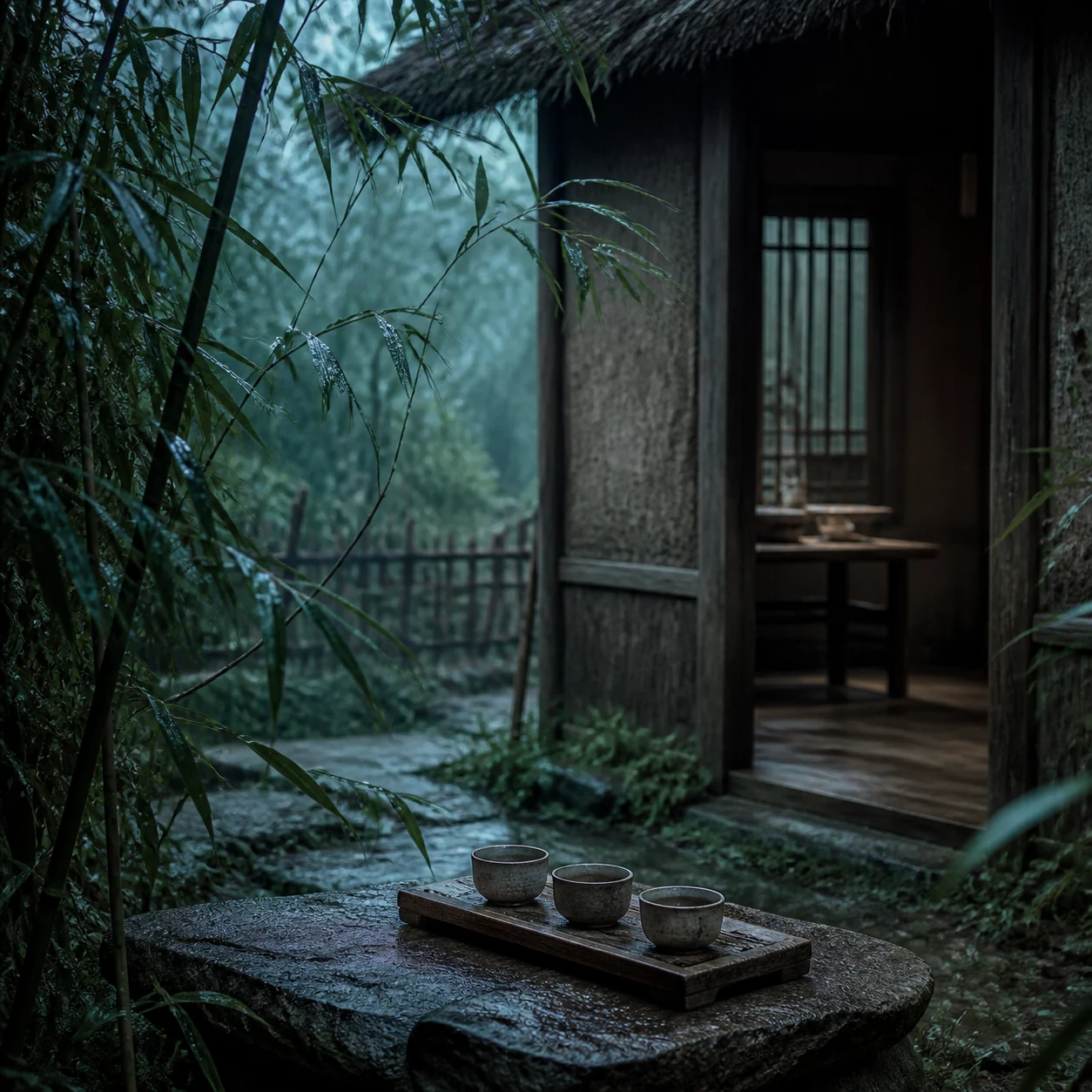
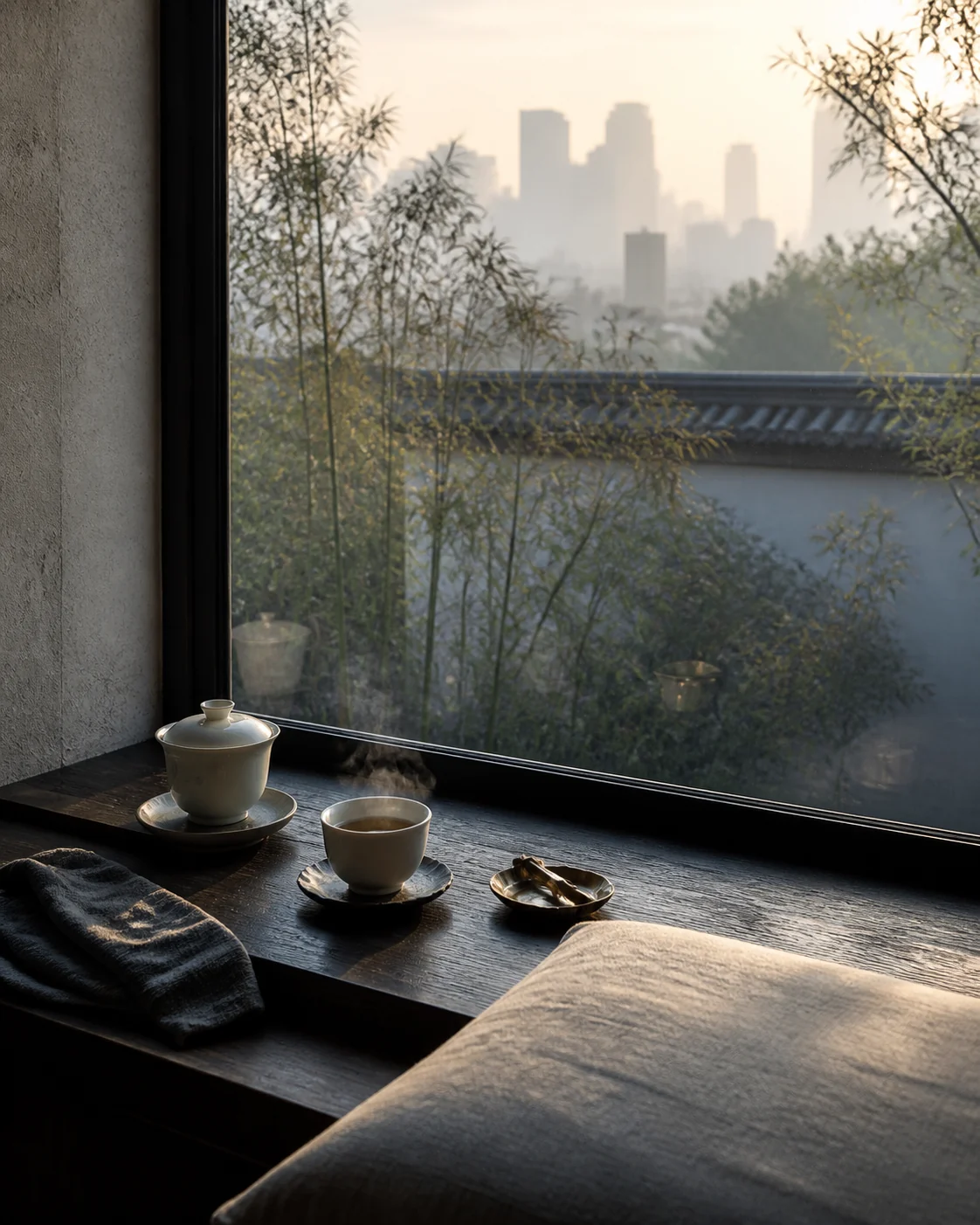
Not a ceremony hall. A window, a tray, and whatever weather is
outside.
山中一席A Seat in the Mountains月窗The Moon Window獨飲Drinking Alone
04 / 18
一葉六向 · One Leaf, Six Directions
Six families, and none of them is a plant.
Green, white, yellow, oolong, red and dark — 綠、白、黃、烏龍、紅、黑
— are not six species. They are six decisions taken about the leaf of one
species, Camellia sinensis, in the hours after it is picked.
The variable is oxidation. Enzymes inside a bruised leaf react with air
and turn it darker and sweeter, in exactly the way a cut apple browns on
the counter. Everything a tea maker does is a way of governing that
reaction: how long the leaf is left to wither, how hard it is rolled or
bruised, and above all when heat is applied to stop it.
Green tea is heated early — pan-fired in a dry wok, or steamed — so the
reaction never really begins. Red tea, which the West calls black, is
allowed to run to completion; it is called 紅茶,
red tea, for the colour of the liquor rather than the leaf. Oolong is
halted somewhere in the middle, anywhere from lightly touched to almost
fully oxidised, and choosing that point is the whole craft. White tea is
barely handled at all: withered, dried, left alone.
Two families sit outside that line. Yellow tea adds a smothering step,
悶黃, in which warm damp leaves are
wrapped and left to mellow — it is the rarest family and the most easily
lost, because the step is slow and unprofitable. Dark tea,
黑茶, is not oxidised so much as
fermented: after the leaf is fixed it is handed to microbes and to time,
which is why it alone keeps changing after it has been sold.
未起Never begins至盡Run to completion
綠茶 Green殺青最早,反應幾未起。Heated early — pan-fired or steamed
白茶 White萎凋、乾燥,此外不施一手。Withered, dried, left alone
烏龍 Oolong止於何處,全在人手。Halted anywhere in here — choosing the point is the whole craft
紅茶 Red任其行至盡處。Allowed to run all the way
豎線 Tick — where heat stops the reaction括號 Bracket — a range the maker chooses, not a point淡出 Faded end — this page does not say where it ends
黃茶 Yellow
Adds悶黃 smothering
Warm damp leaves wrapped and left to mellow. The rarest family, and
the most easily lost — the step is slow and unprofitable.
黑茶 Dark
Adds微生物與時間 microbes and time
Not oxidised so much as fermented, after the leaf is fixed. It alone
keeps changing after it has been sold.
05 / 18
唐 · 陸羽與《茶經》 · Tang · Lu Yu and the Classic of Tea
The man who wrote it down.
Lu Yu 陸羽 (c. 733–804) was
raised in a Buddhist monastery and spent his life on a single
subject. Some time around 760–780 he finished
《茶經》, the Classic of Tea:
three scrolls, ten chapters, covering the plant's origins, the tools
for making it, the manufacture, the vessels, the boiling, the
drinking, the historical record, the growing regions, what may be
left out when travelling, and how to copy the whole thing onto a
scroll and hang it on the wall.
Before him, tea in China was a regional drink boiled up with salt,
ginger, orange peel and whatever else was to hand. Lu Yu thought this
was barbarism and said so. He ranked waters by their source. He
described the three stages of the boil by the look of the bubbles —
fish eyes, then a string of pearls at the edge, then turbulent waves
— and insisted the tea went in at the second.
The lasting achievement is not the recipe, which nobody now follows.
It is that tea acquired a vocabulary, and therefore an argument. From
the Tang onward it was possible to be wrong about tea, which is the
precondition for taking anything seriously.
《茶經》三卷十章Three scrolls, ten chapters
一茶之源起The plant's origins
二製茶之具The tools for making it
三造茶之法The manufacture
四飲茶之器The vessels
五煮茶之法The boiling
六飲茶之事The drinking
七歷代之載The historical record
八產茶之地The growing regions
九行旅可省者What may be left out when travelling
十寫之於卷,張於座隅How to copy it onto a scroll and hang it on the wall
1 / 3魚目Fish eyes
茶入於此 · Tea goes in here2 / 3連珠A string of pearls at the edge
3 / 3騰波Turbulent waves
06 / 18
宋 · 點茶與鬥茶 · Song · Whisked Tea and the Contest
The century tea was a sport.
Song drinkers did not steep. They ground steamed and pressed tea to a
flour-fine powder, warmed a bowl, made a paste with a little hot
water, and then whisked with a split-bamboo
茶筅 while adding more water in
stages, raising a dense white froth. This is
點茶, diancha.
It became competitive. In 鬥茶
contests, players were judged on the whiteness of the froth and on
how long it clung to the wall of the bowl before a watermark appeared
at the rim — last mark wins. Because the prize was whiteness, the
bowls were black: 建盞 Jian ware
from Fujian, glazed in dark iron with streaks the potters called
兔毫, hare's fur. Emperor
Huizong 宋徽宗 — an indifferent
ruler and a serious aesthete — wrote a treatise on the method,
《大觀茶論》, in 1107.
Whisked tea did not survive the next dynasty in China. It did survive
in Japan, where it had been carried by monks and became matcha. When
people say the Japanese tea ceremony preserves something China lost,
this is the specific thing they mean.
兔毫 Hare's fur
Streaks in the dark iron glaze of Jian ware from Fujian
湯花 The froth
Whisked up dense and white. The bowl is black so it can be seen
水痕 The watermark
Appears at the rim when the froth lets go of the wall
鬥茶所較 · Judged on
1湯色 The whiteness of the froth
2咬盞 How long it clings to the wall — last mark wins
中國China — whisked tea did not survive the next dynasty點茶未傳於後朝。
日本Japan — carried there by monks, and it became matcha僧侶攜之東渡,成抹茶。
07 / 18
明 · 散茶與紫砂 · Ming · Loose Leaf and Zisha
One decree, and the teapot.
In 1391 the founding Ming emperor, Zhu Yuanzhang
朱元璋, abolished the
compressed cake tea that provinces had been sending to the court as
tribute and ordered loose leaf sent instead. He had come up from
poverty and regarded the pressed cakes — laborious, ornamental,
extracted from farmers — as waste.
The effect on how China drank was total. Powder and whisk became
pointless overnight. Whole leaves needed to be steeped in a vessel
and poured off, which is 散茶,
loose tea, and which is still, six centuries later, what almost
everyone does.
It also created a demand for a small pot that held heat and did not
fight the tea. The answer came from Yixing
宜興 in Jiangsu: unglazed
紫砂 zisha stoneware, slightly
porous, taking on the character of whatever is brewed in it. The
Ming turn to loose leaf is why a yixing pot exists at all, and why a
serious owner keeps one pot to one kind of tea.
整葉沖泡而傾之Whole leaves are steeped in a vessel and poured off
需小壺蓄溫而不奪茶Which needs a small pot that holds heat and does not fight the tea
宜興紫砂Answered by unglazed zisha from Yixing — slightly porous, and it takes on what is brewed in it
故一壺只事一茶。
Which is why a serious owner keeps one pot to one kind of tea.
08 / 18
流傳 · What Carried Over
Three things that outlived their dynasty.
The last of the four dynasties ended in 1912. These three did not end with
it — and two of them reach this page without a date at all.
四朝之末,止於一九一二年。此三者不與之俱終;其中二者,本頁未載其始。
朝代The dynasties
唐Tang宋Song明Ming清Qing
6181912今 NOW
茶禪一味One flavour
相傳 · attributed, 1063–1135
茶馬古道Tea Horse Road
起始未載 · start not recorded here
客來敬茶Tea for a guest
起始未載 · start not recorded here
實線 Solid line — in use空心 Hollow ring — attributed, not documented淡出 Faded end — older than any date on this page空隙 Gaps in the scale — years this exhibition does not cover
一
茶禪一味Tea and Chan, one flavour
Tea and Chan are one flavour. The phrase is long associated with the
Song Chan master Yuanwu Keqin 圓悟克勤 (1063–1135), though that
attribution is traditional rather than documented. What it asserts is
narrow and useful: the attention you give a cup and the attention you
give a sitting are not two different skills.
茶專注於一杯茶The attention you give a cup
=
禪專注於一次坐禪The attention you give a sitting
一味 · 非二事
One flavour — not two different skills.
二
茶馬古道The Tea Horse Road
The Tea Horse Road. For centuries, tea from Yunnan and Sichuan went
over the mountains into Tibet and horses came back the other way.
Loose leaf would not have survived months on muleback, so it was
steamed and pressed into cakes and bricks — which is why dark tea is
compressed, and how anyone discovered it improves with age.
雲南 · 四川Yunnan & Sichuan茶 Tea →越山 · over the mountains← 馬 Horses西藏Tibet
馬背數月Months on muleback
散茶不耐Loose leaf would not have survived the journey
蒸壓成餅磚So it was steamed and pressed into cakes and bricks
黑茶緊壓Which is why dark tea is compressed
陳放而愈佳And how anyone discovered it improves with age
三
客來敬茶When a guest arrives, tea is served
When a guest arrives, tea is served. It is the first thing offered in
a Chinese household and it is not really about thirst. At the table
the person served taps two fingers on the wood to thank the pourer
without interrupting the conversation — a gesture explained by a
well-loved story about the Qianlong emperor travelling in disguise,
which is a story rather than a record.
主人 Host斟茶 Pours
客 Guest二指叩桌 Taps two fingers
言 Said
—一語未發 Nothing
手 Done
二指叩於桌面 Two fingers, on the wood
意 Meant
謝斟茶之人 Thank you, to the pourer
談話因此不斷。
Which is why the conversation is never interrupted.
09 / 18
現代 · Now
Boiled. Whisked. Steeped.The method changed.The reason did not.
煮Boiled唐 Tang618–907 · 鍑與杓 Cauldron and ladle
點Whisked宋 Song960–1279 · 建盞與茶筅 Jian bowl and whisk
泡Steeped明 · 清 Ming and Qing1368–1912 · 紫砂壺、蓋碗 Yixing pot, gaiwan
Everything above survives in a single ordinary act: hot water, a leaf, and
somebody deciding to wait for it.
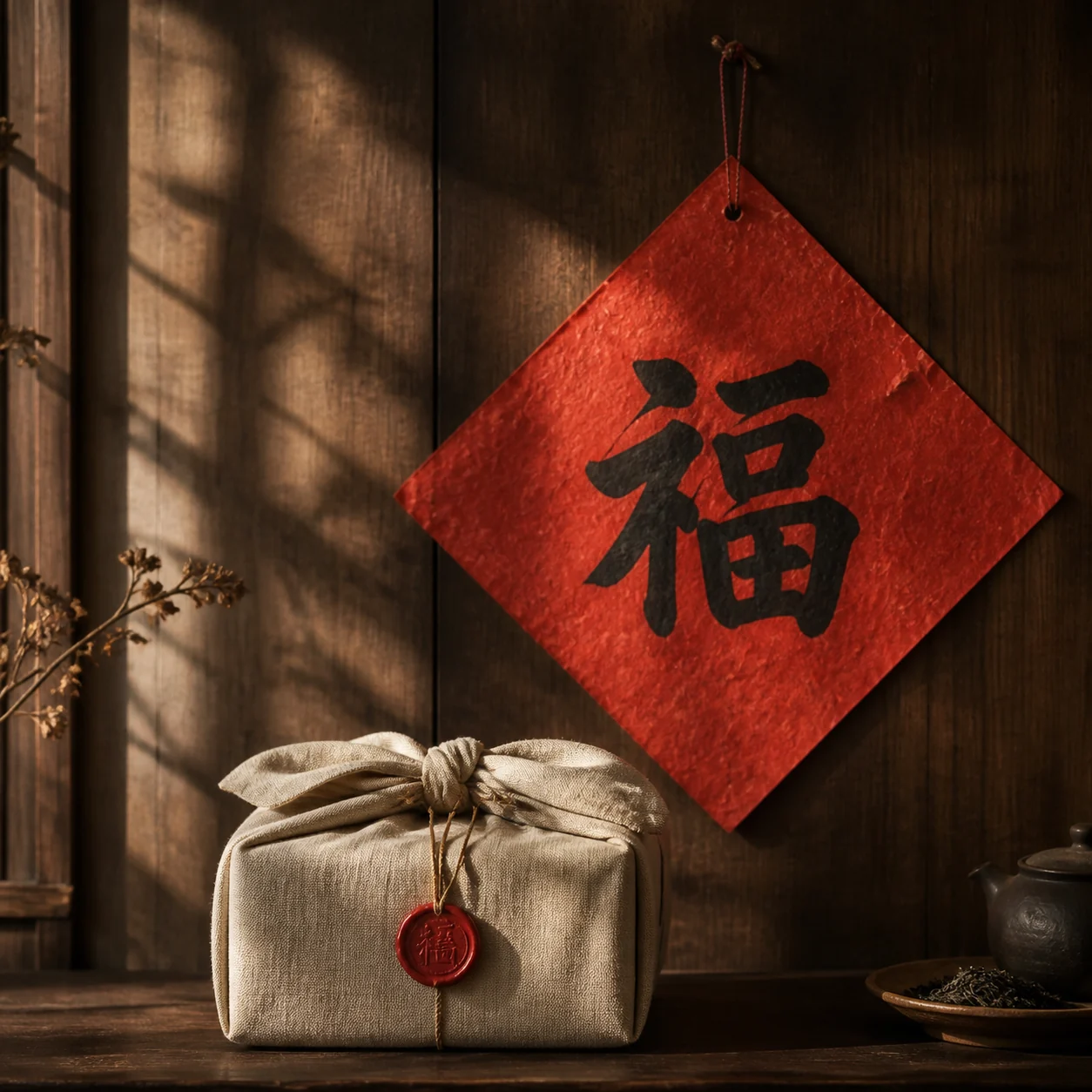
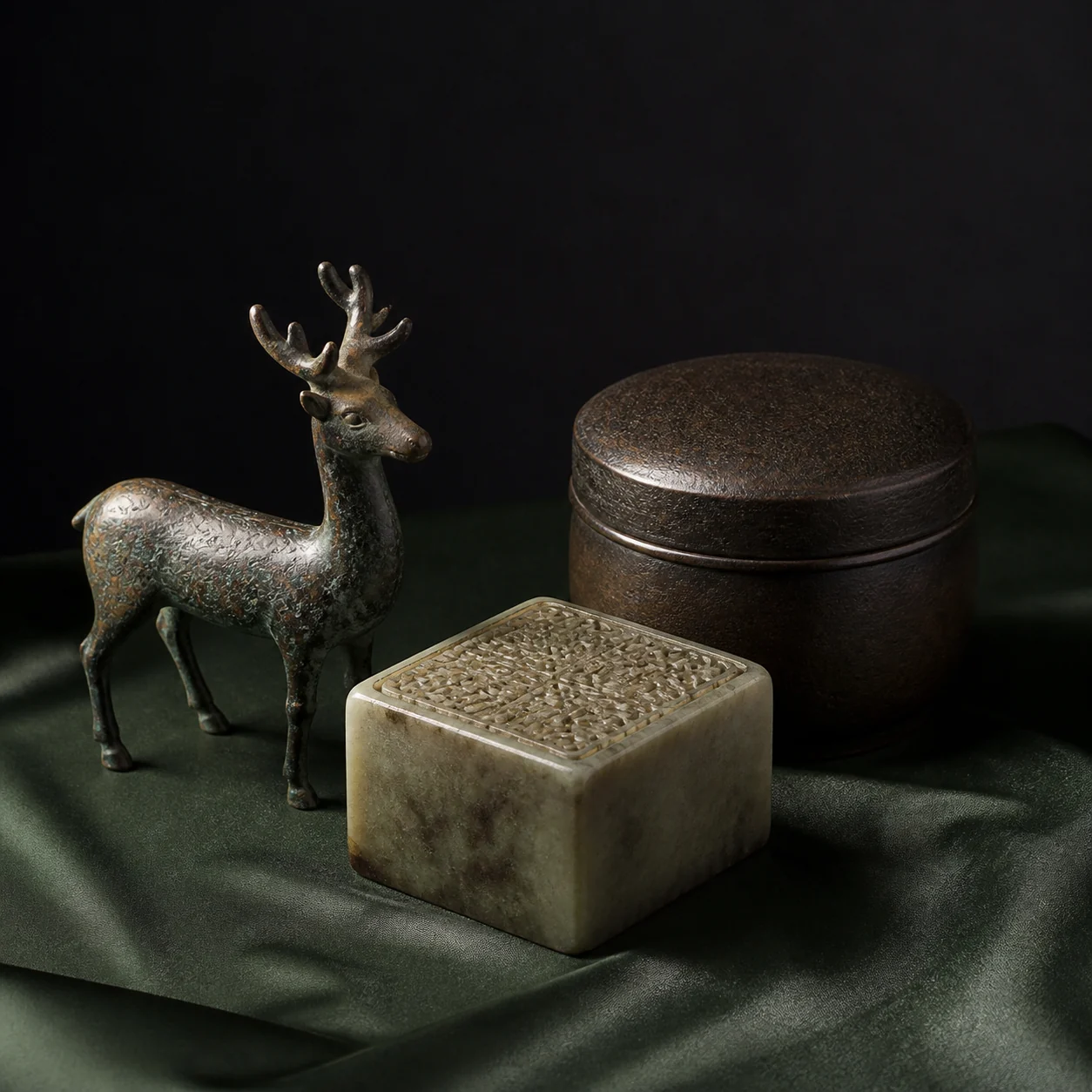
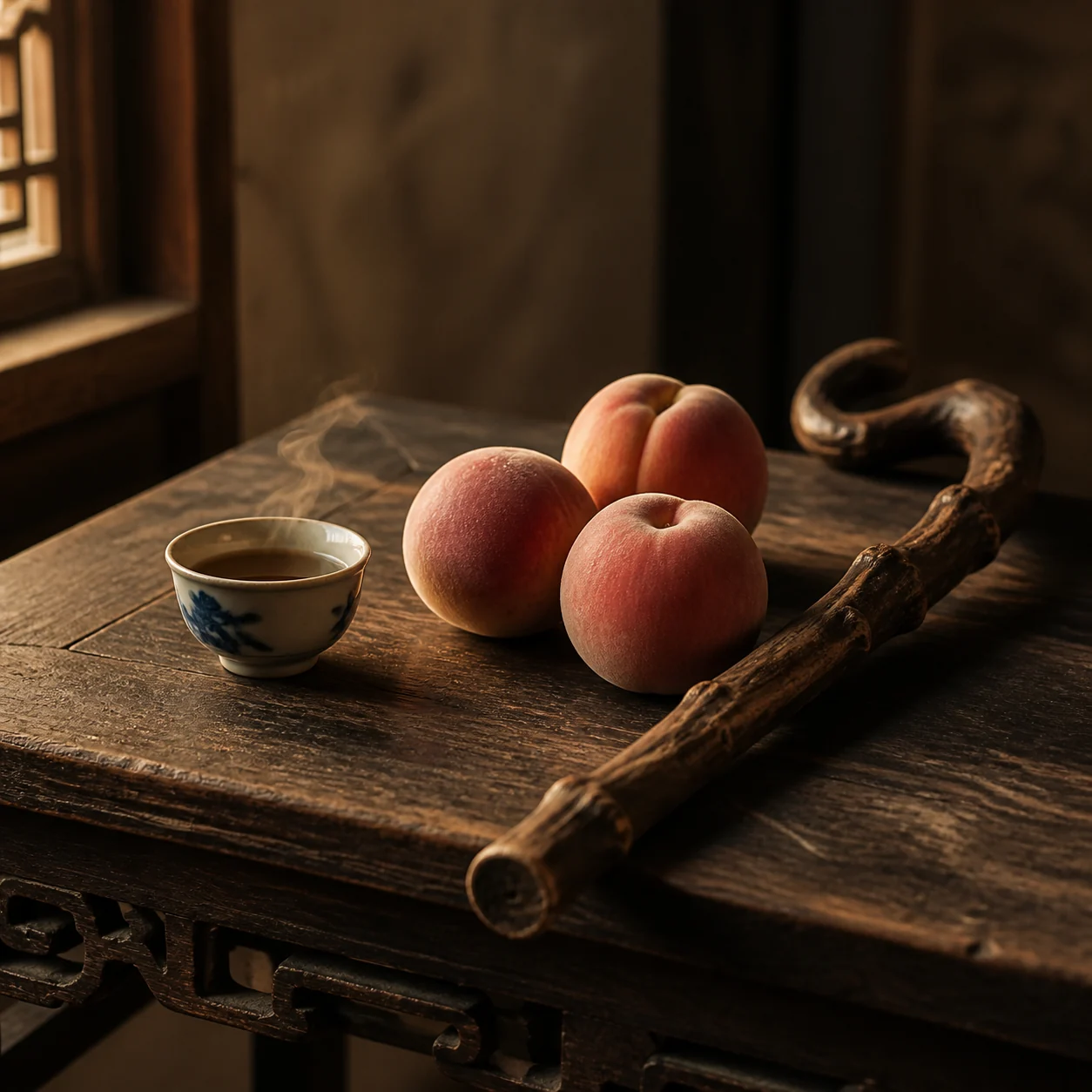
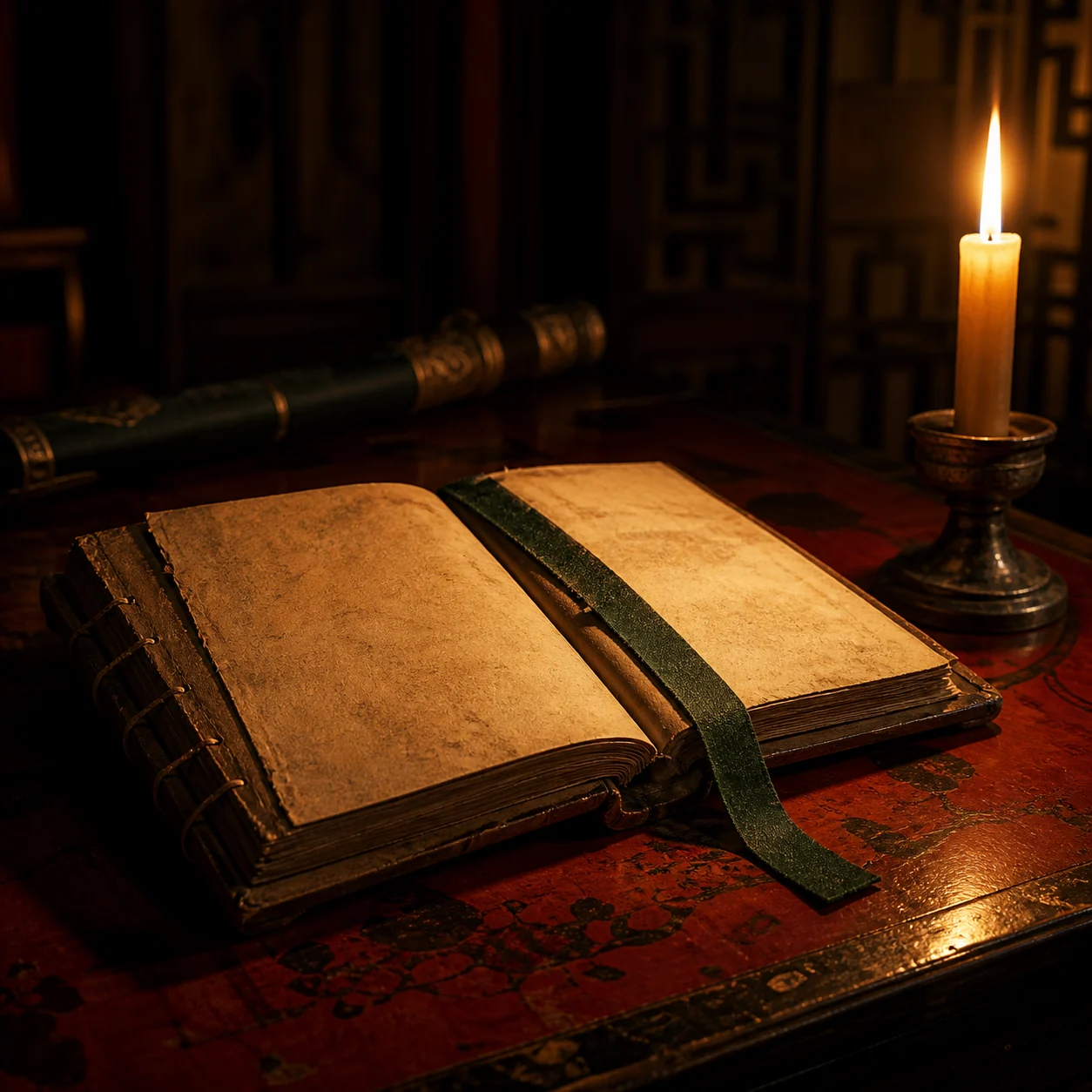
This hall hangs no portraits. Each of the eight is met through a single
object instead — a paper character hung upside down, a bronze deer, a book
read by candlelight. Read the object and you have the figure.
本堂不掛畫像。八位皆以一物相見——倒貼的紅紙福字、一尊銅鹿、燭下攤開的書。見物即見人。
Three groups, walked in order: the three stars, the three who swore the
peach garden oath, and the two who wrote about tea.
三組,依序而行:三星、桃園結義三兄弟,以及兩位寫茶的人。
三星 The three stars桃園結義 The peach garden oath茶聖與詩人 The sage and the poet
讀中間一行,八物自分其類:先是一字、一音,次是手中之物;再來是所行、所讀、所執;末為二人親筆所著、所用。
Read the middle line across and the kinds separate themselves — a written
character and a pun on a sound, then a thing held; then a thing done, a
thing read, a thing carried; and last, the two who are known by what they
wrote and worked with.
11 / 18
福祿壽 · The Three Stars
Three virtues, standing together.
三種德,並肩而立。
None of the three is a historical person. Each is a wish given a shape old
enough to hang on a wall and greet by name — and they are almost never shown
apart, because a household does not wish for one of them at a time.
The first of the three star gods, Fu presides over good fortune and the
wellbeing of a household. Tea given in blessing carries family warmth
and seasonal goodwill.
三星之首,福星主掌福氣與一家安好。以福為名相贈的茶,帶著家的溫度與時節的祝願。
所繫之物 · Object
The 福 character hung upside down, so that blessing arrives
倒貼的福字——福到
倒字 · Inverted
祿Lu
Standing and prosperity · 祿位與豐足
Lu is the star of office and honest income — 祿
was the word for an imperial official’s salary. A tea gift in his name
marks an advancement without asking for anything back.
祿星主功名與正當之俸——「祿」本指官員的俸給。以祿為名的茶禮,是為晉升道賀,而不求回報。
所繫之物 · Object
The deer 鹿, whose name sounds like 祿
鹿——與「祿」同音
同音 · Homophone
壽Shou
Longevity · 長壽
Shou is drawn as an old man with a high domed forehead, a dragon-headed
staff, and a peach in his hand. Tea is his natural gift: something
drunk slowly, over years, by someone in no hurry.
Loyalty is the whole subject of this group. Read them in oath order — eldest,
second, youngest — and the virtue changes register each time: conduct, then
constancy, then plain nerve.
The eldest of the three who swore an oath in the peach garden, and the one
who held them together by conduct rather than force. He went to Zhuge
Liang’s thatched cottage three times before he was received — the
courtesy is the story.
桃園結義三人中的長兄,靠德行而非武力聚攏人心。他三顧茅廬方得見諸葛亮——這份禮數,本身就是故事。
所繫之物 · Object
The thatched cottage, approached three times
三顧的草廬
所行 · A thing he did
二Second
關羽Guan Yu
Loyalty · 忠義
The second oath brother, later honoured across China as the measure of a
kept word; shopkeepers still keep his shrine at the back of the room. Tea
becomes a symbol of constancy, honour, and remembered promise.
The youngest oath brother, remembered for holding a bridge alone at
Changban and turning an army back with his voice. He is the friend who
says the true thing first and stands where he said he would stand.
結義三弟,長坂橋上獨據一橋,一聲喝退曹軍。他是那種先把實話說出口、並且說到哪裡就站到哪裡的朋友。
所繫之物 · Object
The eighteen-foot serpent spear 丈八蛇矛
丈八蛇矛
所執 · A thing he carried
13 / 18
茶聖與詩人 · The Sage and the Poet
The two who actually wrote about tea.
兩位真正寫過茶的人。
Everyone before them is borrowed — a wish, a virtue, an oath. These two wrote.
One gave tea a method; the other gave it a mood.
Water and fire again, and the kettle, kept up through three exiles. Tea
in his hands is not ceremony but consolation.
仍是水、仍是火,加上煎茶一事,三度貶謫之中不曾中輟。茶在他手裡不是儀典,而是慰藉。
茶聖 · The Sage of Tea
陸羽Lu Yu
Method and discernment · 法度與品鑑
The Tang writer who set down The Classic of Tea and gave drinking a
vocabulary — source, water, fire, vessel, conduct. Later ages called him
the Sage of Tea because after him tea could be done well or badly.
The Song poet who wrote that fine tea has always been like a beautiful
woman, and who kept writing about water, fire, and the kettle through
three exiles. Tea in his hands is not ceremony but consolation.
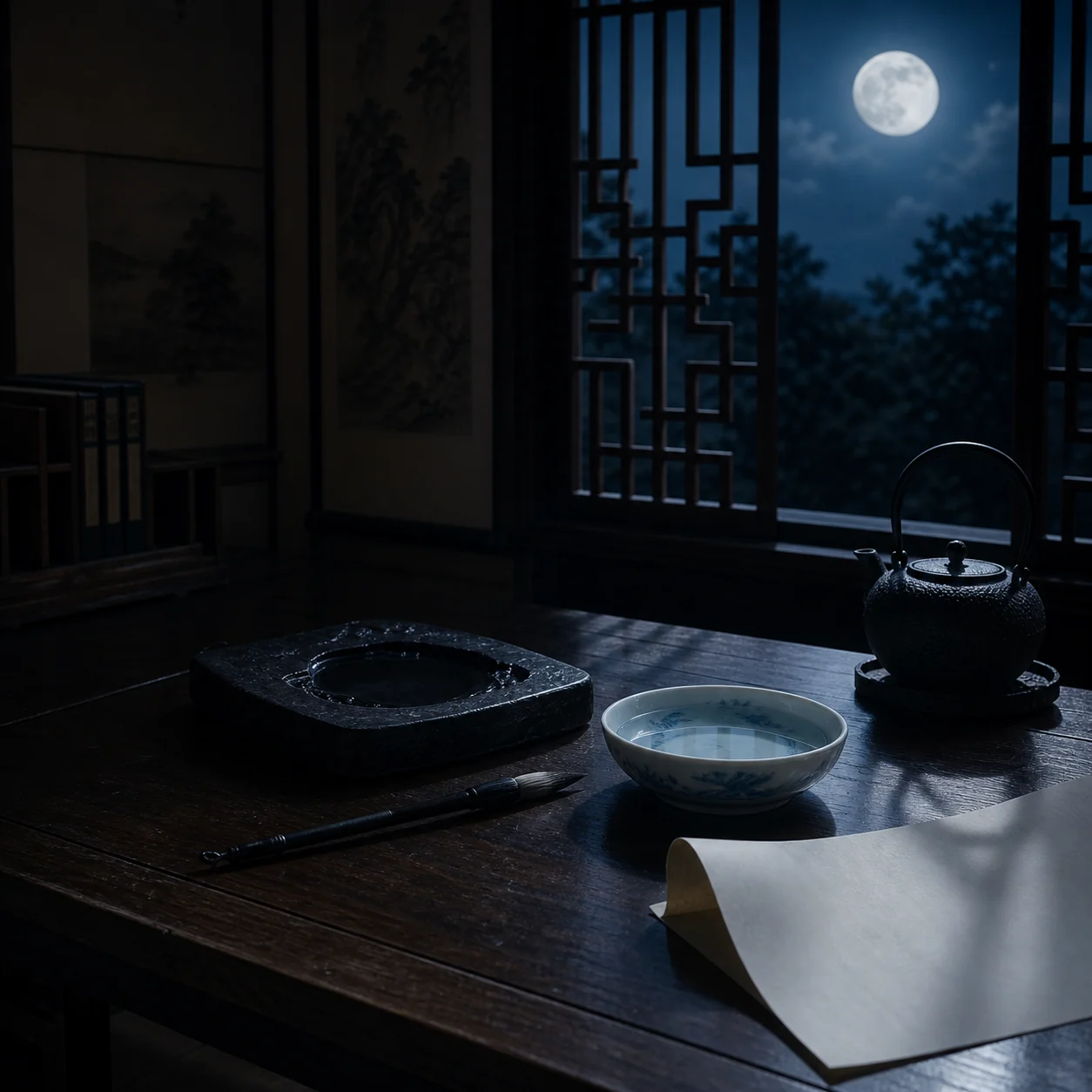
A brush, an inkstone, and river water drawn at night
筆、硯,與夜半汲來的江水
所用 · Things he used
14 / 18
出堂 · Leaving the hall
Why any of this sits on a tea site.
茶與這八位有何相干。
Because a tea gift is never only tea. Someone hands it over for a reason — a
blessing, an advancement, a long life, a promise being kept, a decision to do
the thing properly — and these eight are the names those reasons have carried
for a very long time.
Knowledge, stories, and the aesthetics of daily life.
Eight things worth knowing, the five stages of the water, and the four
dynasties that each drank tea a different way. Nothing here is behind a
sign-up.
Water boils in five stages. Your eyes are the thermometer.
Lu Yu wrote these down in the eighth century, before anyone could measure
heat. You do not need a thermometer either — you need to know what the
bubbles are telling you.
溫度 · °C
0255075100
一
蝦眼 Shrimp eyes
< 80 °C
— no tea family is named for this stage
The first bubbles, no bigger than a shrimp's eye, clinging to the floor of the kettle.
初現的小泡,細如蝦眼,貼在釜底不動。
二
蟹眼 Crab eyes
80 – 86 °C
綠茶 Green
They widen and begin to lift. Green tea wants the water here, before it turns bitter.
泡漸大而始上浮。綠茶要的正是此時的水,再熱便苦了。
三
魚眼 Fish eyes
86 – 93 °C
烏龍 Oolong
Large, slow, rising in a steady file. Oolong opens here and gives up its perfume.
泡大而緩,魚貫而上。烏龍於此舒展,香氣始出。
四
連珠 String of pearls
93 – 98 °C
普洱 · 陳年老葉 Pu'er and aged leaf
A continuous thread of bubbles at the wall of the kettle. Pu'er and aged leaf ask for this.
釜壁之上,泡如連珠不斷。普洱與陳年老葉,所求即此。
五
騰波 Rolling boil
98 °C +
水老 Not for tea
Waves and drumming surf. Lu Yu called water boiled past this point old, and would not drink it.
騰波鼓浪。陸羽謂過此則水老,不可食也。
五段之溫,皆錄自本節文字;騰波作斜紋,如《茶類地圖》之黑茶,蓋其在軸上而不可用。
Every figure on this axis is one this section already states.
Shrimp eyes 蝦眼 is drawn from the foot of the axis because
the copy gives it a ceiling and no floor. Rolling boil 騰波 is
hatched rather than filled, the way dark tea 黑茶 is hatched
on the oxidation scale — a zone that exists on the axis and that the text tells you
not to use.
18 / 18
茶之源流 · The Vessel Thread
Tea history is not dates. It is four ways of drinking.
Boiled, whisked, steeped, infused again and again. Each way of drinking
had its own vessel, and the vessel is the argument.
—
No vessel named
Mythic time
神農傳說
The myth of Shennong frames tea as a discovery of balance: leaf, body, heat, and attention. Before tea became taste, it was a way of reading nature.
器 · Open cauldron
618 – 907
唐 · 陸羽與《茶經》
Tea was pressed into cakes, roasted, ground to powder, and boiled in an open cauldron with salt. Lu Yu gave the practice a vocabulary — source, water, fire, vessel, conduct.
器 · Black-glazed Jian bowl
960 – 1279
宋 · 點茶
Powdered tea was whisked until it stood in a pale, stable foam. Black-glazed Jian bowls existed to make that foam visible. Competitions were judged on the colour of the froth.
器 · Unglazed Yixing clay
1368 – 1644
明 · 散茶
The Hongwu Emperor abolished compressed tribute cakes in 1391. Leaves were steeped whole in unglazed Yixing clay, and shape and fragrance became visible for the first time.
器 · Small vessels
1644 – 1912
清 · 工夫茶
Gongfu is not speed — the name means skill earned over time. Small vessels, water held to a few seconds, and the same leaves opened again and again.
—
No vessel named
Now
當代茶禪
The old forms are not copied as nostalgia. They are edited into a living ritual for modern attention.