01 / 04
日誌 · Journal
Knowledge, stories,
and the aesthetics
of daily life.
Eight things worth knowing, the five stages of the water, and the four dynasties that each drank tea a different way. Nothing here is behind a sign-up.
02 / 04
知識索引 · The Knowledge Index
Eight things worth knowing.
Lu Yu
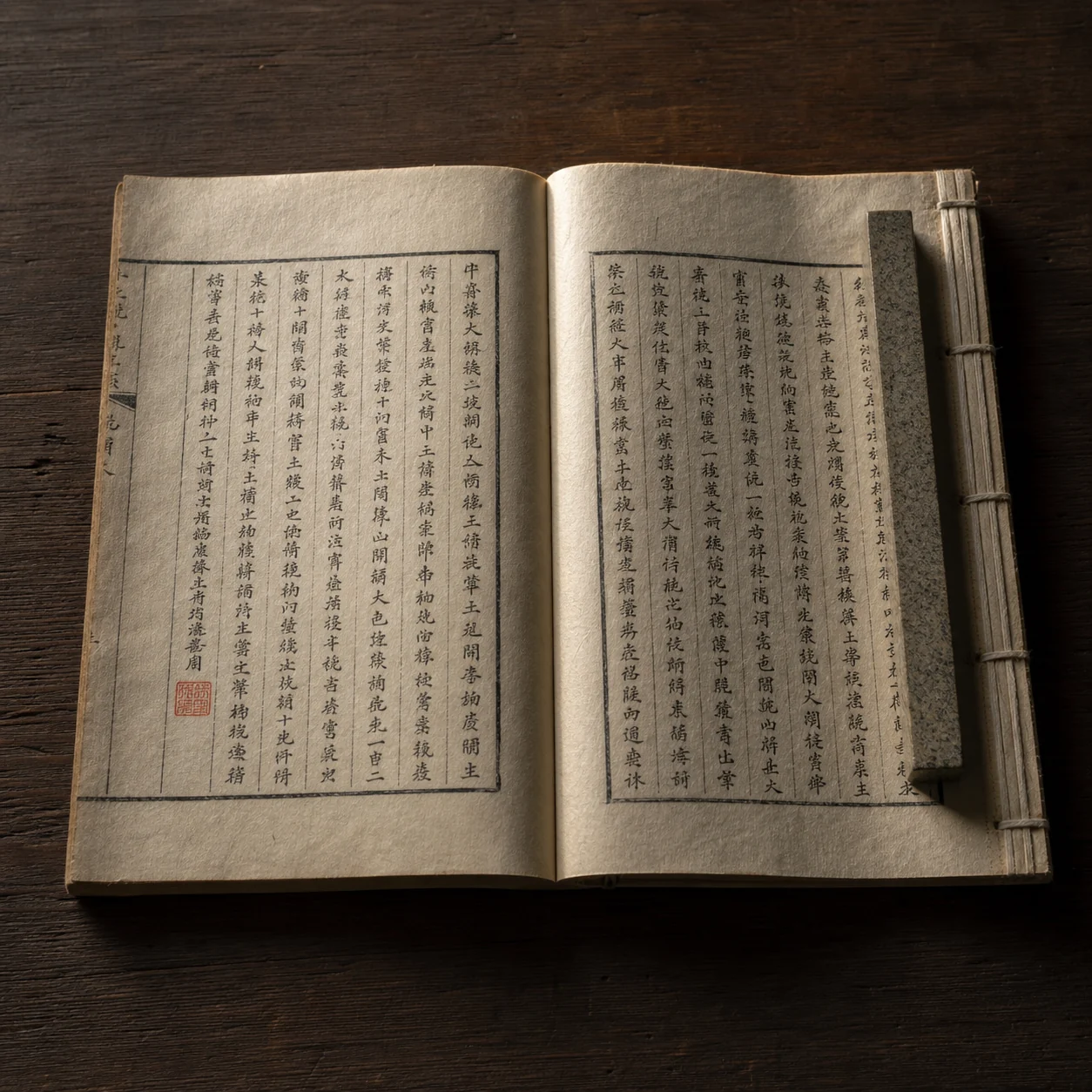
陸羽與茶經The Tang scholar Lu Yu gave tea language, method, and cultural form. The Classic of Tea made drinking a studied art rather than a casual habit.
唐代學者陸羽為茶立下語彙、方法與文化形制。《茶經》使飲茶自隨性之習,成為可以研究的技藝。
Song Dian Cha
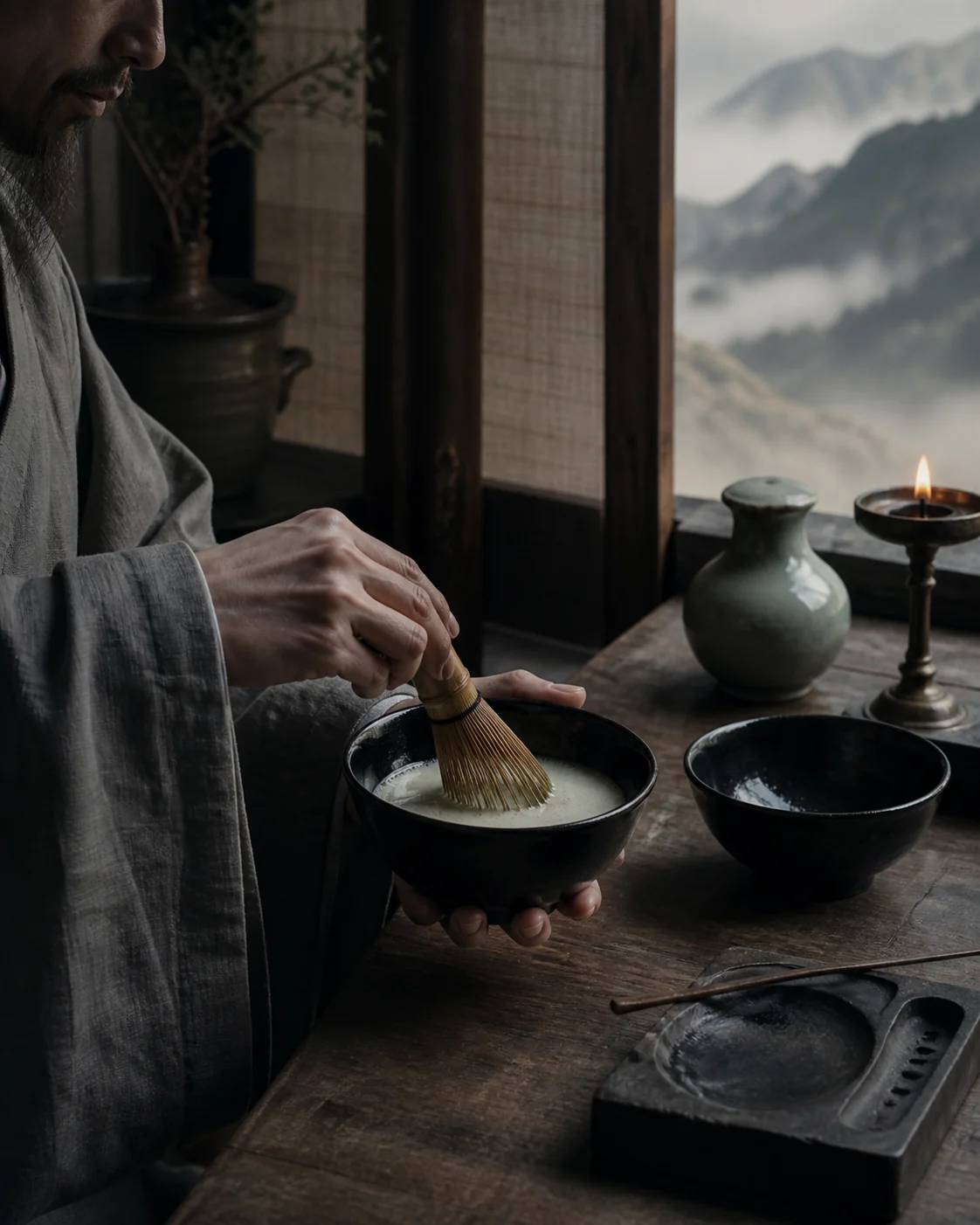
宋代點茶Powdered tea was whisked into a luminous surface. Technique, bowl, foam, and scholar taste became a single aesthetic practice.
茶末經擊拂而成一片瑩然之面。技法、茶盞、湯花與文人品味,合為同一種美學實踐。
Jian Ware
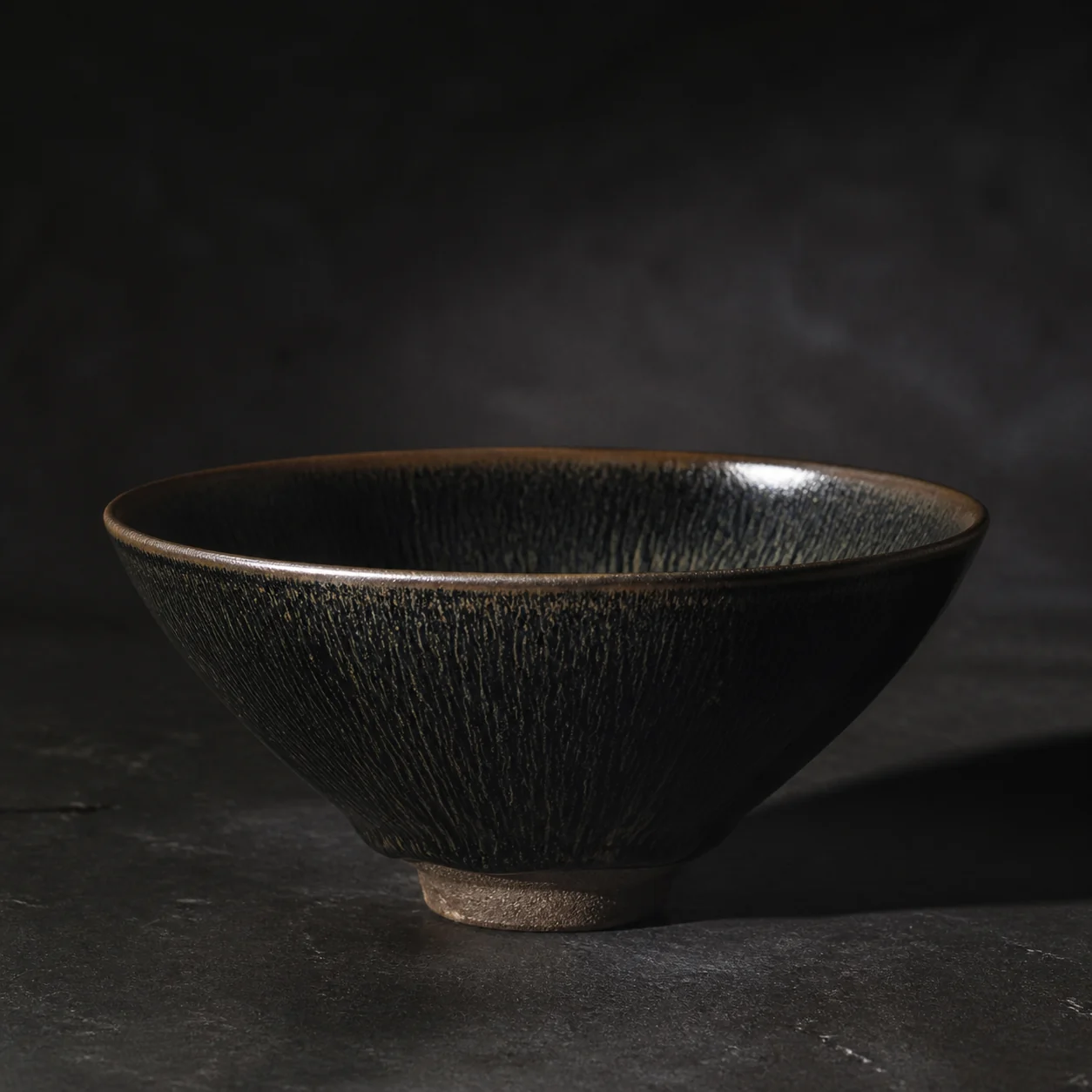
建盞Black-glazed bowls made pale tea foam visible. Their iron-rich surfaces turned drinking into an encounter with light and mineral depth.
黑釉之盞,使潔白湯花得以顯現。其富鐵的釉面,令飲茶成為一場與光影和礦物深度的相遇。
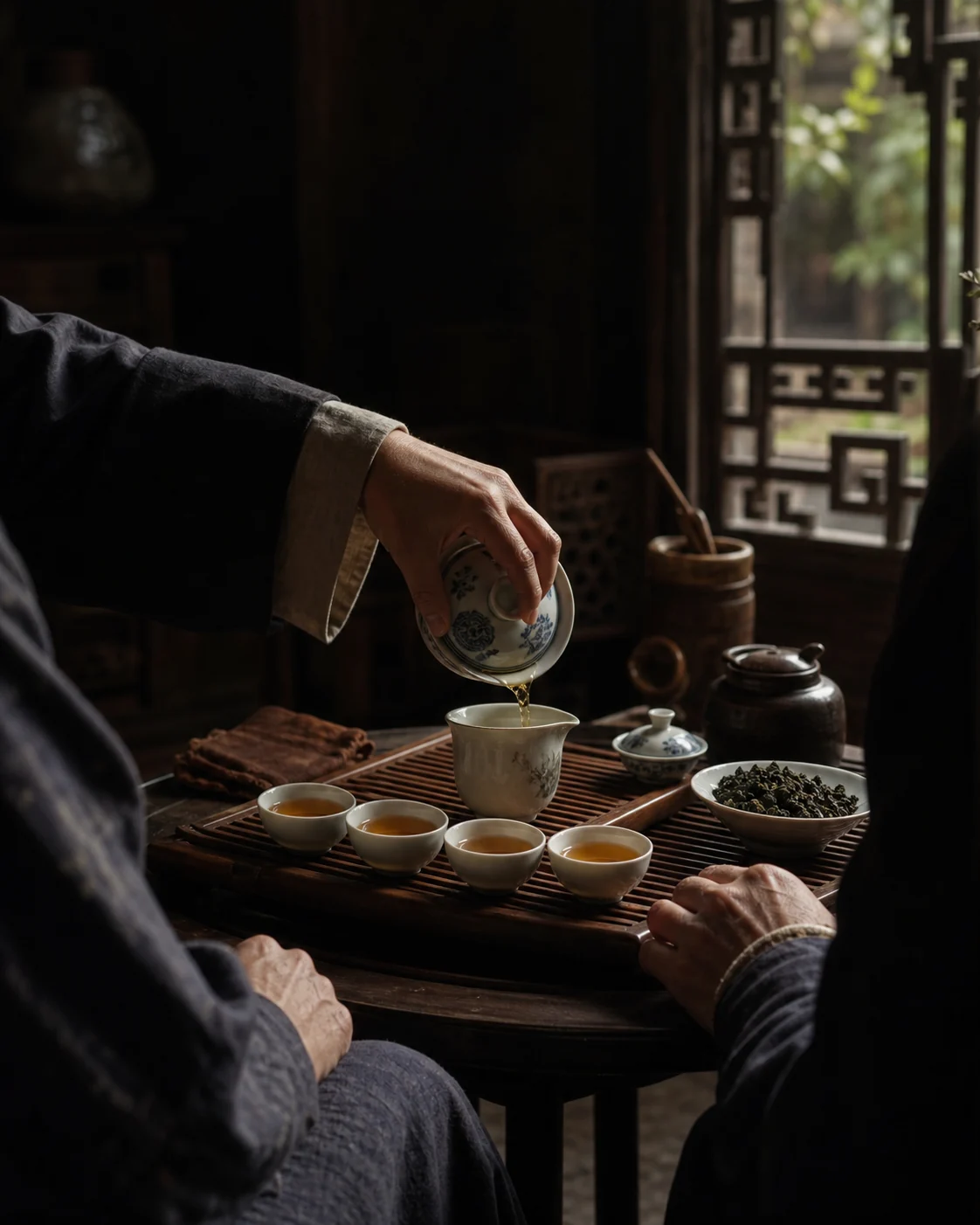
Gongfu Tea
工夫茶Gongfu is not speed but skill over time. Small vessels, repeated infusions, and precise gestures reveal the leaf gradually.
工夫者,非快也,乃積時而成之功。器小、反覆沖瀹、手勢精準,使茶葉逐道展露。
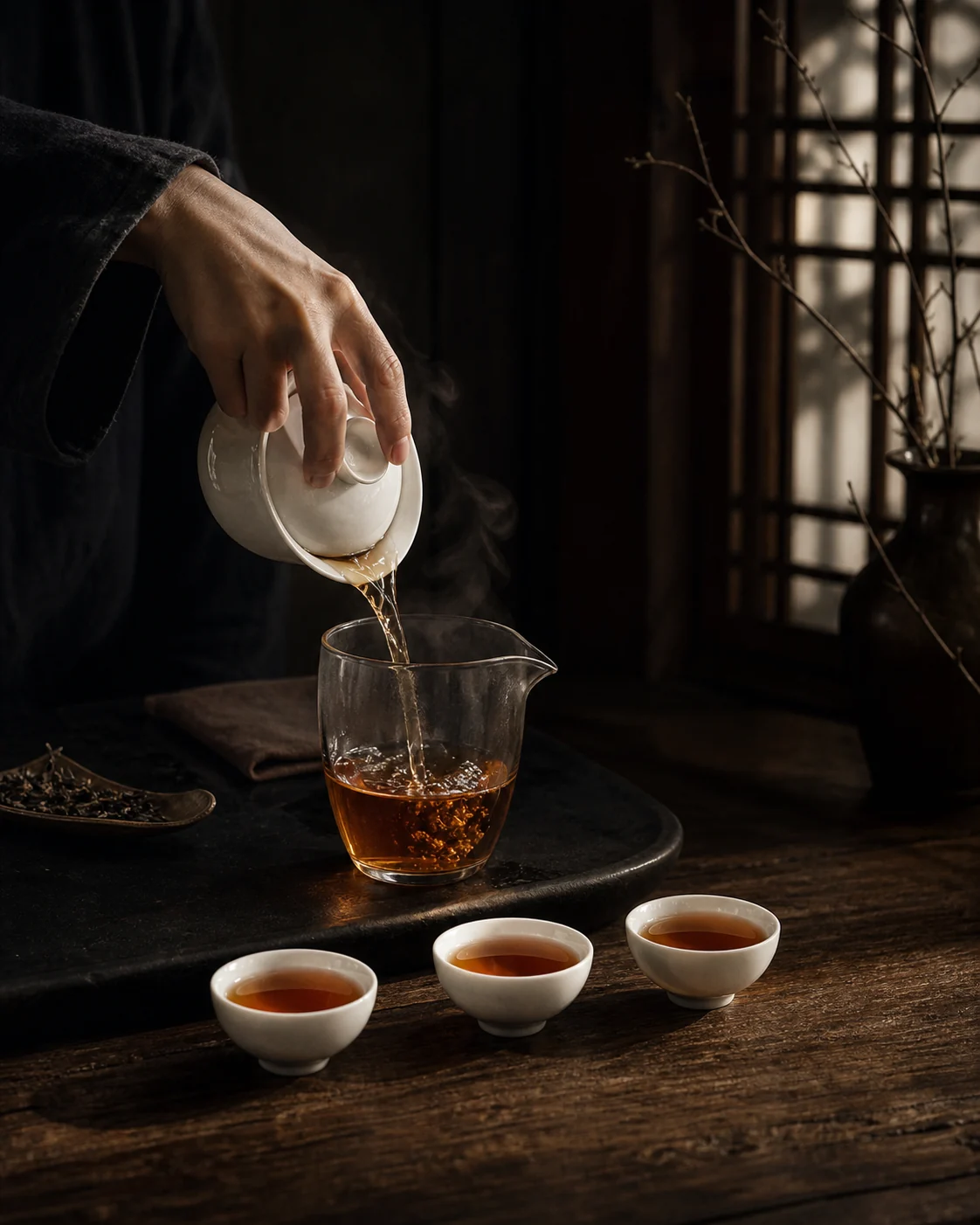
Fairness Cup
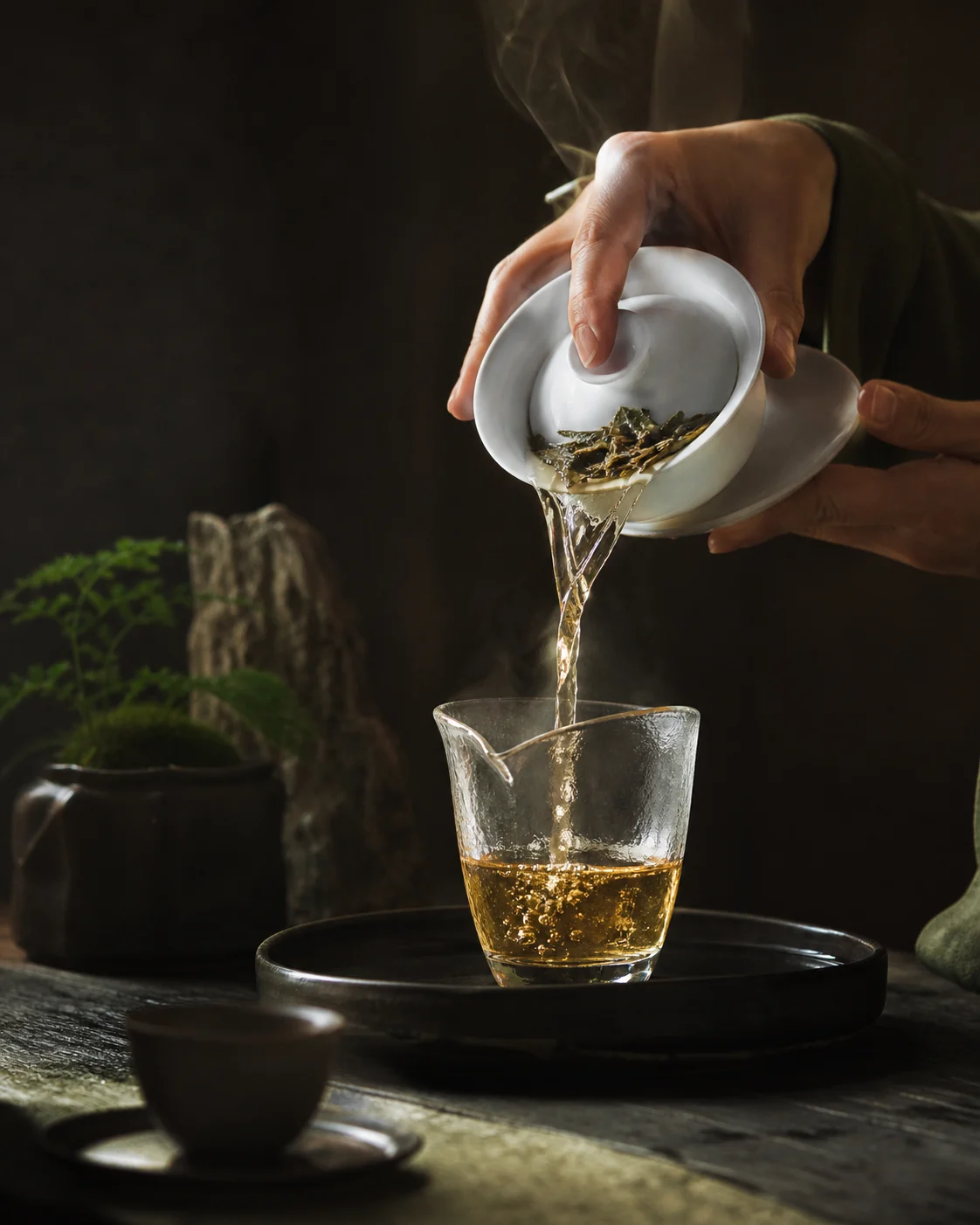
公道杯The fairness cup is ethics in porcelain. It equalises strength before serving, making hospitality visible on the table.
公道杯是瓷中之義。分茶之前先均其濃淡,使待客之心於席上可見。
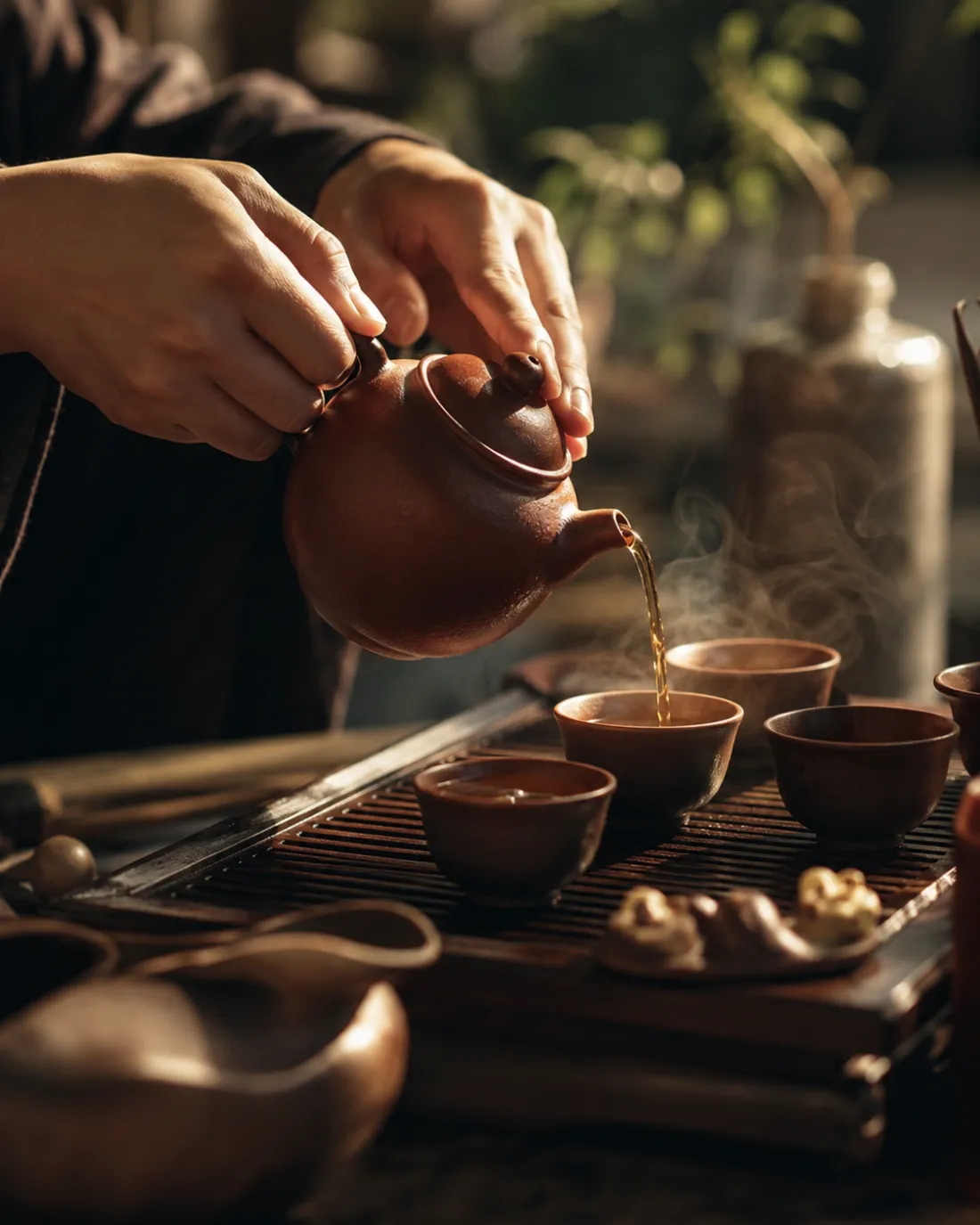
Tea Hospitality
茶與待客之禮A host offers temperature, timing, sequence, and attention. Tea becomes a refined way to receive another person.
主人所奉者,為溫度、時機、次第與心神。茶因此成為接待他人的一種細緻方式。
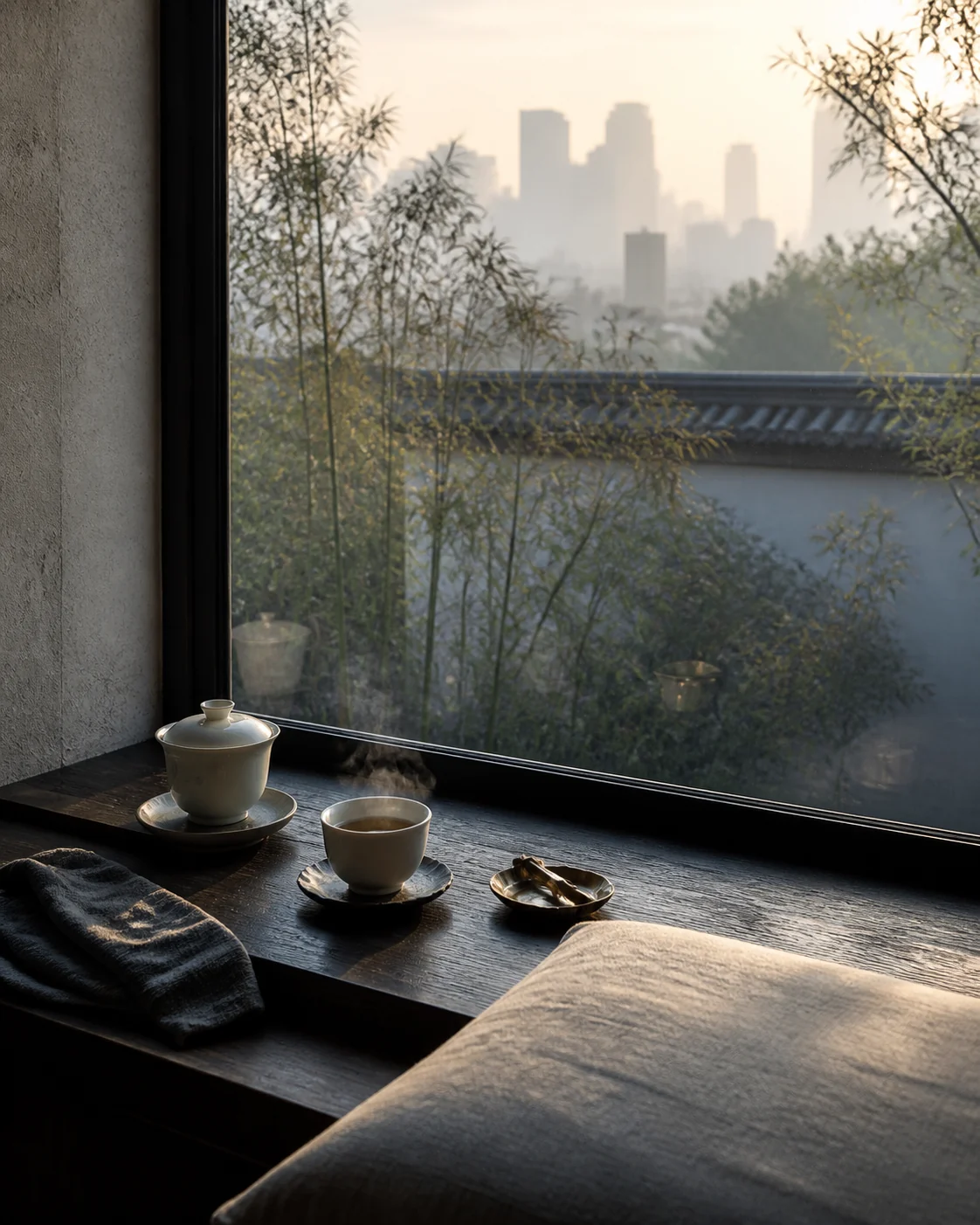
Tea Meditation
茶與靜心The cup narrows the world enough for attention to return. Breath, steam, and silence make practice ordinary and repeatable.
一盞在手,世界收窄至足以令心神回返。呼吸、水氣與寂靜,使修習成為日常而可反覆之事。
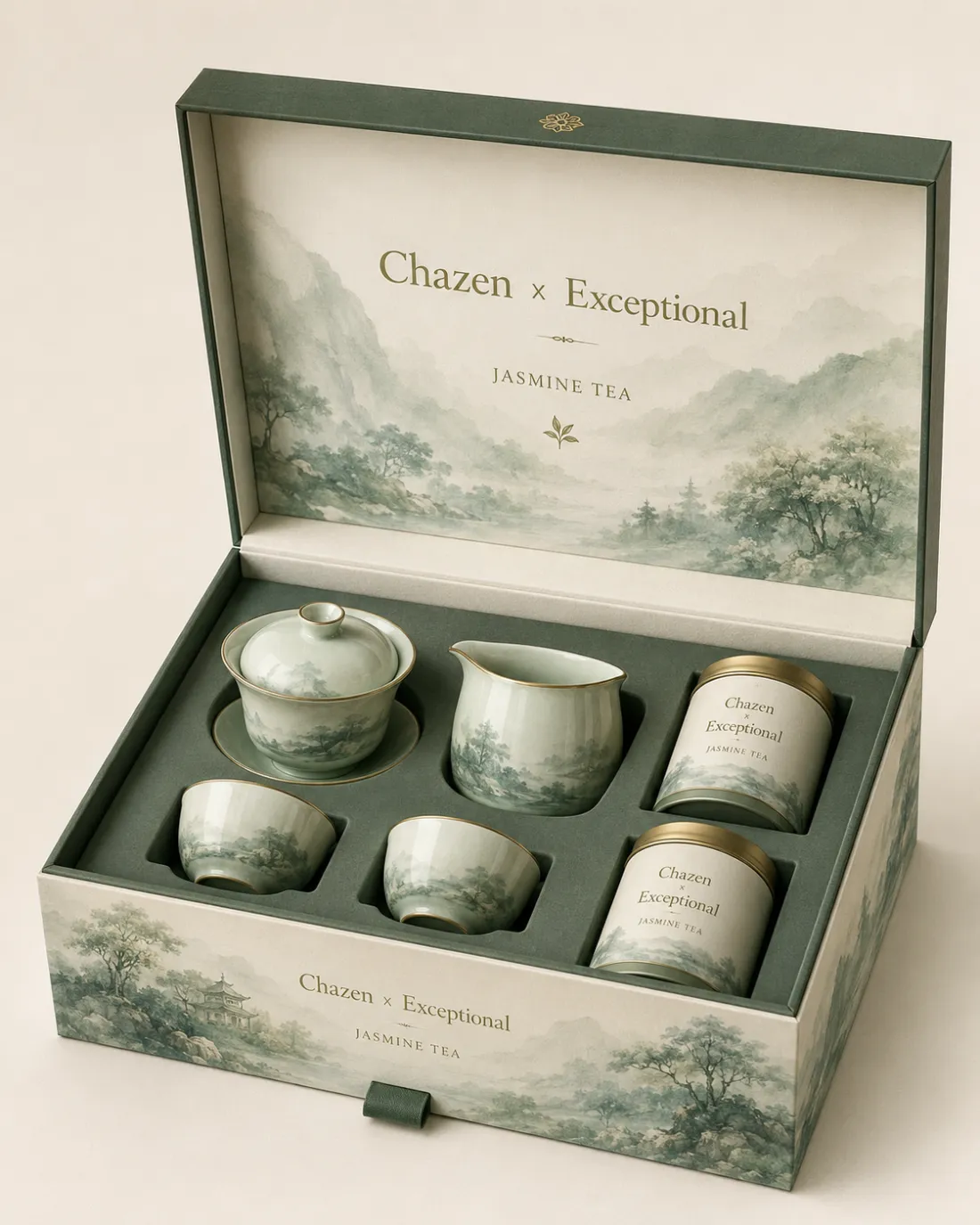
Tea Gifting
茶與禮Tea carries respect without shouting. Origin, vessel, blessing, and packaging turn a gift into memory.
茶致敬意而不張揚。產地、器物、祝願與包裝,使一份禮成為記憶。
03 / 04
候湯 · Reading the Water
Water boils in five stages.
Your eyes are the thermometer.
Lu Yu wrote these down in the eighth century, before anyone could measure heat. You do not need a thermometer either — you need to know what the bubbles are telling you.
一
蝦眼 Shrimp eyes
< 80 °C
— no tea family is named for this stage
The first bubbles, no bigger than a shrimp's eye, clinging to the floor of the kettle. 初現的小泡,細如蝦眼,貼在釜底不動。
二
蟹眼 Crab eyes
80 – 86 °C
綠茶 Green
They widen and begin to lift. Green tea wants the water here, before it turns bitter. 泡漸大而始上浮。綠茶要的正是此時的水,再熱便苦了。
三
魚眼 Fish eyes
86 – 93 °C
烏龍 Oolong
Large, slow, rising in a steady file. Oolong opens here and gives up its perfume. 泡大而緩,魚貫而上。烏龍於此舒展,香氣始出。
四
連珠 String of pearls
93 – 98 °C
普洱 · 陳年老葉 Pu'er and aged leaf
A continuous thread of bubbles at the wall of the kettle. Pu'er and aged leaf ask for this. 釜壁之上,泡如連珠不斷。普洱與陳年老葉,所求即此。
五
騰波 Rolling boil
98 °C +
水老 Not for tea
Waves and drumming surf. Lu Yu called water boiled past this point old, and would not drink it. 騰波鼓浪。陸羽謂過此則水老,不可食也。
五段之溫,皆錄自本節文字;騰波作斜紋,如《茶類地圖》之黑茶,蓋其在軸上而不可用。 Every figure on this axis is one this section already states. Shrimp eyes 蝦眼 is drawn from the foot of the axis because the copy gives it a ceiling and no floor. Rolling boil 騰波 is hatched rather than filled, the way dark tea 黑茶 is hatched on the oxidation scale — a zone that exists on the axis and that the text tells you not to use.
04 / 04
茶之源流 · The Vessel Thread
Tea history is not dates.
It is four ways of drinking.
Boiled, whisked, steeped, infused again and again. Each way of drinking had its own vessel, and the vessel is the argument.
No vessel named
Mythic time
神農傳說
The myth of Shennong frames tea as a discovery of balance: leaf, body, heat, and attention. Before tea became taste, it was a way of reading nature.
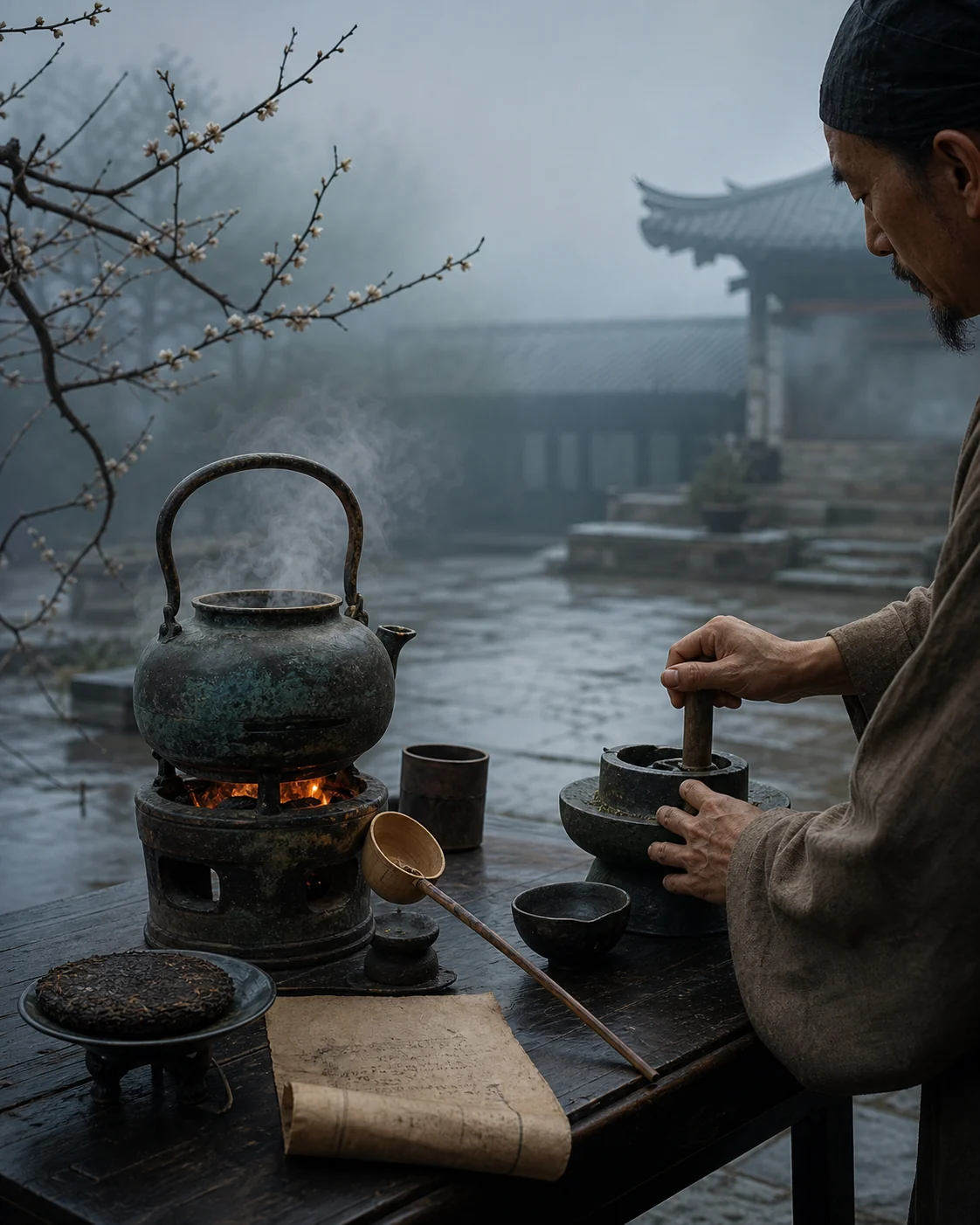
器 · Open cauldron
618 – 907
唐 · 陸羽與《茶經》
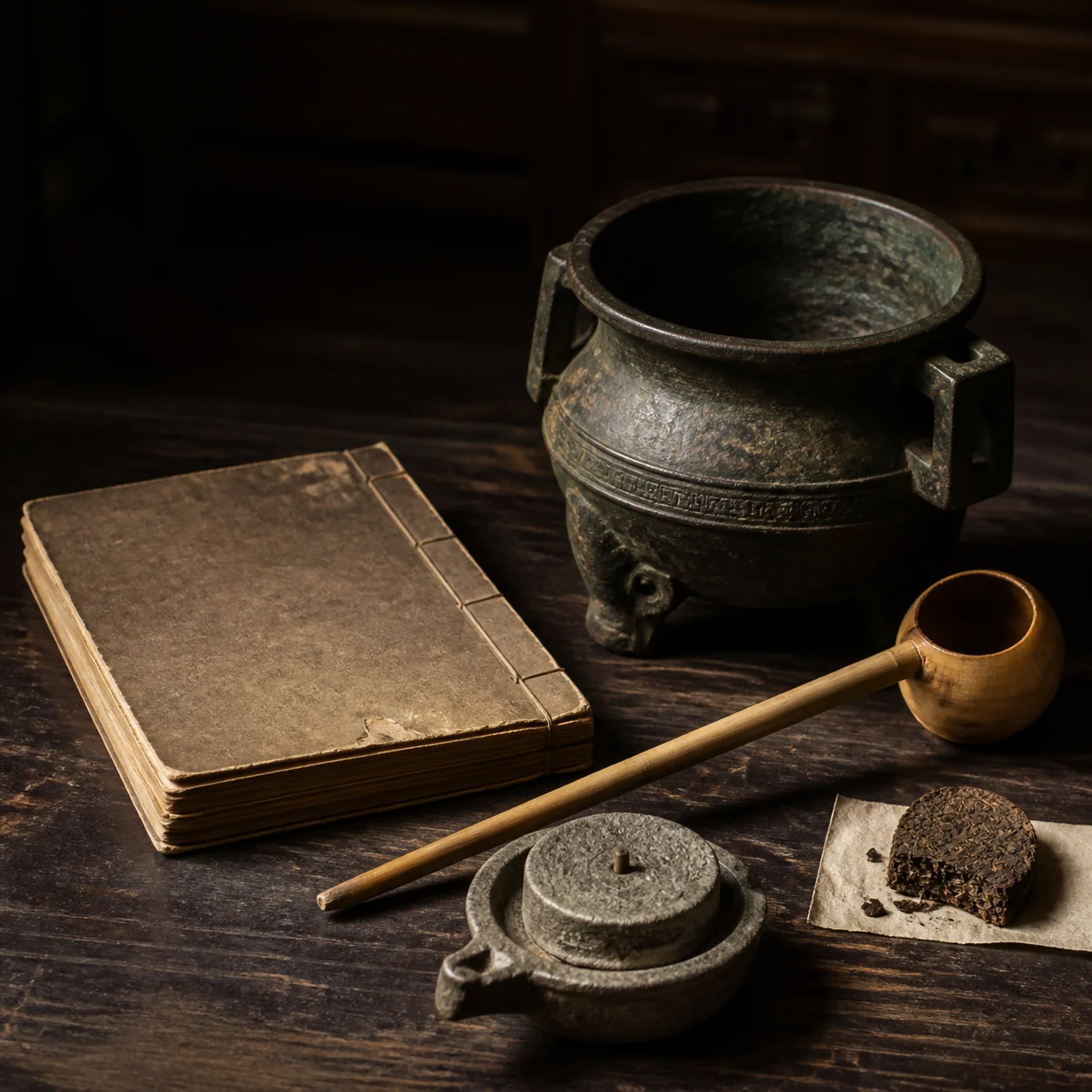
Tea was pressed into cakes, roasted, ground to powder, and boiled in an open cauldron with salt. Lu Yu gave the practice a vocabulary — source, water, fire, vessel, conduct.
器 · Black-glazed Jian bowl
960 – 1279
宋 · 點茶
Powdered tea was whisked until it stood in a pale, stable foam. Black-glazed Jian bowls existed to make that foam visible. Competitions were judged on the colour of the froth.
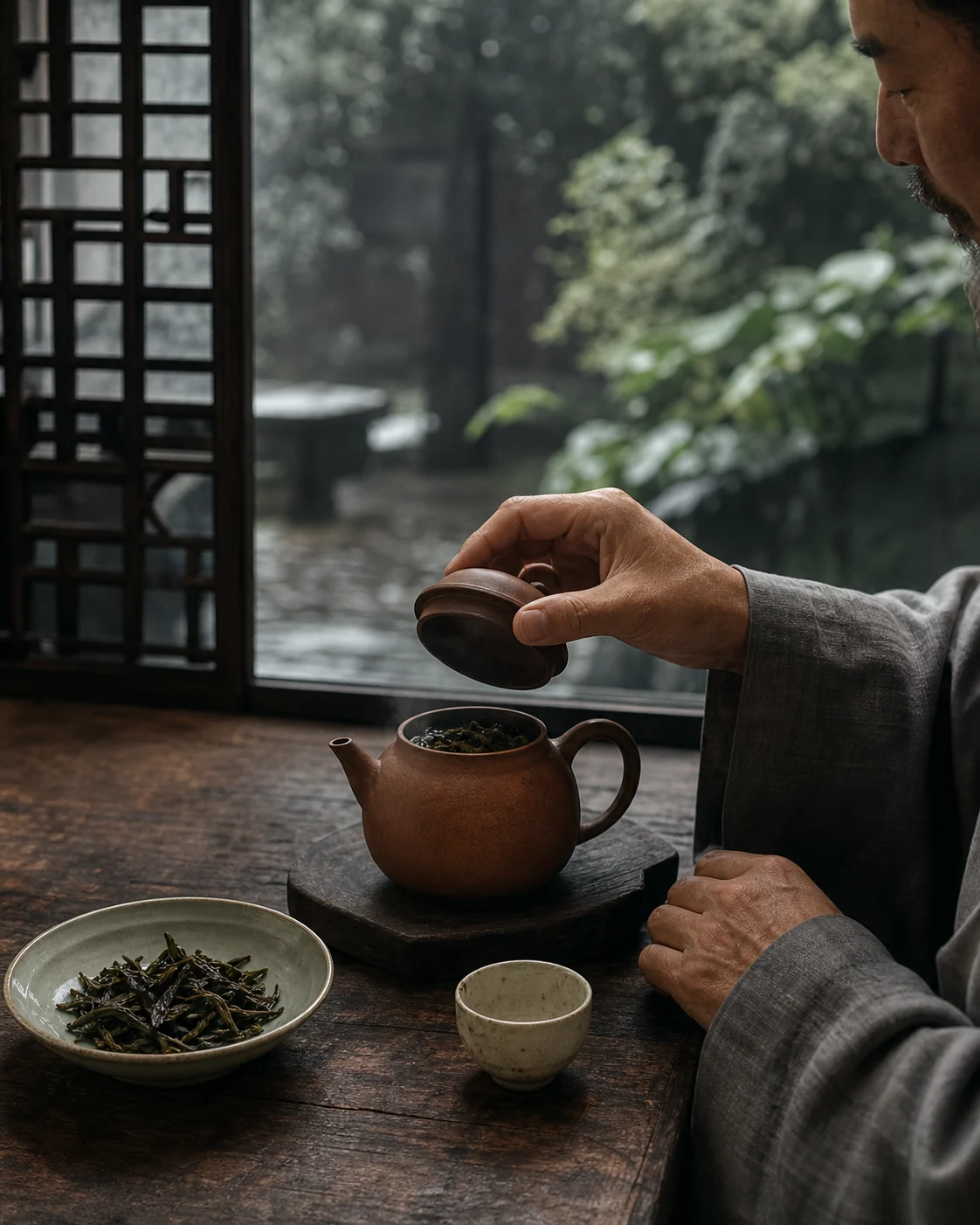
器 · Unglazed Yixing clay
1368 – 1644
明 · 散茶
The Hongwu Emperor abolished compressed tribute cakes in 1391. Leaves were steeped whole in unglazed Yixing clay, and shape and fragrance became visible for the first time.
器 · Small vessels
1644 – 1912
清 · 工夫茶
Gongfu is not speed — the name means skill earned over time. Small vessels, water held to a few seconds, and the same leaves opened again and again.
No vessel named
Now
當代茶禪
The old forms are not copied as nostalgia. They are edited into a living ritual for modern attention.